The “Soleus and Achilles Stretch” is an important stretching exercise that specifically targets the calf muscles. This movement is performed to increase flexibility and reduce tension in the calf muscles, particularly the soleus muscle and the Achilles tendon. Performing this exercise helps reduce the risk of injury in athletes and active individuals, especially those who engage in sports activities involving running, jumping, and endurance sports. The Achilles tendon is one of the strongest and largest tendons in the body, connecting the calf muscles to the heel bone. This tendon and the soleus muscle play a vital role in the movement and stability of the legs. Stretching exercises like the “Soleus and Achilles Stretch” help maintain the health of these structures and prevent problems such as Achilles tendinitis.
Target Muscle in Soleus and Achilles Stretch
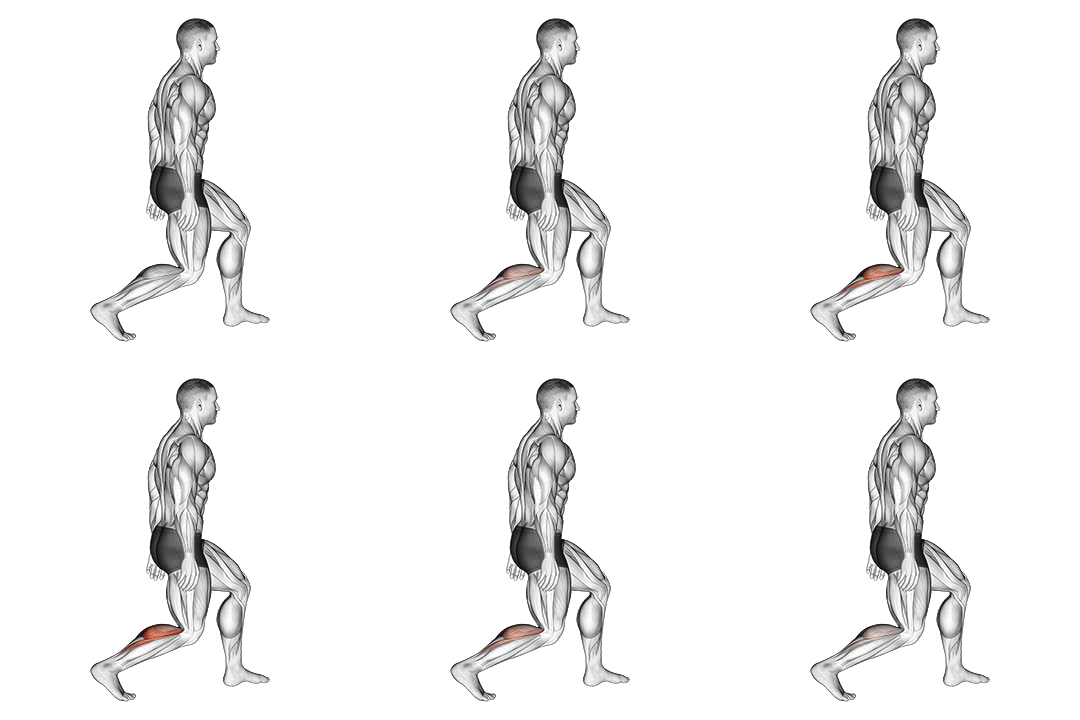
The primary target muscle in this movement is the soleus muscle, located in the deeper part of the calf, beneath the gastrocnemius. The soleus plays a significant role in activities requiring endurance and stability, especially during standing and walking. Due to its position under the gastrocnemius, this muscle is heavily engaged in daily activities and requires regular stretching. The Achilles tendon, which connects the calf muscles to the heel bone, is also targeted as part of the muscular system. This tendon plays a crucial role in transferring muscle force to the feet for movement and stability. Regular stretching of this tendon helps maintain flexibility and reduce the risk of injury.
Secondary Muscles Involved in Soleus and Achilles Stretch
In addition to the soleus muscle and Achilles tendon, other muscles are also involved in this exercise. The gastrocnemius muscle, located in the more superficial part of the calf and known as one of the largest calf muscles, is also indirectly affected. This muscle plays an important role in the strength and flexibility of the legs, and stretching it helps improve overall leg function. Below the calf, in the foot area, the plantar muscles may also be affected by these exercises. These muscles play a significant role in foot stability and balance, and stretching them helps improve overall foot flexibility and health.
How to Perform the Soleus and Achilles Stretch
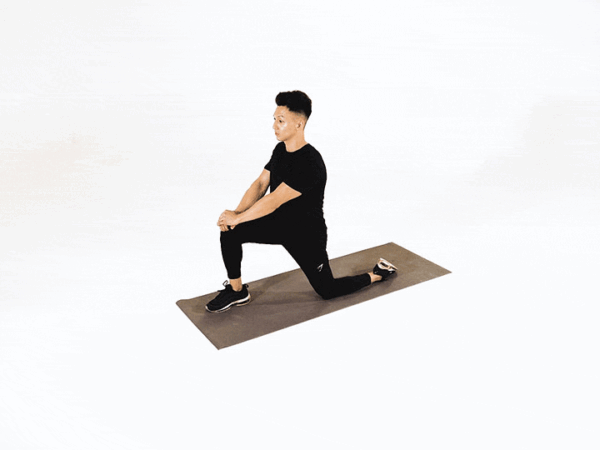
To perform the “Soleus and Achilles Stretch,” first stand facing a wall or a stable surface. Place one leg forward and bend the front knee. Step the other leg back, keeping the knee slightly bent. Ensure both feet are flat on the ground. By pushing against the wall or stable surface, you will feel a stretch in the back of your calf and the Achilles tendon. Throughout this movement, ensure you keep your knees and feet stable so that the pressure is correctly applied to the target muscles. Hold this position for 20 to 30 seconds, then switch legs. You can perform this exercise multiple times a day, especially after exercise, to increase flexibility and reduce muscle tension.
Equipment Needed
You do not need complex equipment to perform the “Soleus and Achilles Stretch.” A wall or stable surface is sufficient for support. You can also use a step or a small elevation to increase the pressure and stretch in the muscles. Some individuals may also use resistance bands or a towel to create additional stretch in the muscles. If you do not have access to equipment, you can perform this exercise anywhere. Just find a stable surface for support and begin the exercise. Due to its simplicity and lack of need for special equipment, this exercise is very practical and suitable for performing at home or work.
Yes, this exercise is suitable for most people. However, individuals with specific foot or tendon issues should consult a doctor before performing it.
This exercise can be performed regularly as part of a daily stretching routine or after exercise to increase calf muscle flexibility.
Yes, regular stretching of the Achilles tendon can help reduce tension and pain in this area and lower the risk of injury.
The best duration to hold the stretch is between 20 to 30 seconds. You can repeat this exercise multiple times a day for optimal results.
Yes, by increasing flexibility and reducing muscle tension, this exercise can help improve athletic performance and reduce the risk of injury.
How to perform
-
Step 1
Stand upright with your feet hip-width apart, one foot slightly ahead of the other.
-
Step 2
Gently bend your knees, keeping the heel of the back foot firmly on the ground until you feel a stretch in your calf muscles.
-
Step 3
Hold this position for 15 to 30 seconds, then return to the starting position.
-
Step 4
Perform this exercise for the desired number of repetitions, sets, and duration.