The “Stability Ball Walking Lunge” is an effective and challenging exercise that helps strengthen the lower body muscles, especially the leg muscles and the core. This movement combines lunges with the use of a stability ball, which improves balance, strength, and coordination. By performing this exercise, you can help strengthen your leg muscles, improve flexibility, and increase endurance. Additionally, this exercise can be used as part of a regular training program to strengthen the leg muscles and core.
Performing the “Stability Ball Walking Lunge” allows you to add more challenges to your workouts by engaging various muscles. Using the stability ball not only strengthens the leg muscles but also improves body control and stability. This exercise is particularly beneficial for athletes looking to increase strength and endurance in their legs and can be included as a comprehensive exercise in their training program.
Target Muscles in Stability Ball Walking Lunge
The primary target muscle in the “Stability Ball Walking Lunge” is the quadriceps. This muscle is located at the front of the thigh and is responsible for flexing and extending the knee. Performing this exercise puts significant pressure on the quadriceps, helping to strengthen them and increase strength and endurance in this area. This muscle also plays a crucial role in daily activities such as sitting and standing up.
In addition to the quadriceps, other muscles such as the hamstrings and glutes are also activated during this exercise. The gluteal muscles are located at the back of the body and help strengthen and support lower body movements. This interaction between different muscles makes this exercise a comprehensive workout for strengthening the lower body and improves athletic performance.
Secondary Muscles Involved in Stability Ball Walking Lunge
Several secondary muscles are also involved while performing the “Stability Ball Walking Lunge.” The obliques and rectus abdominis muscles are activated simultaneously with the leg muscles during this exercise. These muscles help stabilize the body and maintain balance during the movement. Strengthening these muscles not only improves abdominal strength but also enhances posture and reduces the risk of sports injuries.
In addition to the abdominal muscles, the calf muscles are also engaged in this exercise. These muscles are used to maintain balance and control leg movements. Strengthening these areas helps improve endurance and strength in athletic movements and can be effective in reducing the risk of injury in daily activities. Therefore, this exercise is recognized as a comprehensive workout for strengthening the core and lower body.
How to Perform the Stability Ball Walking Lunge
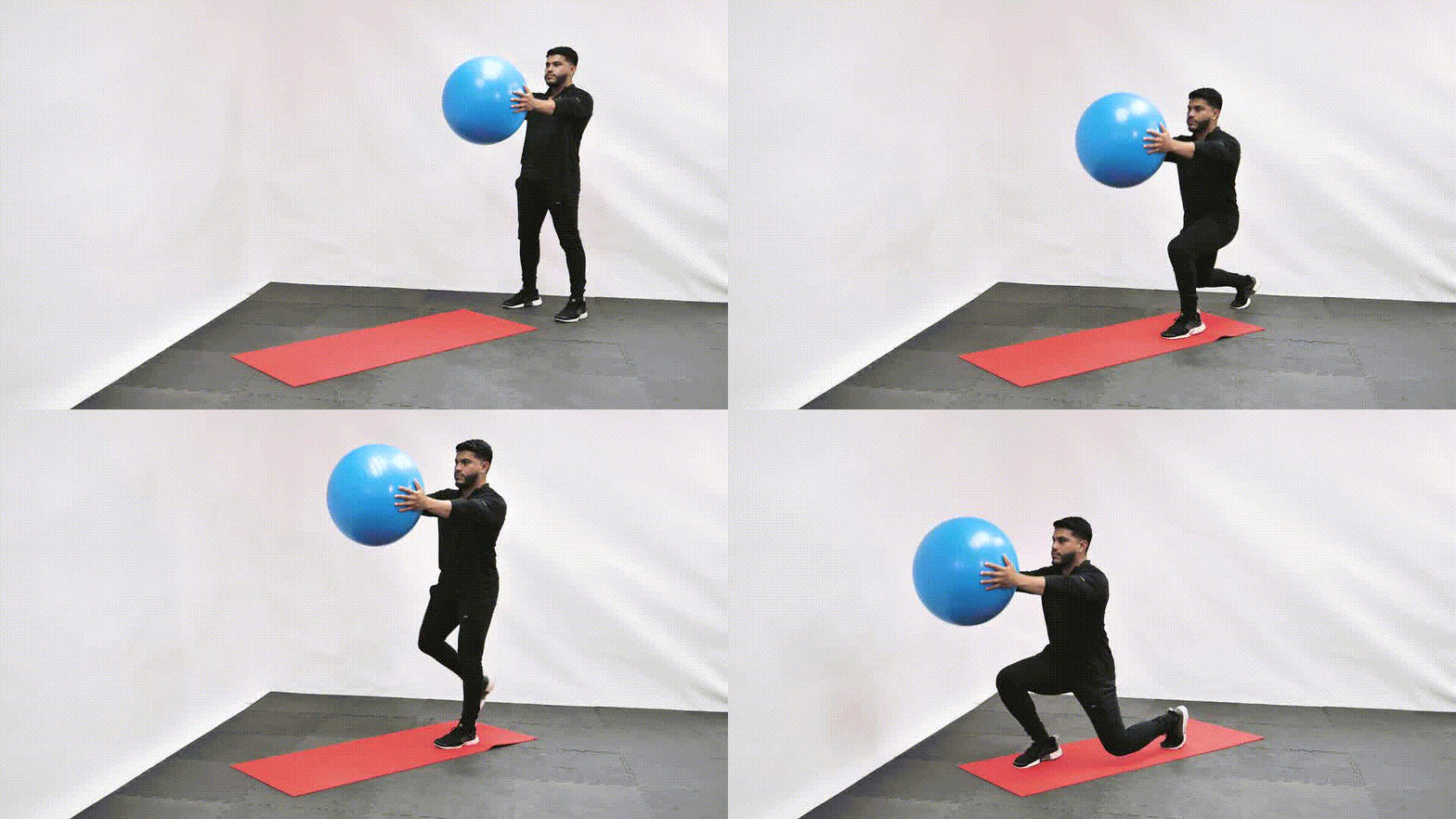
To perform the “Stability Ball Walking Lunge,” first place a stability ball in front of you and step forward into a lunge with your right leg. While lunging, place your left foot on the stability ball and lower yourself slowly. Then, switch your legs and perform a lunge forward with your left leg. Alternate this movement between your legs, ensuring you keep your body stable throughout the exercise.
You can perform this exercise for several sets with varying repetitions. To increase the challenge, you can use weights or medicine balls. Also, pay attention to controlling your breathing during the exercise and avoid sudden movements to prevent injury. With regular practice of this exercise, you can gradually increase the strength and endurance of your leg and core muscles.
Equipment Needed
To perform the “Stability Ball Walking Lunge,” you need a stability ball on which you can place your foot. This ball should be sturdy enough to support your body weight and remain stable during the exercise. Using a stability ball allows for greater focus on balance and motor control, resulting in a more significant impact on the leg and core muscles.
If you wish to perform this exercise with weights or a medicine ball, you can use these as well. These weights can help increase the intensity of the workout, allowing you to gradually increase your strength and endurance. However, be mindful that using weights should be done cautiously to prevent injury.
Yes, this exercise is suitable for beginners, but it should be performed with care and focus on correct technique.
Typically, you can perform 2 to 3 sets of 10 to 15 repetitions.
Yes, this exercise can be a suitable part of a warm-up routine.
It is important to perform movements slowly and with control, and to avoid sudden movements.
Pregnant women should consult their doctor before performing these types of exercises.
How to perform
-
Step 1
Stand tall with your feet shoulder-width apart, holding a stability ball in front of you.
-
Step 2
Lunge forward by stepping one foot in front of the other, then rotate your upper body towards the opposite side of your bent legs along with the stability ball.
-
Step 3
Return to a standing position with your back leg, then switch sides and lunge forward again.
-
Step 4
Repeat this movement for the desired number of repetitions and sets.