The “Revolved Abdomen Pose” is a yoga movement that specifically focuses on the abdominal muscles and the spine. This movement is known as a stretching and strengthening exercise that helps increase flexibility and improve the function of the core muscles. This movement also helps improve blood circulation and reduce muscle tension in the abdominal and lower back areas.
The “Revolved Abdomen Pose” is very beneficial for individuals looking to strengthen their core muscles and improve body balance and coordination. Additionally, this movement aids in improving digestion and stimulating internal organs, which is why it is recommended in many yoga sequences for calming and balancing the digestive system.
Target Muscle in Revolved Abdomen Pose
The primary target muscle in the “Revolved Abdomen Pose” is the abdominal muscles, especially the oblique muscles. These muscles are responsible for twisting and rotating the abdominal area, and performing this movement helps strengthen and improve their function. The oblique abdominal muscles are among the most important core muscles that play a significant role in maintaining body balance and endurance.
With regular practice of this movement, the abdominal muscles are deeply strengthened, and their flexibility increases. This strengthening helps improve body balance and stability and can also contribute to reducing abdominal fat.
Secondary Muscles Involved in Revolved Abdomen Pose
In addition to the abdominal muscles, the lower back and spinal muscles are also actively involved in the “Revolved Abdomen Pose.” These muscles help support and stabilize the body’s rotation and play a crucial role in spinal stability and strength. Strengthening these muscles can help improve posture and reduce lower back pain.
The thigh and hip muscles are also indirectly involved in this movement. Stretching and twisting in the hip and thigh areas can help increase flexibility and reduce muscle tension in these regions.
How to Perform the Revolved Abdomen Pose
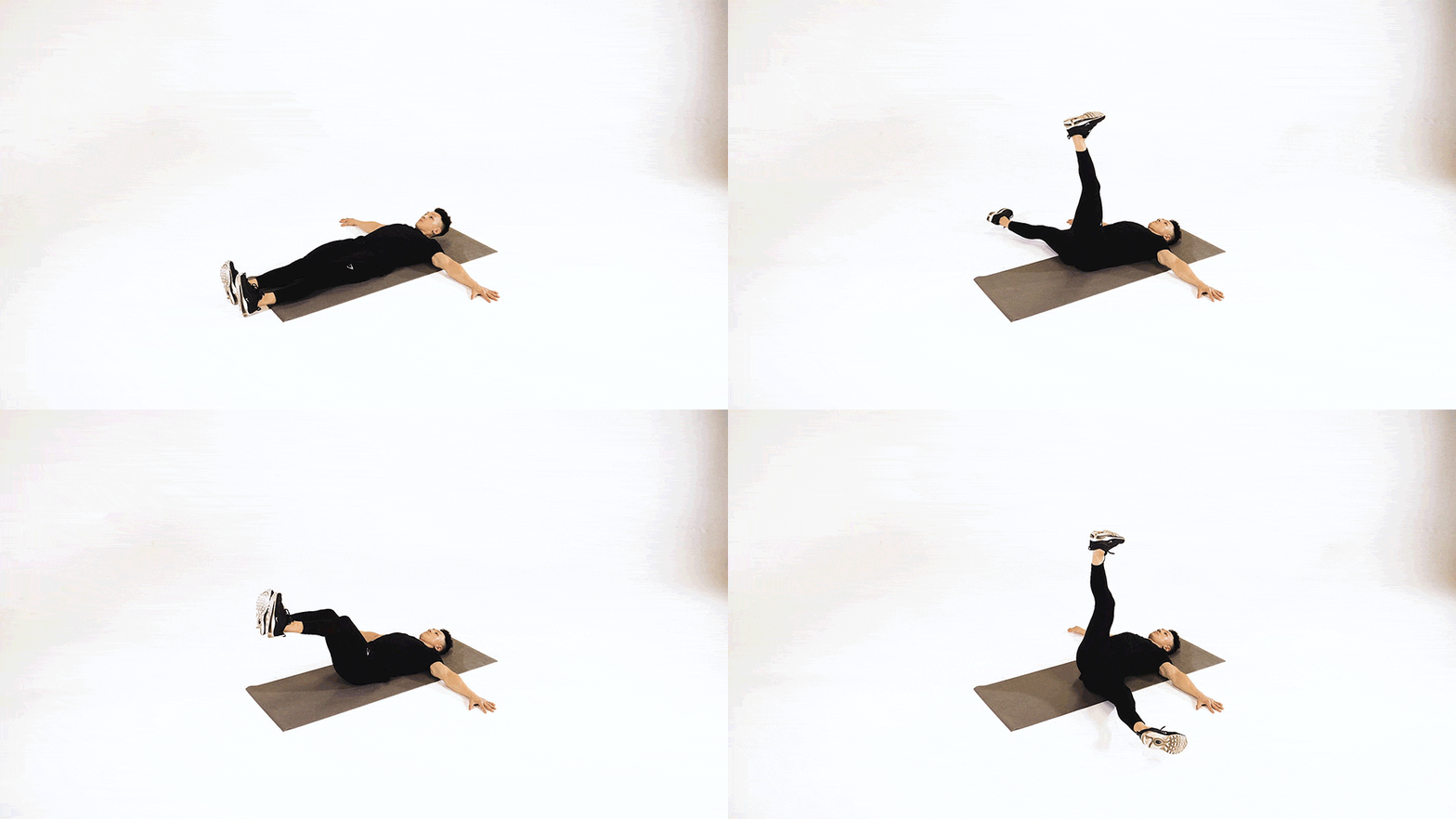
To perform the “Revolved Abdomen Pose,” first lie on your back and extend your arms straight out to the sides at shoulder level. Bring your legs up to a 90-degree angle. Then, slowly lower your legs to one side of your body while keeping your shoulders in contact with the floor. In this position, you will feel a deep twist in your abdomen and lower back.
Next, move your legs to the other side of your body and perform the stretch on the opposite side. Focus on breathing deeply and calmly, and with each exhale, deepen the twist of your body. Finally, return your legs to the starting position and repeat this movement several times.
Equipment Needed
No special equipment is required to perform the “Revolved Abdomen Pose.” A yoga mat or a soft surface is sufficient for comfort and to prevent potential injuries. Additionally, if you are a beginner or have limited flexibility, you can use yoga blocks or small cushions for support.
Using additional equipment such as a yoga strap or small props can help increase balance and assist in performing the movement correctly. These aids help you perform the movement gradually and without excessive strain on your body.
Yes, this pose can be adapted for beginners. Using blocks or cushions can help improve performance.
Yes, this movement helps stretch and strengthen the lower back and spinal muscles, which can reduce lower back pain.
For best results, perform this movement 3 to 4 times a week to increase flexibility and muscle strength.
Yes, this movement helps strengthen the oblique abdominal muscles and improves the balance and endurance of the abdominal muscles.
No, only an exercise mat is needed. However, using yoga blocks can aid in better execution.
How to perform
-
Step 1
Lie on your back and extend your arms to the sides, so your hands are at shoulder level.
-
Step 2
Lift your legs and, while moving your hips and pelvis to the left, lift them off the ground.
-
Step 3
Extend your heels outwards and stretch your right leg towards your right fingertips.
-
Step 4
Continue this movement slowly by lowering your left leg towards your right leg.
-
Step 5
Try to hold both your legs with your right hand, keeping your body stable on the ground with your left hand and shoulder.
-
Step 6
Turn your head towards your left hand and repeat this movement several times, bringing your left leg up and lowering it towards the right, holding the full position.