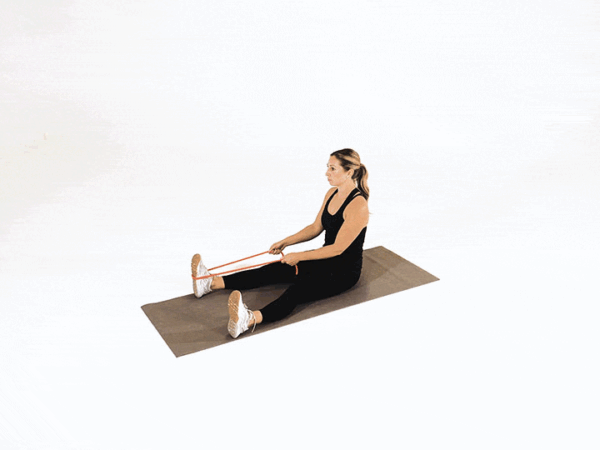

The “Peroneal Stretch” is a stretching exercise performed to increase flexibility and reduce tension in the muscles of the outer lower leg. This movement is particularly beneficial for individuals experiencing stiffness and pain in the outer calf area. This stretch helps improve the function of the peroneal muscles and prevent injuries related to physical activities such as running and walking. The peroneal muscles play a vital role in stabilizing and moving the feet, thus requiring special attention. Therefore, performing the “Peroneal Stretch” is recommended as part of daily exercise routines or rehabilitation programs. This exercise also contributes to improving overall foot health and preventing issues like ankle sprains.
Target Muscle in Peroneal Nerve Stretch
The primary target muscles in this exercise are the peroneal muscles, which include the Peroneus Longus and Peroneus Brevis. These muscles are located in the outer part of the lower leg and extend from the lower calf down to the ankle and the sole of the foot. The peroneal muscles play a crucial role in stabilizing and facilitating lateral movements of the feet. These muscles are also highly active during daily activities like walking and running. Therefore, maintaining the flexibility and health of these muscles is of great importance. The “Peroneal Stretch” exercise helps improve blood flow and reduce tension in these muscles, thereby preventing potential injuries.
Secondary Muscles Involved in Peroneal Nerve Stretch
In addition to the peroneal muscles, other muscles of the lower leg and ankle are indirectly involved in this exercise. Among these muscles is the Tibialis Anterior, located in the front part of the lower leg. This muscle, along with the peroneal muscles, plays a role in maintaining balance and controlling foot movements. Furthermore, the calf muscles, such as the Gastrocnemius and Soleus, may also be indirectly affected during this exercise. These muscles are generally active in daily and athletic activities, and stretching them helps improve overall foot function and prevent unwanted tension.
How to Perform the Peroneal Nerve Stretch
To perform the “Peroneal Stretch,” first sit on the floor with one leg extended forward. Bend the knee of the other leg and place the sole of that foot against the inner thigh of the extended leg. Then, gently rotate the extended leg inward until you feel a stretch in the outer part of your lower leg and ankle. Hold this position for 20 to 30 seconds. It is important to perform the stretch gently and without excessive force to avoid injury. After holding the stretch, gently switch legs and repeat the movement for the other leg. This exercise can be performed multiple times a day to increase flexibility and muscle health.
Equipment Needed
The “Peroneal Stretch” does not require any special equipment and can be performed anywhere. A flat, comfortable surface to sit on is sufficient. However, some individuals may use stretching straps or a towel to increase the stretch and enhance the effectiveness of this movement. If you are looking to add more challenge to this exercise, you can use a foam roller for deeper muscle massage and stretching. This can help reduce tension and improve flexibility. But overall, this exercise is very simple and can be done in any environment.
Yes, this stretch is suitable for most people, but individuals with severe ankle or lower leg injuries should consult a doctor before performing it.
For best results, hold the stretch for 20 to 30 seconds, then switch legs. You can do this multiple times a day.
Yes, this exercise can help reduce pain and tension in the ankle area and facilitate improved blood flow.
Yes, increasing the flexibility and reducing tension in the peroneal muscles can help improve athletic performance and reduce the risk of injury.
This stretch can be performed as part of a daily stretching routine or after exercise to prevent tension and reduce soreness.
How to perform
-
Step 1
Sit down and wrap a strap, rope, or band around one of your feet.
-
Step 2
Extend both legs forward, then pull the strap around your foot to flex your foot inward.
-
Step 3
Pull the inside of your extended foot towards you and hold this position for 15 to 30 seconds.
-
Step 4
Return to the starting position and repeat this movement for the desired number of repetitions, sets, and duration.