The “Trap Bar Lunges” movement is an advanced type of lunge exercise performed using a trap bar (hex bar). The use of the trap bar in this movement allows for a more balanced distribution of weight across the body, helping the movement to be performed with greater stability. This feature allows athletes to train with heavier weights and strengthen their lower body muscles more effectively. This movement is very beneficial for improving strength and balance in the leg muscles, especially the quadriceps and glutes. Because the weight is centered during this exercise, less stress is placed on the spine, which helps prevent potential injuries. Trap Bar Lunges are suitable for professional athletes and those looking to increase the power and endurance of their lower body muscles.
Target Muscles in Trap Bar Lunges

The primary target muscles in “Trap Bar Lunges” are the quadriceps. These muscles are heavily engaged when bending the knee and lowering down in the lunge movement, and they bear the main responsibility for generating force to stand up and return to the starting position. Additionally, the glutes are also activated as one of the main muscles in this movement. These muscles help stabilize the pelvis during the exercise, and strengthening them improves balance and stability during the movement.
Secondary Muscles Involved in Trap Bar Lunges

Alongside the target muscles, the hamstrings (back of the thigh) are also engaged during this movement. Hamstrings play an important role in controlling the lower body movement and preventing knee injuries. Strengthening these muscles can help improve overall performance in lower body movements. In addition, the calf muscles and core muscles are also active in this exercise. The calf muscles help with stability and balance during the movement, while the core muscles play a vital role in maintaining overall stability and preventing the body from collapsing while carrying weight.
How to Perform Trap Bar Lunges
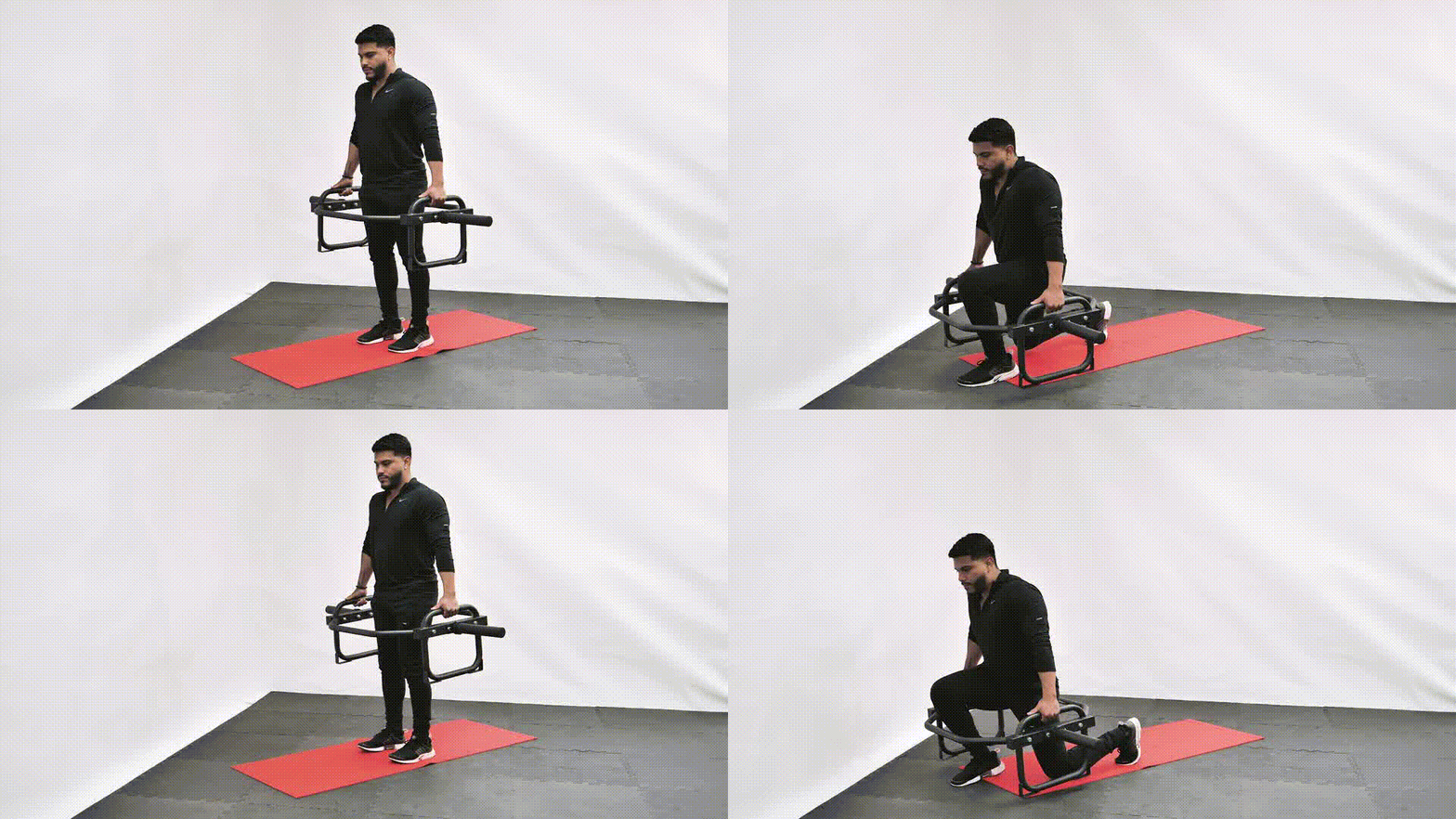
To perform “Trap Bar Lunges,” first place the trap bar in front of you and stand inside it. Grip the handles of the trap bar with both hands and place your feet shoulder-width apart. Now, step forward with one leg, bending your knee to a 90-degree angle. Lower the knee of your back leg towards the ground. Maintain your balance and keep your spine straight in this position. Then, push off with your front foot to return to a standing position, and repeat the movement for the other leg. Note that throughout the movement, your front knee should not go past your toes, and you must maintain control of the movement.
Equipment Required
To perform “Trap Bar Lunges,” you will need a trap bar and appropriate weights. The trap bar, due to its unique design, allows you to carry weights with greater balance and prevents excessive strain on your lower back. Sufficient space to perform the exercise is also essential. Ensure there is enough room to step forward and backward so you can perform the movement without restriction. Due to the use of weights, wearing appropriate athletic shoes is also recommended to prevent slipping.
This movement is more suitable for intermediate and advanced athletes who are familiar with basic lunge exercises. Beginners should start with simpler exercises like bodyweight or dumbbell lunges first.
To increase the intensity of the exercise, you can add heavier weights to the trap bar. You can also increase the number of repetitions and sets to gradually improve your muscle strength and endurance.
Yes, if a trap bar is not available, you can perform this exercise with dumbbells or kettlebells. However, using a trap bar creates less strain on the lower back due to the balanced weight distribution, making the exercise safer.
While performing the exercise, you should maintain your balance and prevent your lower back from arching. Also, your front knee should not go past your toes, as this may cause excessive pressure on your knees.
Yes, the “Trap Bar Lunges” movement helps improve overall balance and stability due to the need to maintain balance throughout the exercise. Performing this exercise regularly can increase your muscular balance and motor control.
How to perform
-
Step 1
First, load the trap bar with an appropriate amount of weight on each side. Grip the handles of the trap bar with a neutral grip (palms facing each other). Engage your abdominal muscles. Keep your chest up and pull your shoulders back to maintain good posture throughout the movement.
-
Step 2
Take a large step forward with one leg, ensuring your knee is aligned with your ankle and your thigh is parallel to the ground. Lower your body towards the ground by bending both knees until your back knee is close to the ground. Ensure your front knee is in line with your toes and prevent it from collapsing inward. Your back knee should hover close to the ground, and your weight should be evenly distributed between your front and back legs.
-
Step 3
Push off from your front heel to return to the starting position. Focus on engaging your front leg muscles as you return to a standing position. Keep your chest up and your back straight to maintain proper alignment. After completing the desired number of repetitions on one side, switch legs and perform the exercise on the opposite side.