The Dumbbell Split Jump is a plyometric exercise that builds strength and speed in the lower body muscles. Using dumbbells increases the intensity of the workout and helps strengthen the leg muscles, especially the quadriceps and glutes. Performing this exercise requires balance and muscle coordination, which can help improve athletic performance and overall body balance. Since this exercise involves jumping and changing leg positions in the air, focusing on correct form and controlling the movement is very important. The Dumbbell Split Jump is very suitable for professional athletes and those looking to strengthen their lower body muscles and enhance their plyometric abilities.
Target Muscles in Dumbbell Split Jump
The primary target muscles in the Dumbbell Split Jump are the quadriceps and glutes. During the jump and landing, these muscles are directly activated and play a crucial role in generating power for the jump and controlling the movement. This exercise helps strengthen and shape these muscles. Additionally, the calf muscles are also activated during this exercise, helping to generate power for the jump. Therefore, this exercise helps improve the strength and explosive capabilities of the lower body muscles.
Secondary Muscles Involved in Dumbbell Split Jump
In addition to the target muscles, the hamstrings, core muscles, and back muscles are also involved. The hamstrings play an important role in landing and preventing hard impacts of the feet on the ground. The core muscles (including the abdomen and lower back) are engaged throughout this exercise to maintain balance and stability. The dumbbells also engage the back and shoulder muscles, as you need to hold the weights in your hands throughout the movement.
How to Perform the Dumbbell Split Jump
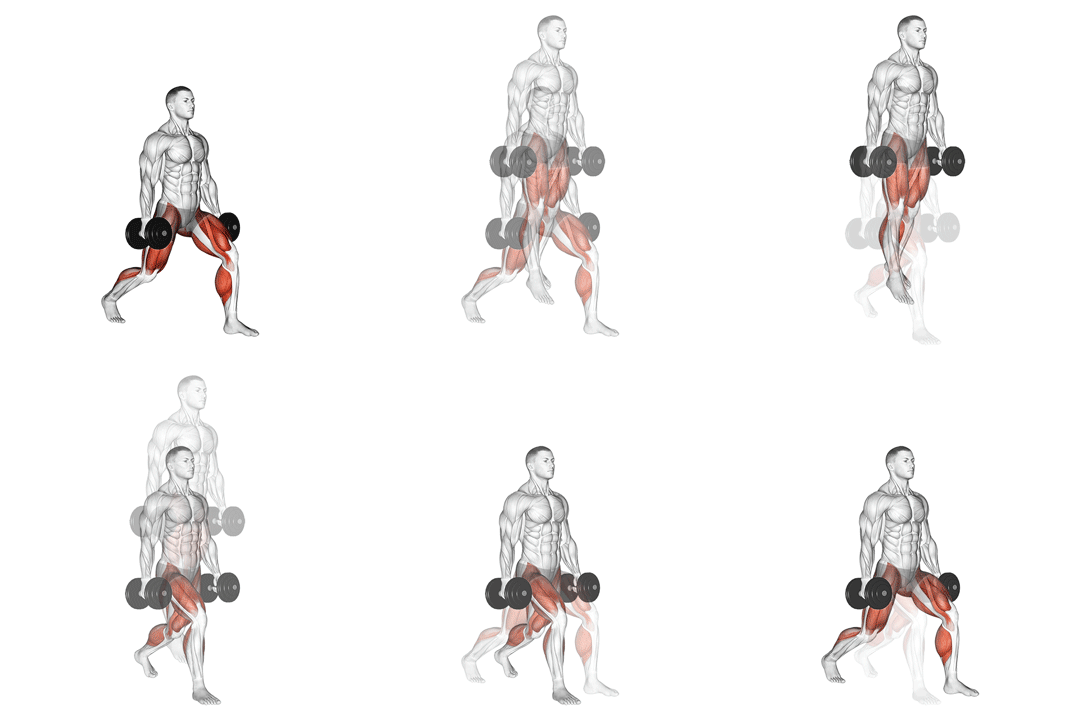
To begin, stand upright and hold a dumbbell in each hand. Step one leg forward and the other back into a lunge position. The front knee should be bent at a 90-degree angle, and the back leg should remain extended. From this position, jump upwards with power generated from your leg muscles, switching your legs in the air during the jump. So that upon landing, the back leg comes forward and the front leg goes back. Continue this movement for the desired number of repetitions, ensuring correct form and control are maintained.
Equipment Needed
To perform the Dumbbell Split Jump, you will need a pair of dumbbells. The weight of the dumbbells should be appropriate for your fitness level and experience. Using lighter dumbbells is recommended for beginners so they can first learn the correct form of the movement. In addition to dumbbells, you need enough space to perform this exercise. This space should be sufficient for you to jump and switch your legs comfortably without hitting obstacles.
No, this exercise is more suitable for intermediate and advanced athletes due to the need for greater balance, coordination, and strength in the lower body muscles. Beginners can start with a regular lunge and then gradually progress to this advanced movement.
To reduce intensity, you can use lighter dumbbells or perform the exercise without weights initially. You can also decrease the number of repetitions and the height of the jump to gradually master the correct form and control of the movement.
While performing the exercise, ensure that your front knee does not go past your toes. Also, land softly and with control to avoid excessive pressure on your knees and joints.
Yes, this exercise helps improve explosive power, balance, and coordination of the lower body muscles. Performing this exercise can enhance your athletic performance in sports that require jumping and changing direction.
How to perform
-
Step 1
Start by standing straight with your feet shoulder-width apart, holding a dumbbell in each hand.
-
Step 2
Take a step forward with your left leg and lower yourself into a lunge position through your hips, maintaining your balance.
-
Step 3
Lower yourself until your front thigh is parallel to the ground, then explosively push off the floor through the balls of your feet to jump upwards.
-
Step 4
Return to the initial lunge position.
-
Step 5
Perform this movement for your desired number of repetitions and sets.