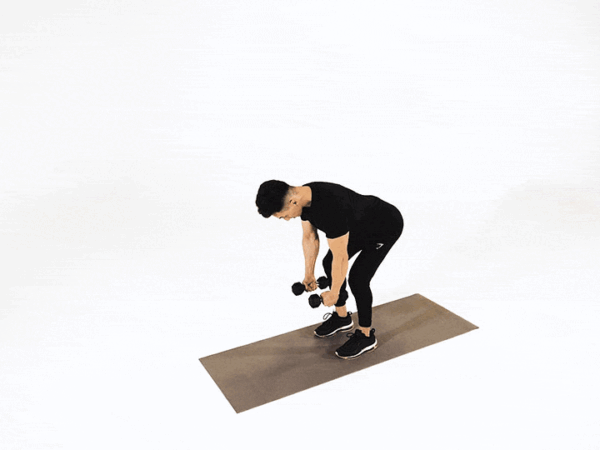
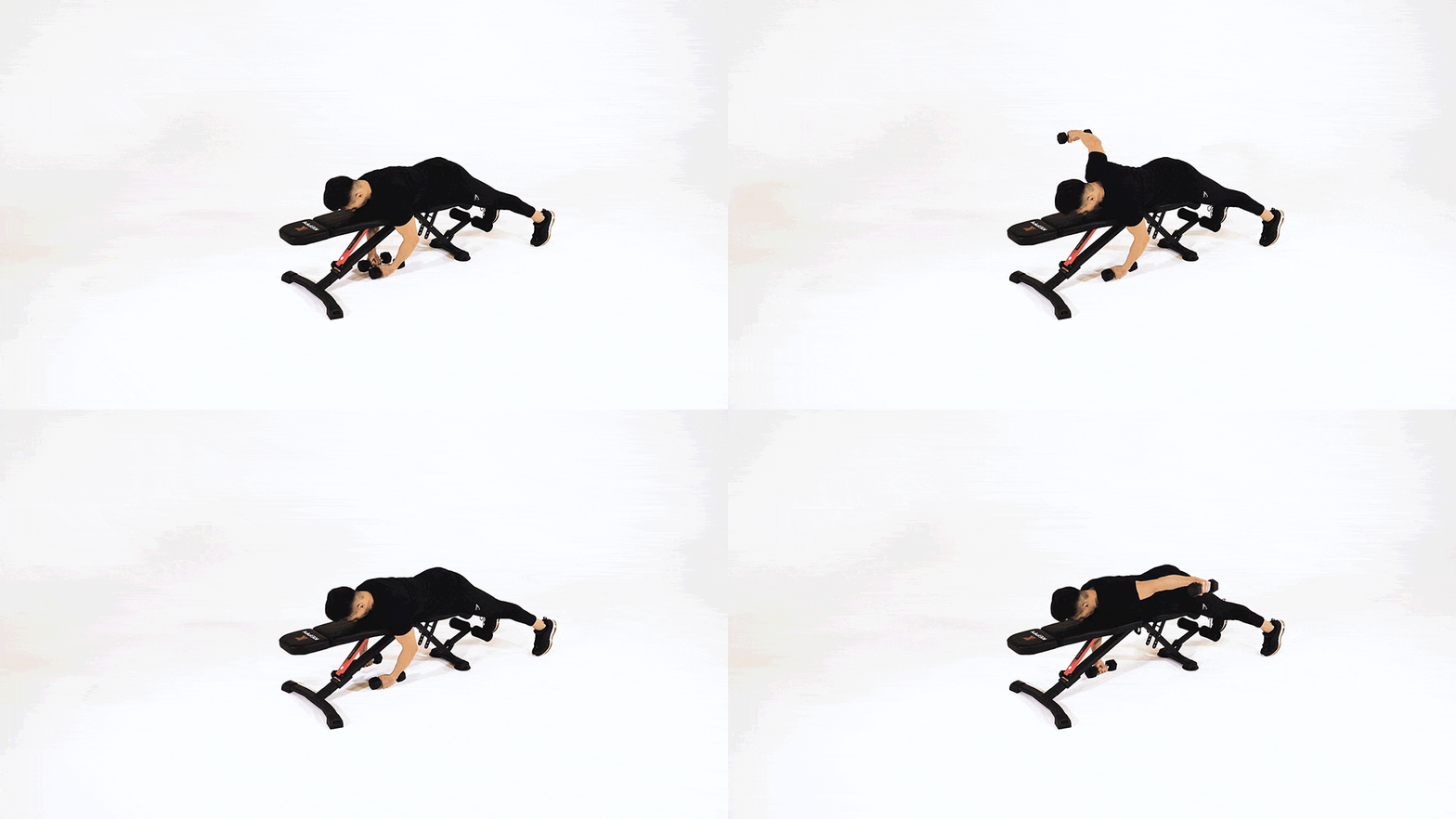
The “Alternating Prone Reverse Fly” is an advanced exercise to strengthen the muscles of the rear shoulder, especially the posterior deltoid. This movement is performed alternately, meaning both arms move from the bottom to the top position individually and in turns. This exercise helps strengthen the shoulder and back muscles and improves posture. You need to have good balance to perform this exercise effectively and focus on the target muscles.
In addition to strengthening the shoulder muscles, the Alternating Prone Reverse Fly helps improve the body’s strength and endurance in dealing with alternating loads. This movement is particularly useful for those looking to increase strength in the posterior parts of the body. This exercise is at an intermediate to advanced level and requires high precision and focus to prevent injury.
Target Muscle
The primary muscle targeted in this exercise is the posterior deltoid. The posterior deltoid is the muscle located at the back of the shoulder and is involved in moving the arm backward. This muscle is responsible for shoulder movement, and strengthening it can help improve shoulder posture and strength.
In addition to the posterior deltoid, other muscles such as the back, neck, and upper back muscles are also indirectly involved. These muscles are used to maintain balance and prevent excessive body movement. Strengthening these muscles can help improve posture, prevent shoulder and back injuries, and increase overall strength.
Secondary Muscles Involved
In this exercise, besides the main shoulder muscles, secondary muscles are also significantly engaged. The neck and back muscles are active to maintain body posture and prevent excessive movements during the exercise. The upper back muscles and the rectus abdominis also become indirectly active to maintain balance throughout the movement.
Furthermore, the forearm and arm muscles are constantly under pressure to hold the dumbbells and perform the movement. This exercise is very effective for strengthening the upper body muscles, especially in the shoulder and back area, and can help improve functional body strength.
How to Perform the Exercise
To perform the Alternating Prone Reverse Fly, first lie down on a flat, comfortable surface with your stomach facing the ground. Hold two dumbbells, one in each hand, and bring your arms straight down towards the floor. In this position, your body should be relaxed and still.
Then, slowly lift one arm upwards in a controlled manner until the arm is almost parallel to the ground. At this time, the other hand should remain in its initial position. After completing the movement with the first arm, repeat the same movement with the other arm. This exercise should be performed alternately without excessive body movement. In each repetition, pay special attention to the quality of the movement and maintaining body balance.
Equipment Needed
You will need two dumbbells to perform this exercise. The weight of the dumbbells should be chosen such that you can perform the movement with complete control, without feeling unnatural pressure in your shoulders or back. Also, it is best to perform this exercise on a flat, soft surface like an exercise mat to prevent injury.
Wearing comfortable sportswear that allows you to move freely is also important. This clothing should be flexible so you can perform effectively without restriction throughout the movement.
This exercise is not recommended for beginners. Beginners should first focus on basic movements to strengthen their shoulder and back muscles, and then they can perform this exercise.
The dumbbells should be chosen with a weight appropriate for the individual’s ability. Choosing too heavy a weight can lead to injury, while too light a weight may not be effective enough. Starting with a moderate weight and gradually increasing it is the best option.
Typically, performing 3 to 4 sets of 8 to 12 repetitions for each arm is recommended to adequately challenge the muscles.
Yes, in addition to the shoulders, the back, neck, and upper body muscles are indirectly involved in this exercise. Strengthening these muscles helps improve posture and prevent shoulder and back injuries.
How to perform
-
Step 1
First, set up a flat bench so that your chest is on the bench, your legs are extended behind you, and you are holding a dumbbell in each hand with your arms hanging down close to the floor.
-
Step 2
Slowly, using your shoulders, lift one arm towards the ceiling, feeling the contraction as you lift, and hold this position for a moment.
-
Step 3
Return to the starting position and perform the same movement with the opposite arm.
-
Step 4
Repeat this movement for the desired number of repetitions and sets.