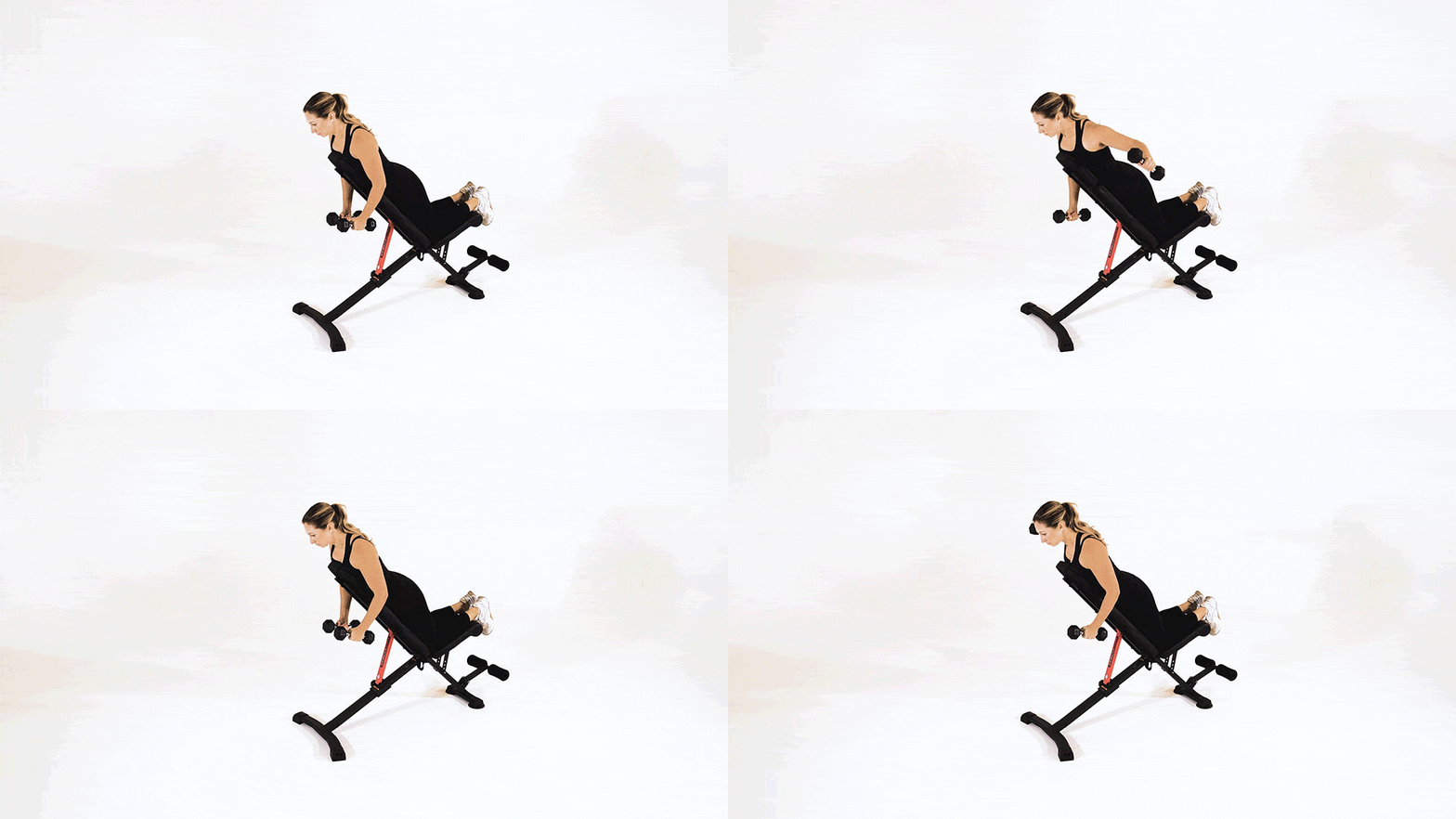
The “Incline Dumbbell Reverse Fly (Alternating)” is an advanced exercise that helps strengthen the rear shoulder muscles and the upper back. This movement is particularly beneficial for individuals looking to improve their rear shoulder muscles and enhance shoulder strength and endurance. In this exercise, dumbbells are used, and the body is positioned at an incline, meaning the head and shoulders are higher than the legs. This angle allows for an improved range of motion and greater emphasis on the target muscles.
This exercise is particularly effective for strengthening the posterior deltoids (rear shoulders) and trapezius (upper back muscles). Additionally, during the execution of this movement, the lower back, forearms, and stabilizing muscles are indirectly engaged. The Incline Dumbbell Reverse Fly (Alternating) can help you increase shoulder strength, body balance, and upper body muscle stability. This exercise is suitable for all levels, from beginner to advanced, but it’s important to start with lighter weights if you are new to it.
Target Muscle
The primary muscle targeted in the “Incline Dumbbell Reverse Fly (Alternating)” is the posterior deltoid (rear shoulder). These muscles are responsible for moving the shoulder backward and downward and are particularly active in movements requiring shoulder extension. Strengthening these muscles not only improves shoulder endurance but also helps maintain body balance and strengthens the rear shoulder. This exercise is highly beneficial for those who want to specifically strengthen their shoulder and upper back muscles.
In addition to the posterior deltoids, other muscles such as the trapezius (upper back and neck) and the rotator cuff muscles (shoulder stabilizers) are indirectly engaged throughout this movement. These muscles are crucial for maintaining shoulder stability and providing support to the shoulder joint. Furthermore, back muscles like the latissimus dorsi (large back muscles) are also laterally involved in this exercise, aiding in stability and movement execution.
Secondary Muscles Engaged
In the “Incline Dumbbell Reverse Fly (Alternating)” exercise, besides the primary muscles, other secondary muscles are also indirectly engaged. The forearm and wrist muscles are activated to effectively hold the dumbbells and perform the movement. These muscles help keep the dumbbells on the correct path and transfer the load to the shoulders. Moreover, core muscles like the abdominal and lower back muscles are directly activated to maintain body posture and prevent abnormal movement during the exercise.
Throughout the execution of this movement, the lower back muscles are constantly engaged to maintain the prone position and prevent the body from falling. Additionally, the thigh muscles and glutes must also be engaged to maintain body stability and prevent unnatural stretching during the movement. These secondary muscles indirectly contribute to strengthening the primary shoulder and back muscles, thereby increasing the strength and endurance of these areas.
How to Perform the Exercise
To perform the “Incline Dumbbell Reverse Fly (Alternating)” exercise, first position yourself on an incline bench, adjusting the incline angle so that your body is in a prone position. Then, grasp dumbbells in each hand, keeping your elbows slightly bent. Now, alternately move each dumbbell outward and upward until your arms are roughly parallel to the floor. At this stage, you should feel the contraction in your rear shoulder muscles and avoid sudden, injurious movements.
During the exercise, control the movement of the dumbbells and avoid overstretching or unnatural bending. Also, focus on the target muscles and refrain from using weights heavier than you can handle. After lifting each dumbbell, slowly return it to the starting position, then lift the other dumbbell. In this exercise, ensure your body remains stable, and only your arms and shoulders move.
Equipment Required
For this exercise, you will need an incline bench (a positive incline bench). The bench should be adjusted so that your head is lower than your body, and your body is stably positioned in a prone manner. You will also need two dumbbells, the weight of which should be adjusted according to your capability. It is recommended to start with light to moderate weights to perform the movement with correct form. Using workout gloves can also help ensure hand safety and prevent injuries.
If you require heavier weights, it is advisable to use a weightlifting belt for lower back support to prevent injury to your back and spine. Generally, the main equipment for this exercise includes dumbbells and an incline bench, with no other specialized equipment needed.
Yes, this exercise is particularly beneficial for strengthening the posterior deltoid muscles and the shoulders.
Yes, the lower back muscles are engaged to maintain the prone position and prevent the body from falling during this exercise.
To prevent injury, you must maintain correct form and avoid using weights heavier than you can handle.
To start, 3 sets of 12-15 repetitions are suitable, and you can gradually increase the number of sets and repetitions.
Yes, this exercise is suitable for beginners, but it’s better to start with lighter weights to maintain correct form.
How to perform
-
Step 1
Set up an incline bench so that your chest rests on the bench and your feet are extended behind you, with your toes on the floor or stable on the bench. Hold a dumbbell in each hand, letting your arms hang down.
-
Step 2
Slowly, using your shoulders, raise one of your arms towards the ceiling, feeling the contraction as you lift, and hold for a few seconds.
-
Step 3
Slowly return to the starting position and repeat the movement with the opposite arm.
-
Step 4
Perform this exercise for the desired number of repetitions and sets.