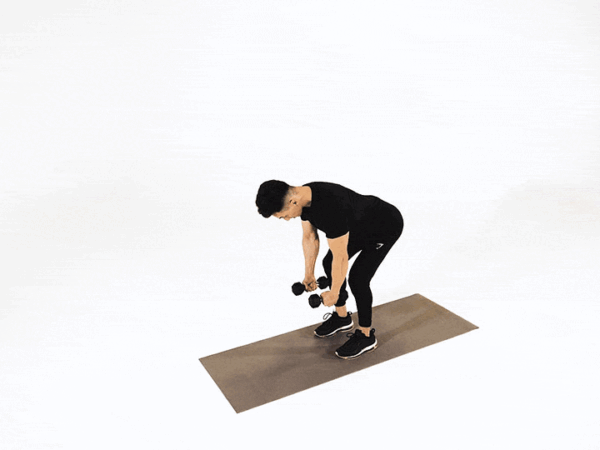
The “Dumbbell Reverse Fly Lying” exercise is an excellent movement for strengthening the rear shoulder muscles (posterior deltoids) and the upper back. This exercise is a variation of the reverse fly performed with dumbbells, allowing you to effectively strengthen your muscles. It is highly suitable for those looking to strengthen their shoulder, back, and even upper body muscles. Furthermore, the lying dumbbell reverse fly, by using dumbbells, allows for more precise and controlled execution, offering a better range of motion.
In this exercise, you should lie prone (face down) on a bench or the floor and hold dumbbells in each hand. By lifting the dumbbells outwards, pressure is applied to the rear shoulder muscles and the upper back muscles. This movement is particularly beneficial for improving shoulder stability and strengthening the muscles involved on both sides of the body. Due to the prone position, less stress is placed on the shoulders and joints, and the movement effectively contributes to strengthening the rear shoulder muscles.
Target Muscle
The primary target of this exercise is the posterior deltoid muscles. The posterior deltoids are responsible for moving the shoulder outward and backward, and they are often less targeted in other shoulder exercises. Performing the lying dumbbell reverse fly specifically helps strengthen these muscles, increasing the strength and size of the rear shoulder muscles. This movement effectively enhances shoulder stability and creates balance in the shoulder muscles.
In addition to the posterior deltoids, other muscles are also engaged during this exercise. The trapezius muscles (upper back and neck area) are activated to stabilize the shoulder and support the body during the movement. The rotator cuff muscles (shoulder rotating muscles) and the back muscles (latissimus dorsi) are also indirectly involved. These muscles help control and execute the movement, collectively strengthening the shoulder and upper back area.
Secondary Muscles Involved
In this exercise, besides the primary muscles of the posterior deltoids and trapezius, various secondary muscles are indirectly involved. The core stabilizing muscles, particularly the abductors, are active to maintain body posture. Additionally, the forearm and wrist muscles are engaged for holding the dumbbells and performing the movement. The forearm muscles must be active to control the dumbbells throughout the movement, preventing them from dropping and effectively transferring the load to the shoulders.
During this exercise, the back and upper back muscles are also engaged to maintain balance and prevent injury. The spinal stabilizing muscles in the lower back are crucial for maintaining correct body posture and preventing bending or falling during the workout. These secondary muscles not only aid in performing the movement but also contribute to overall body muscle strengthening.
How to Perform
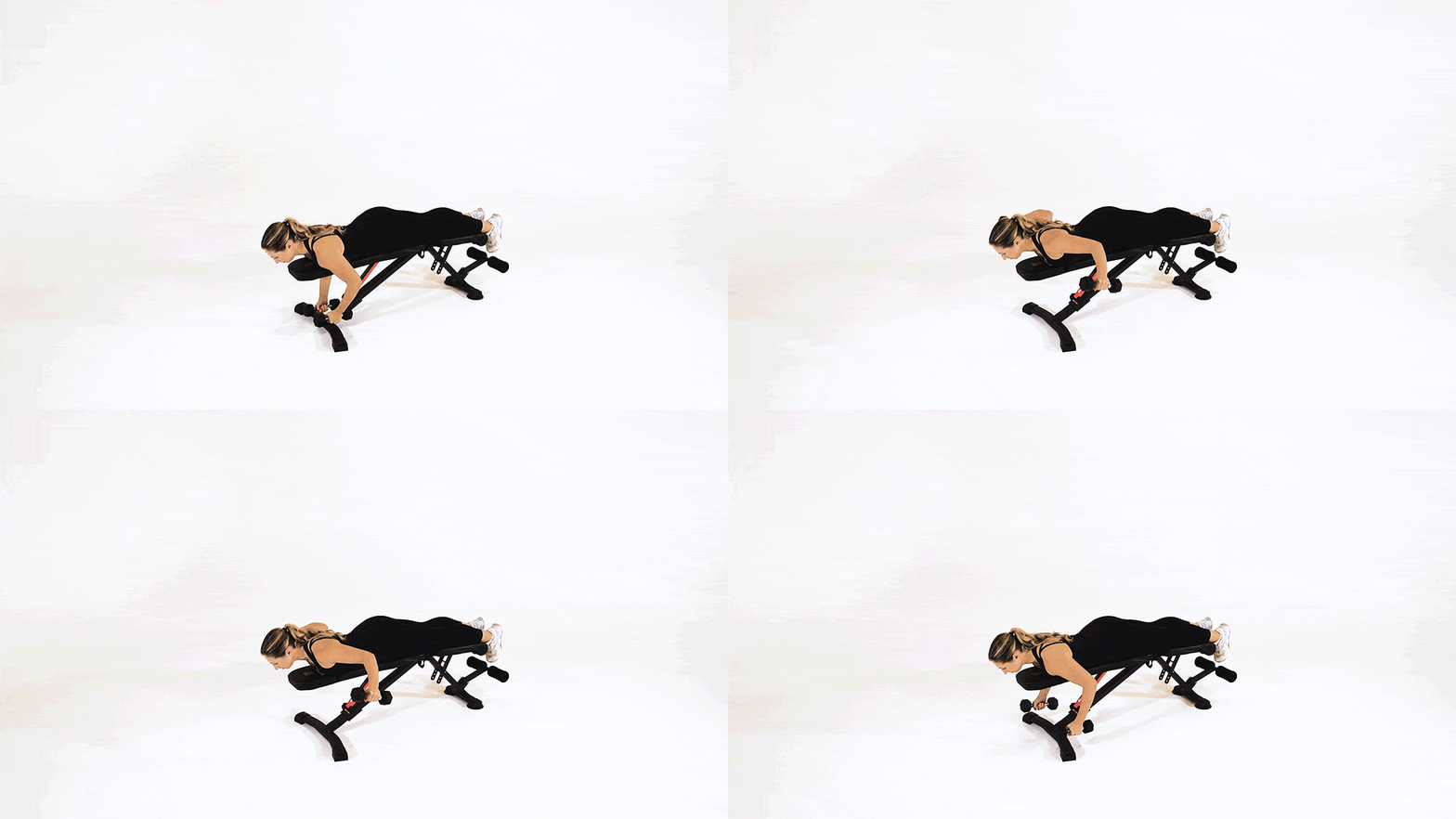
To perform the lying dumbbell reverse fly, first position yourself prone (face down) on a bench or a flat surface. Hold dumbbells in each hand and let your arms hang down towards the floor. At this stage, your body should be stable, and only your shoulders and arms should move. Then, lift the dumbbells outwards and upwards until your arms are parallel to the floor, keeping your elbows slightly bent.
Throughout the movement, ensure you move your shoulders outwards in a controlled manner, avoiding sudden or unnatural movements. Also, when returning the dumbbells to the starting position, do so slowly and with control. Be mindful that your lower back should remain stable and unchanged throughout the exercise. Maintain regular breathing: exhale as you lift the dumbbells and inhale as you lower them.
Equipment Needed
You will need dumbbells for this exercise. The weight of the dumbbells should be chosen according to your capability. It is recommended to start with lighter weights to perform the movement with proper form and precision. If more resistance is needed, you can use heavier dumbbells. A bench or a flat surface is also essential for lying in the prone position, allowing you to maintain correct body posture and focus more on the exercise.
If you are a beginner looking for a safe and effective exercise, wearing workout gloves can help prevent calluses and injuries to your hands. Individuals using heavier weights can also benefit from a weightlifting belt for additional lower back support.
Yes, this exercise is particularly beneficial for strengthening the posterior deltoid muscles and shoulders.
Yes, the back muscles are activated to maintain balance and body stability during this exercise, contributing to lower back strengthening.
To prevent injury, maintain correct form and do not use weights heavier than you can handle.
For starters, 3 sets of 12-15 repetitions are suitable, and you can gradually increase the number of sets and repetitions.
Yes, this exercise is suitable for beginners, but it’s best to start with lighter weights to maintain proper form.
How to perform
-
Step 1
Begin by setting up a flat bench so that your chest rests on it and your legs extend backward. Hold dumbbells in each hand with your arms hanging down towards the floor.
-
Step 2
Slowly, using your shoulders, lift your arms towards the ceiling, feeling the contraction and holding for a second at the top.
-
Step 3
Return to the starting position.
-
Step 4
Repeat for the desired number of repetitions and sets.