Daily liquid multivitamins can be convenient for someone who dislikes tablets, but the liquid format does not establish that a product is necessary or superior. The more useful decision is whether its actual nutrients address a gap in your diet without creating unnecessary overlap.
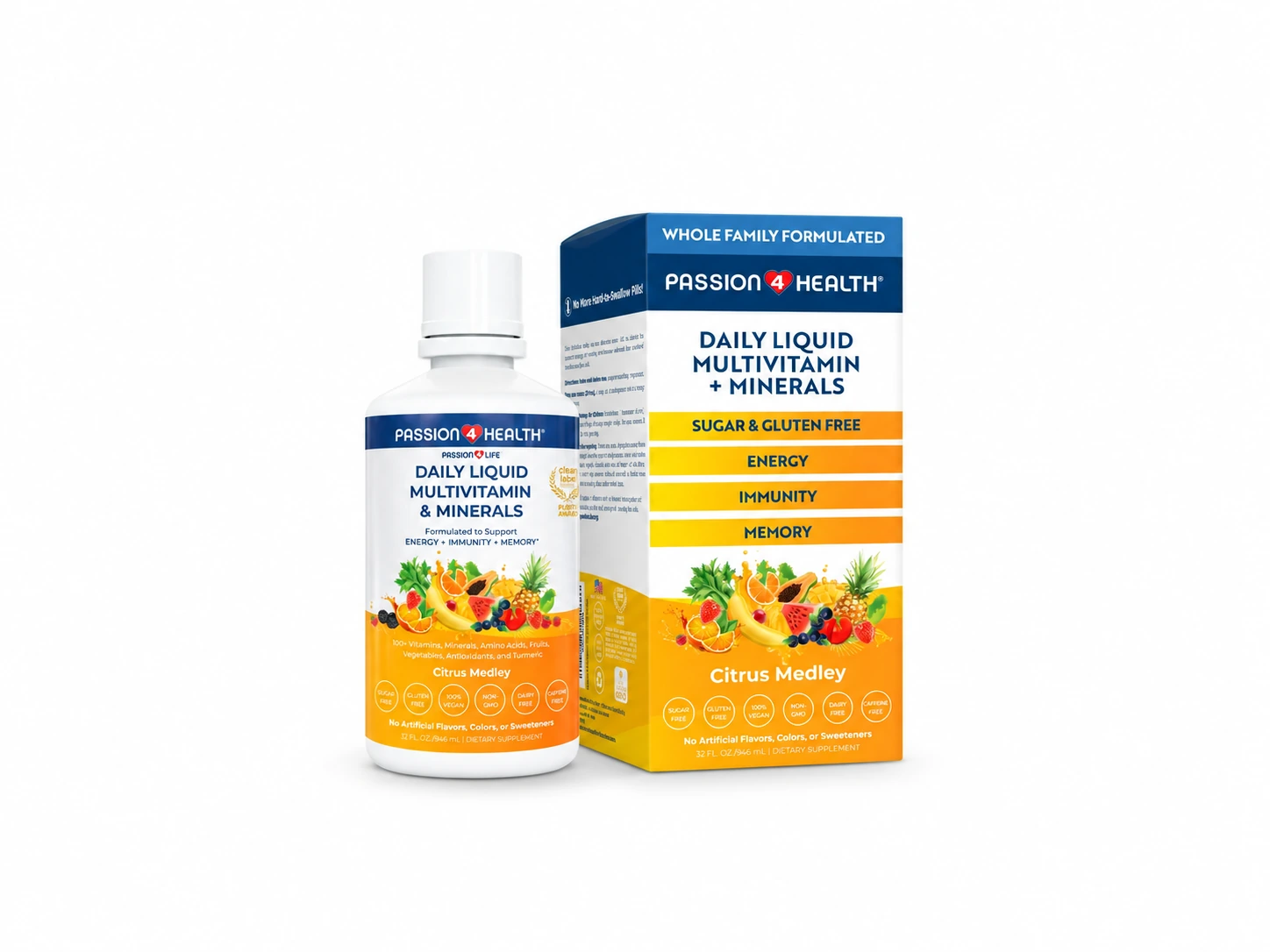
The Passion 4 Health Daily Liquid Multivitamins & Minerals listing on BenFit is a broad formula rather than a targeted single-nutrient supplement. This guide explains how to evaluate it alongside meals, fortified foods and other supplements. It does not diagnose a deficiency or claim that this product improves performance in a person whose nutritional needs are already met.
At a glance
| Question | Practical answer |
|---|---|
| Product | Passion 4 Health Daily Liquid Multivitamins & Minerals |
| Format | Measured liquid serving |
| Main decision | Does it address a real nutrient gap? |
| Important check | Review overlap with other supplements and fortified products |
Start with the problem, not the bottle
Write down why you are considering a multivitamin. Difficulty swallowing tablets is a format problem. A limited diet is a food-planning problem. A confirmed deficiency is a clinical problem. Persistent fatigue is a symptom that deserves investigation rather than an automatic supplement purchase.
These situations require different solutions. A liquid may solve the first issue, help with some gaps in the second, and still be inappropriate for the third if the dose or nutrient is wrong. It should not delay assessment of the fourth.
The NIH overview of multivitamin/mineral supplements explains that formulations vary and supplements can help fill some nutrient gaps, but they do not replace a varied diet. Higher percentages on a label are not automatically better. Combining products can increase the risk of excessive intake.
Read the current Supplement Facts panel
Use the manufacturer’s Supplement Facts page together with the label on the bottle you receive. Confirm the serving volume, suggested user group, nutrients, other ingredients and storage requirements. Do not calculate a serving using an ordinary kitchen spoon unless it has the required calibrated volume.
A long list of fruits, botanicals or amino acids does not mean the bottle replaces servings of those foods or provides a meaningful amount of dietary protein. Assess the stated amounts, not just the number of ingredients. Marketing language such as comprehensive is not a personalized assessment of your needs.
A useful label-reading order is: serving size first, individual amounts second, percentage Daily Values third, then other ingredients and cautions. This prevents the front-of-pack design from becoming the main source of information.
Make a supplement-overlap worksheet
Put every product you regularly use in one place, including fortified drinks. For each, write down the actual daily serving and nutrients that appear in more than one product. A photo of each label can make a pharmacist’s review easier.
For example, someone might combine a multivitamin, a separate vitamin D capsule and a functional coffee containing vitamin D. Even if each product looks reasonable by itself, the combined intake deserves attention. This is relevant when comparing Alphacino coffee with a daily multivitamin.
Do not try to solve overlap by guessing which serving to halve. Ask a qualified clinician or dietitian which products have a clear purpose and which can be removed. A shorter routine is often easier to follow and explain.
A seven-day food audit for active adults
You do not need to track every gram forever. Use one ordinary week to look for patterns. Record meals as they actually happen, including rushed workdays and weekends. The aim is to identify an obstacle you can fix.
- Days one and two: note skipped meals and long gaps when you become too hungry to make a planned choice.
- Days three and four: look at the variety of foods you use. Are the same two convenience foods carrying almost the entire week?
- Day five: identify one affordable meal you can prepare reliably.
- Day six: check whether travel, shopping access or cooking time is the real constraint.
- Day seven: choose one change for the next week and decide whether professional nutrition guidance would help.
This audit is an organizational tool, not a way to diagnose a deficiency. A food diary cannot replace appropriate testing or medical history when a clinician thinks those are needed.
What a multivitamin cannot do for a training plan
A bottle cannot choose the right exercises, provide a progressive workload or make room in your calendar. It also cannot substitute for meals that supply energy and protein. Someone trying to build strength while routinely missing lunch needs a food plan, not just a larger supplement list.
Consider two practical goals for the next month: complete the planned workouts and establish one reliable meal around your busiest part of the day. These goals give you observable behaviors to improve. Feeling that you have taken something healthy is much harder to evaluate.
For a coordinated approach, review BenFit coaching programs. The existing strength, protein and sleep guide also helps place nutrition inside a broader fitness routine.
Liquid versus tablets: compare usability fairly
A liquid product may be easier to take for some people, but it also requires measuring, storage space and attention to handling. Tablets may be easier to carry. Neither format should be declared better absorbed simply because of its physical form.
Compare cost per recommended serving, taste tolerance, storage instructions and the nutrients you actually need. A bottle that stays unused in the refrigerator is not good value. A tablet that you cannot comfortably swallow is not a practical solution either.
If swallowing difficulty is new or persistent, seek medical advice rather than assuming that switching formats fully addresses it. The symptom itself may need evaluation.
Safety checks before starting
Ask a pharmacist or clinician to review the product if you take medication, have a medical condition, are pregnant or breastfeeding, or are selecting a supplement for a child. A general family-oriented description does not make one serving appropriate for every age or life stage.
For people using warfarin, vitamin K intake is particularly relevant to discuss with the prescribing team. Do not independently stop medication or change a supplement routine around it. Report all products you take, even if you think of them as food rather than supplements.
Follow the label’s storage and measuring directions, keep the cap clean, and keep the product away from children. Do not drink directly from a shared bottle. If the product changes unexpectedly in smell or appearance, ask the manufacturer before continued use.
Frequently asked questions
Will a liquid multivitamin give me more energy?
Do not assume it will. Correcting a specific nutrient problem is different from expecting a broad formula to act like a stimulant. Ongoing tiredness should be assessed in context.
Is it better than eating vegetables?
No. A supplement and a meal are not interchangeable. Continue building a varied eating pattern rather than treating an ingredient list as servings of food.
Can I take it with protein powder?
Check both labels and any other supplements. The important issue is the combined routine, not whether two products can physically be taken at the same meal.
Should everyone who works out take a multivitamin?
No. Training does not automatically establish a need for this product. Diet, health circumstances and a clear reason for supplementation should guide the decision.
Make nutrition easier to follow
Use the BenFit product page to identify the item, then verify the current label before purchase. If your biggest challenge is coordinating food and exercise, contact BenFit about an appropriate coaching plan rather than expecting a multivitamin to organize the routine for you.
Ready for a structured program? Start the BenFit Plus online coaching program, or compare all online and one-on-one options. Learn about the coach and BenFit approach before choosing.
Related BenFit guides
- Gold Standard Isolate Chocolate Bliss: Whey Isolate, Digestion and Value
- Alphacino Mushroom Coffee: Ingredients, Caffeine and Workout Fit
Sources and product information
Sources and live product listings checked September 11, 2026. Manufacturer pages identify products and label details; research sources support ingredient-level discussion. Neither implies independent testing of the listed retail product.
Scope: General educational information for adults, not individualized medical, nutrition or rehabilitation advice. Training examples require adjustment to your ability, equipment and health circumstances.