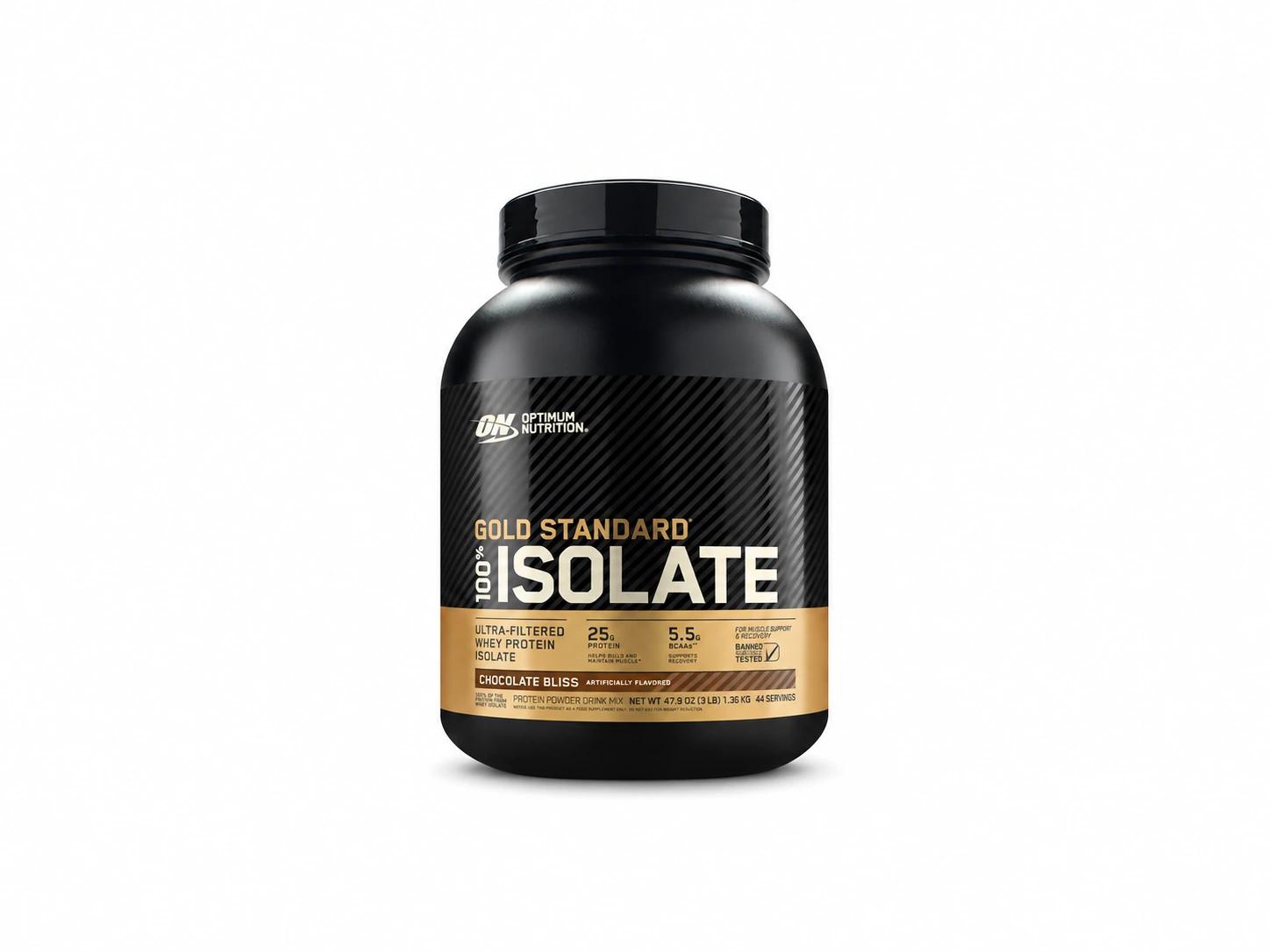
Gold Standard Isolate Chocolate Bliss may appeal to someone who wants a whey-isolate product and is comparing it with a regular whey blend. The decision should be based on the actual nutrition panel, ingredient tolerance and cost. Words such as isolate and premium do not automatically mean better results for every person.
The Gold Standard Isolate Chocolate Bliss listing on BenFit identifies a 3 lb product and lists 25 g protein per serving. Verify the container supplied by the seller. This guide uses the listing for product identification and separates those details from general nutrition evidence; it is not a first-hand taste or digestion review.
At a glance
| Question | Practical answer |
|---|---|
| Listed product | Gold Standard Isolate Chocolate Bliss, 3 lb |
| Listed protein | 25 g per serving; verify your label |
| Main comparison | Actual ingredients, tolerance and cost versus a whey blend |
| Allergen point | Whey isolate is still milk protein |
Whey isolate versus a whey blend
Whey isolate is processed to concentrate the protein fraction. Compared with some whey blends, an isolate product may provide less lactose, carbohydrate or fat, but you need to compare the actual labels. Different flavors and regional formulas can change the numbers.
The most useful comparison is per equivalent amount of protein. Compare energy, ingredients, serving weight, protein and price together. A one-gram difference in the headline protein number does not settle the entire purchasing decision.
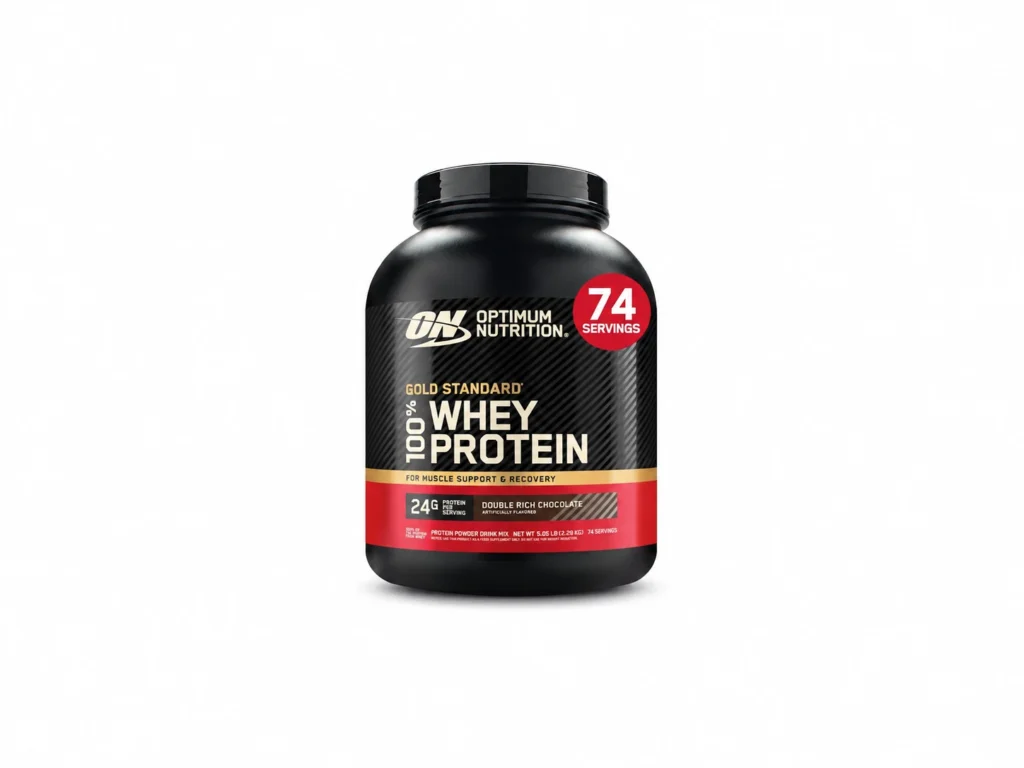
The Gold Standard Whey 2 lb listing gives you another option within the BenFit shop. Compare those exact products rather than assuming all products called whey have the same formula.
Milk allergy and lactose intolerance are not the same
Whey is a milk protein. A person with a milk-protein allergy should not treat whey isolate as a safe alternative merely because it may contain less lactose. Lactose intolerance concerns milk sugar; a milk allergy involves a different problem.
The NIDDK explanation of lactose intolerance helps distinguish the condition from other causes of digestive symptoms. An isolate label is not a personal tolerance test and should not be interpreted as a guarantee of zero lactose unless the specific product substantiates that claim.
If you experience symptoms after a shake, consider the complete recipe. Milk used as the liquid, a large serving, sweeteners and other additions can all complicate the picture. Do not assume that changing the tub while keeping every other ingredient identical will solve the problem.
How much protein should the shake contribute?
Work backward from a suitable daily plan. If your meals already cover it, the powder is optional. If a particular meal is hard to organize, the shake can be a convenient way to cover part of the gap.
The ISSN protein and exercise position stand describes approximately 1.4–2.0 g/kg/day for many healthy exercising adults. That is a general range, not a prescription for every reader. Medical conditions, age, goals and total food intake can require individual adjustment.
For illustration, 70 kg multiplied by 1.6 g/kg gives 112 g per day. If meals supply 90 g, the remaining gap is about 22 g. This arithmetic is more useful than automatically taking two scoops after every session. Use an individualized target when available.
A simple way to compare cost
Calculate cost per serving first, then cost per a common amount of protein. If a product supplies 25 g protein per serving, its cost per 25 g protein is simply its price divided by the confirmed serving count.
For a competing powder with a different amount, calculate total protein in the container and divide the price by that total, then multiply by 25. This avoids rewarding a product simply because it uses a smaller serving.
Do not insert today’s price into a long-term decision without checking it again. Sales, container sizes and shipping costs change. Use current checkout prices and the physical label rather than a cached search snippet.
Use the powder in a realistic meal routine
Choose a situation where convenience matters. That might be a quick snack after an early session or a planned option at work. It does not have to be immediately after exercise, and it does not need to replace a complete meal.
A basic drink can use the label serving with an appropriate liquid. If you want a more substantial meal, add foods deliberately rather than turning the shake into an unmeasured mixture. The total recipe should fit your appetite, schedule and goals.
Use the BlenderBottle Sport Sleek for a simple portable mixture if it suits you. For thick smoothies, a kitchen blender may be more practical. The mixing method changes convenience and texture, not the protein amount listed on the package.
A cautious digestion check
If you do not have a milk allergy and the product is otherwise appropriate, avoid introducing several new supplements and recipe ingredients at once. Keep a note of the serving, liquid and symptoms. This can make a discussion with a dietitian or clinician more useful if discomfort develops.
Do not keep increasing the serving to chase a protein target when the product makes you feel unwell. Food alternatives or a different protein source may fit better. Persistent, severe or unexplained symptoms should be evaluated rather than managed through repeated product switching.
For related background, see BenFit’s article on foods that can cause bloating after 40. Treat it as general reading, not a diagnosis of your symptoms.
What to expect from training
A powder supports a food plan; it does not provide the stimulus of a workout. Choose a repeatable training structure and log the main movements. An increase in controlled repetitions at the same load tells you something useful about training progress.
If you are moving from inconsistent exercise to a structured program, keep the first few weeks manageable. It is easier to assess tolerance and adherence when you are not simultaneously changing every variable. Do not credit an isolate product for all improvements that follow a major change in training and meals.
The BenFit exercise library provides movement references. Coaching options can help turn those movements into an appropriate plan rather than a random selection.
Who may not need the extra cost?
If a regular whey product is comfortable, affordable and fits your nutrition plan, switching to isolate is not automatically necessary. If you prefer food and can meet your needs that way, there may be no reason to buy either.
Conversely, if the specific isolate’s label better fits your requirements, the additional cost may be worthwhile for convenience. Make that a personal value decision rather than treating isolate as a higher level of fitness commitment.
Frequently asked questions
Is Gold Standard Isolate lactose-free?
Do not assume so from the word isolate. Check the current product’s explicit labeling and discuss persistent intolerance symptoms with an appropriate professional.
Is it safe with a milk allergy?
Whey is milk protein. Do not use a whey isolate as a workaround for a milk-protein allergy.
Does isolate build more muscle than regular whey?
The label category alone does not establish that result. Overall protein intake, training and adherence matter more to the decision than a premium label.
Can I use it on rest days?
Yes, if an appropriate food plan still has a protein gap. You do not need a workout on the same day to justify meeting nutritional needs.
Choose the option that fits your actual needs
Review Gold Standard Isolate Chocolate Bliss and compare it with your existing meals before purchasing. For a coordinated training and nutrition routine, start with BenFit’s programs.
Ready for a structured program? Start the BenFit Plus online coaching program, or compare all online and one-on-one options. Learn about the coach and BenFit approach before choosing.
Related BenFit guides
- Gold Standard Whey 2 lb: A Beginner’s Guide to Protein Powder
- Optimum Nutrition Casein: Bedtime Protein, Portions and Evening Recovery
Sources and product information
Sources and live product listings checked September 11, 2026. Manufacturer pages identify products and label details; research sources support ingredient-level discussion. Neither implies independent testing of the listed retail product.
Scope: General educational information for adults, not individualized medical, nutrition or rehabilitation advice. Training examples require adjustment to your ability, equipment and health circumstances.