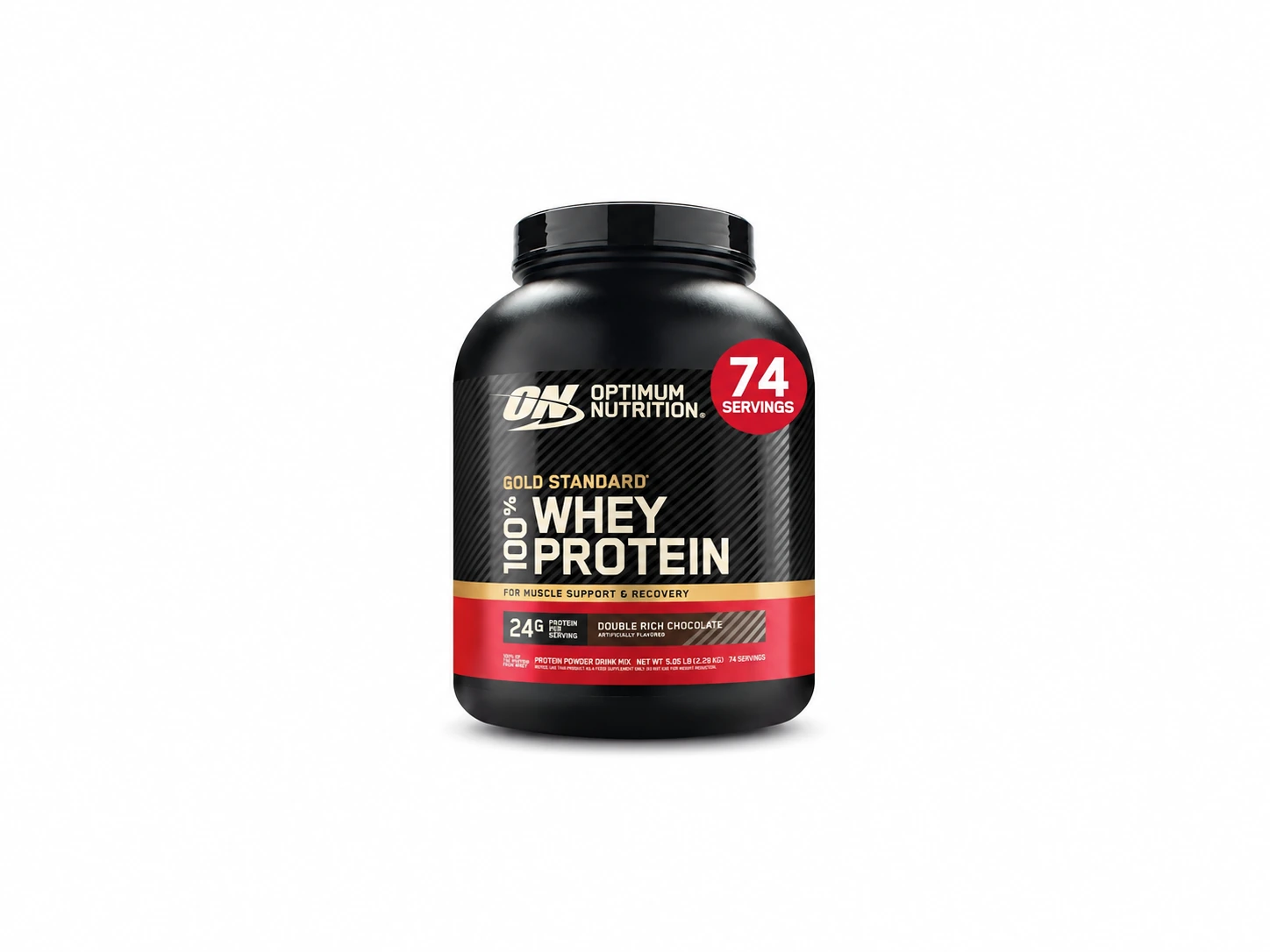
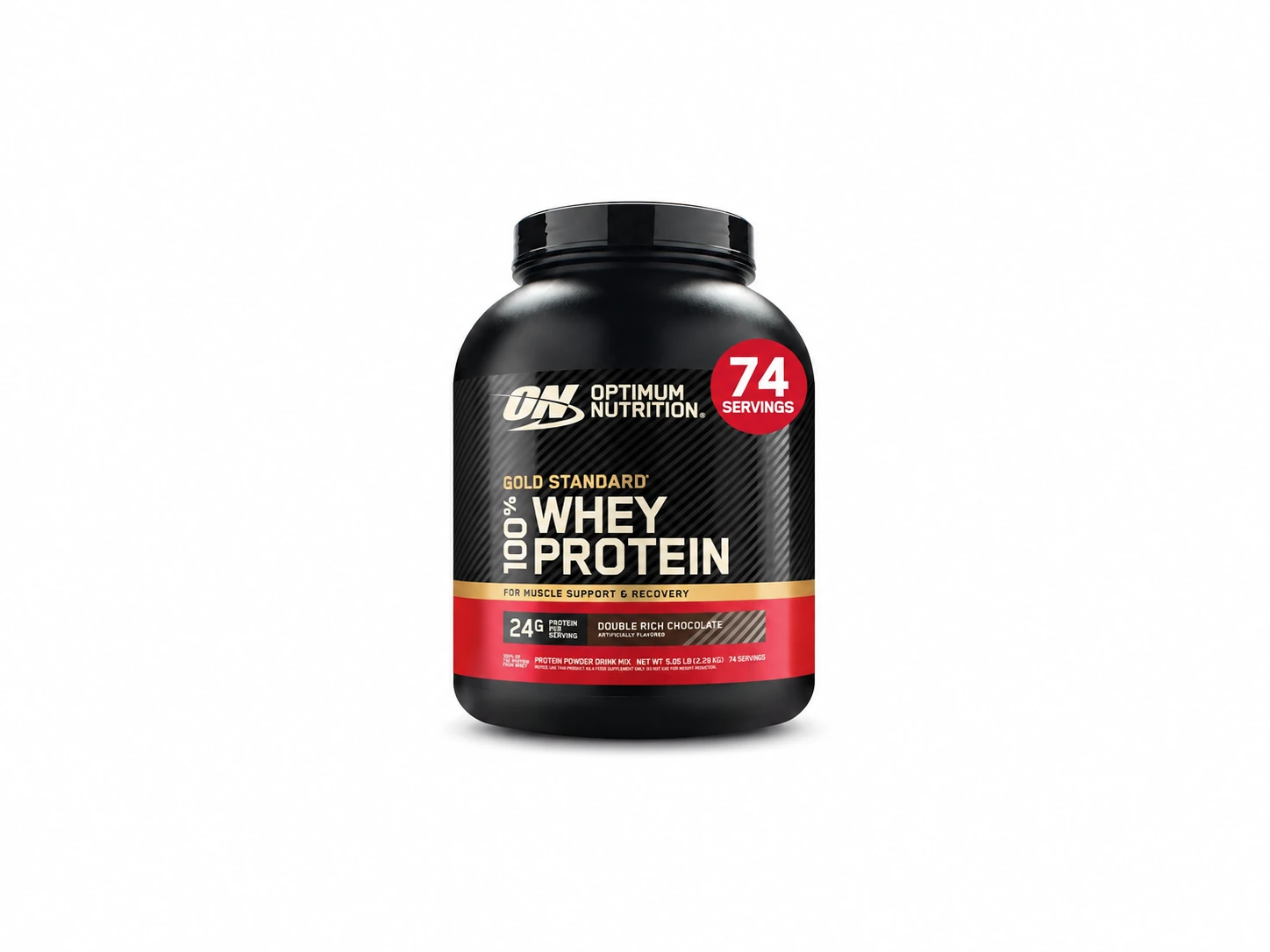
Gold Standard Whey 5 lb makes the most sense to compare after you know that the product fits your diet and preferences. The larger tub is a purchasing decision, not a more powerful formula because the package is bigger. Its value depends on how much you will use, the actual serving count and the current delivered price.
The Double Rich Chocolate 5 lb product on BenFit is intended here as a planning example for regular users. If you have never tried the formulation, start with the 2 lb beginner guide before committing to a larger quantity. This article focuses on value, storage and integrating protein into an ordinary week.
At a glance
| Question | Practical answer |
|---|---|
| Listed product | Gold Standard Whey Double Rich Chocolate, 5 lb |
| Buying angle | Cost, storage and realistic weekly use |
| Comparison unit | Delivered cost per equivalent protein amount |
| Important distinction | A larger tub does not call for larger servings |
Compare the exact product, not just the size label
Check flavor, ingredient list, serving weight and protein per serving on both products. Two tubs with the same brand name may have different regional labels or updated packaging. A product title can round the net weight, so precise calculations should use the actual container.
The manufacturer’s Gold Standard Whey page describes the range, while the purchased label identifies your exact version. BenFit’s listing states 24 g protein per serving; confirm that against the item supplied.
A larger container should not change how much protein you decide to eat. Your plan sets the serving need. The tub size only changes how long the supply may last and how much cash you commit upfront.
Calculate cost per useful serving
Let the delivered price be P and the confirmed serving count be S. Cost per serving is P divided by S. For a fair comparison, use the same protein amount and include shipping or other charges that materially change the total.
Here is a hypothetical example, not a current price quote: a tub costing $90 with 75 servings costs $1.20 per serving. Another costing $45 with 30 servings costs $1.50. The larger tub saves $0.30 per comparable serving, but only if you use the contents appropriately.
If serving protein differs, normalize the calculation. Multiply serving count by grams of protein per serving to get total protein in the tub. Divide price by that total and multiply by 25 to compare cost per 25 g protein. Keep the calculation on a note so you can update it when prices change.
Estimate how long a tub will actually last
Divide confirmed servings by your real weekly use. If a container has 75 servings and you use five per week, it lasts about 15 weeks. If you use two per week, it lasts about 37.5 weeks. Those examples show why a bulk purchase can be impractical for occasional use.
Do not increase consumption to finish the tub sooner. Instead, buy a size that matches the role it plays in your diet. Compare expiry dates and storage directions before deciding that a long supply is convenient.
Account for travel and routine changes. If you will be away for several weeks or prefer different flavors regularly, a large container may create waste despite a lower unit price.
A weekly meal-planning method
Begin with the meals you already eat rather than a target number of shakes. List the workdays when preparing food is difficult and identify one realistic solution for each. A shake is one possible solution, not the default answer to every busy period.
Use three categories: meals prepared at home, portable food, and backup options. Put the whey powder in the backup category unless it genuinely serves a regular role. This keeps ordinary food at the center of the plan while allowing convenience where it helps.
For example, a person might use a shake on two early-training mornings and one long workday. Another may prefer yogurt, eggs, tofu, beans or another suitable food. The important planning task is consistency and adequacy across the week, not loyalty to one product.
Build a shopping list around the whole week
A powder purchase should not crowd out the foods needed for other meals. Before ordering, check the total grocery and training budget. Allocate money to the routines you use most consistently.
Write a short shopping list with reliable meal ingredients, portable options and the supplement only if needed. Include variety rather than relying on the same drink several times a day because a large tub is available.
The BenFit coaching programs can help connect food organization with your training schedule. If you need a specific medical diet, work with the appropriate clinician or registered dietitian instead of applying a generic supplement routine.
Keep storage simple and clean
Follow the container’s storage instructions. A cool, dry location away from heat and moisture is generally more practical than a steamy kitchen corner or a car. Close the lid after use and keep the scoop dry.
If you portion powder for travel, use a clean food-safe container and label it. Keep the original packaging information available, including the batch and expiry. Avoid transferring the entire tub into an unmarked container that makes it difficult to identify later.
Check the product if its appearance or smell changes unexpectedly, or if it has been stored poorly. Do not decide that every clump is dangerous or that every change is harmless; ask the manufacturer when uncertain. Never use a questionable product simply because you want to avoid wasting a large purchase.
Share the tub carefully
If two adults share one tub, their serving needs may still differ. Each person should follow their own appropriate food plan. Do not create one household rule such as two scoops after every workout.
Avoid sharing measuring tools between products with different ingredients, and prevent cross-contact where allergies matter. Whey remains a milk-derived product; it is not appropriate for milk-protein allergy. The convenience of a shared tub does not override individual dietary restrictions.
Anyone with kidney disease, a prescribed protein limit or another relevant medical condition should follow individualized guidance. The article’s budgeting arithmetic is not a nutrition prescription.
Connect the purchase to training consistency
Set a training goal that does not depend on how much powder remains. It might be completing two planned sessions each week or improving control in a familiar movement. Record the exercises and progress separately from your supplement purchases.
A new tub is not a new training phase by itself. If your program has stopped progressing, review load selection, exercise execution and the weekly schedule. Do not assume a different container size or flavor is the missing variable.
BenFit’s strength exercises after 40 article offers related reading, and the exercise library helps with movement references. Use these within a plan suited to your ability.
Frequently asked questions
Is the 5 lb tub stronger than the 2 lb tub?
No. Package size does not establish a stronger effect. Compare the actual formulations and nutrition panels.
Is buying the larger tub always cheaper?
Not necessarily. Calculate the current delivered cost per comparable serving and consider whether you will use it before its expiry and storage limits.
How many scoops should I take daily?
That depends on the gap in an appropriate food plan. The fact that you own a large tub is not a reason to increase intake.
Should I buy it before trying the flavor?
A smaller quantity may be a better first step if preference or tolerance is uncertain. Lower commitment can be worth more than a small unit-price saving.
Buy the amount your routine justifies
Use the 5 lb product listing for current purchase information and check the supplied label. For help organizing the routine around it, contact BenFit or compare the available coaching plans.
Ready for a structured program? Start the BenFit Plus online coaching program, or compare all online and one-on-one options. Learn about the coach and BenFit approach before choosing.
Related BenFit guides
- Gold Standard Whey 2 lb: A Beginner’s Guide to Protein Powder
- Optimum Nutrition Casein: Bedtime Protein, Portions and Evening Recovery
Sources and product information
Sources and live product listings checked September 11, 2026. Manufacturer pages identify products and label details; research sources support ingredient-level discussion. Neither implies independent testing of the listed retail product.
Scope: General educational information for adults, not individualized medical, nutrition or rehabilitation advice. Training examples require adjustment to your ability, equipment and health circumstances.