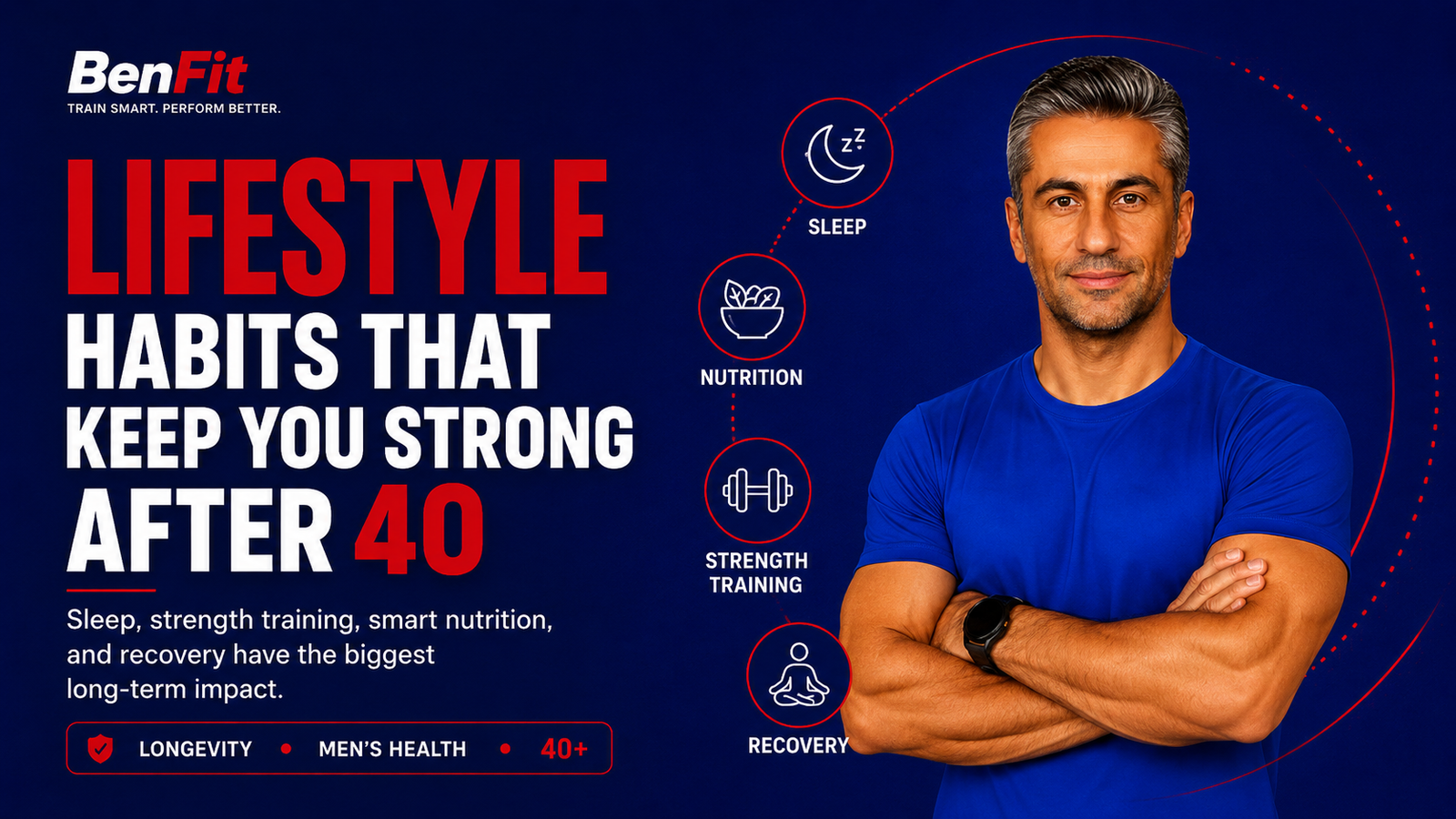
After 40, the goal of training changes.
You are not just training for bigger muscles. You are training for better movement, better posture, stronger joints, better balance, more confidence, and a body that can handle real life.
The best exercises after 40 are not always the most complicated. They are the movements that give you the biggest return with the lowest unnecessary risk.
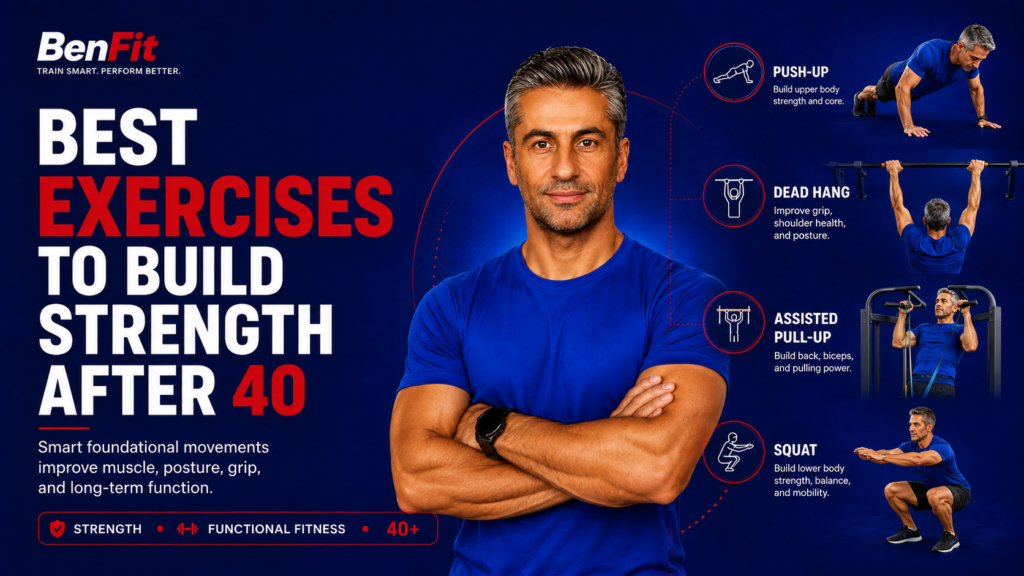
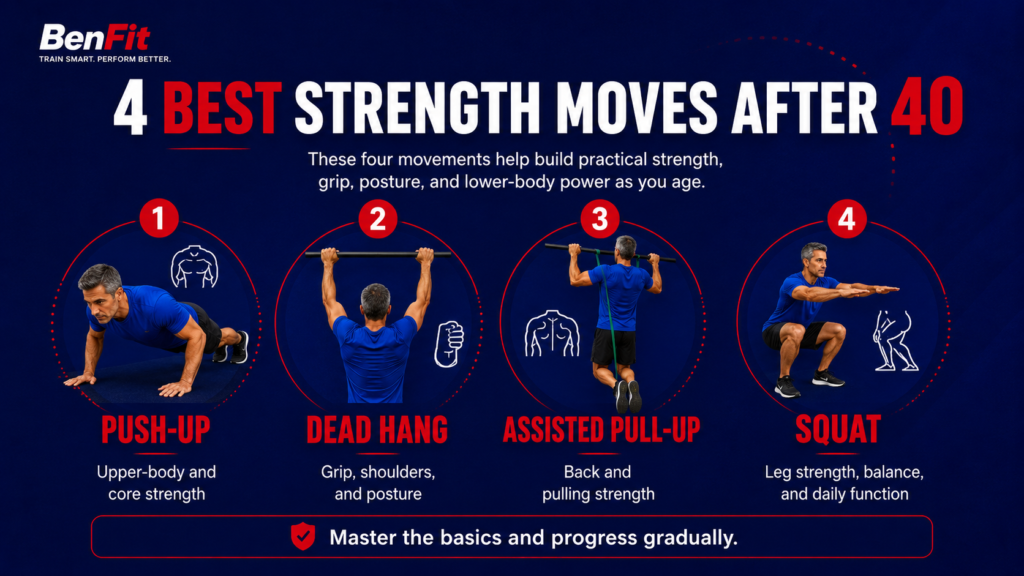
This article covers four foundational movements:
- Push-up
- Dead hang
- Assisted pull-up
- Squat
These exercises build practical strength that carries over into daily life.
Why Strength Training Matters After 40
Strength training helps preserve muscle, mobility, and function as you age. The National Institute on Aging notes that physical activity can help protect against osteoporosis and age-related loss of muscle mass, strength, and function.
The CDC recommends adults do muscle-strengthening activities at least 2 days per week, along with regular aerobic activity.
After 40, the goal is not maximum intensity every day. The goal is intelligent progression.
You want to train hard enough to improve but smart enough to recover.
For the bigger BenFit formula, read Strength Training, Protein, and Sleep After 40.
1. Push-Up: Upper Body and Core Strength
The push-up is one of the best exercises after 40 because it trains the chest, shoulders, triceps, core, and posture together.
It also teaches your body to create full-body tension, which matters for injury prevention and better movement.
Benefits of push-ups after 40
Push-ups help:
- Strengthen chest and arms
- Improve shoulder control
- Train core stability
- Build pushing strength
- Improve bodyweight control
How to do it correctly
Start in a strong plank position. Keep your ribs down, glutes lightly engaged, and hands under or slightly wider than shoulders.
Lower your body with control. Do not let the hips sag. Push the floor away and return to the starting position.
Easier version
Use an incline push-up with your hands on a bench, box, or wall.
Harder version
Use slower tempo, pause reps, deficit push-ups, or weighted push-ups.
2. Dead Hang: Grip, Shoulders, and Posture
The dead hang looks simple, but it is powerful.
Grip strength, shoulder control, and upper-back endurance are extremely important after 40. Many people lose pulling strength because they stop hanging, climbing, pulling, and carrying.
Benefits of dead hangs
Dead hangs help:
- Improve grip strength
- Build shoulder tolerance
- Decompress the upper body
- Improve overhead control
- Prepare for pull-ups
How to do it correctly
Hold a pull-up bar with both hands. Let your body hang while keeping your shoulders active, not completely collapsed.
Start with 10–20 seconds and build gradually.
Easier version
Keep your feet lightly on the floor or use a lower bar.
Harder version
Use longer holds, towel hangs, or controlled scapular pull-ups.
3. Assisted Pull-Up: Back and Pulling Strength
The pull-up is one of the best tests of relative strength, but many adults lose it because they stop training pulling patterns.
The assisted pull-up gives you the same movement pattern while reducing the load.
Benefits of assisted pull-ups
Assisted pull-ups help:
- Build back strength
- Strengthen biceps and grip
- Improve posture
- Train shoulder control
- Build toward full pull-ups
How to do it correctly
Use a resistance band or assisted pull-up machine. Start from a controlled hang, pull your chest toward the bar, and lower slowly.
Avoid kicking, swinging, or rushing.
Easier version
Use a stronger band or machine assistance.
Harder version
Use less assistance, slower lowering, or paused reps.
4. Squat: Legs, Balance, and Daily Function
The squat is one of the most important exercises after 40 because it directly connects to daily life.
Sitting, standing, climbing stairs, lifting objects, and getting off the floor all require lower-body strength.
Benefits of squats
Squats help:
- Strengthen quads, glutes, and hamstrings
- Improve hip and ankle mobility
- Support balance
- Build bone-loading capacity
- Improve daily function
How to do it correctly
Stand with feet about shoulder-width apart. Keep your chest tall, brace your core, and sit the hips down and back.
Go as low as you can control without pain or compensation.
Easier version
Use a box squat or assisted squat holding a support.
Harder version
Use goblet squats, front squats, split squats, or tempo squats.
How to Program These Exercises After 40
Start with 2–3 strength sessions per week.
Beginner plan
- Incline push-up: 3 sets of 8–12
- Assisted dead hang: 3 sets of 10–20 seconds
- Assisted pull-up or band row: 3 sets of 6–10
- Box squat: 3 sets of 8–12
Intermediate plan
- Push-up: 4 sets of 8–15
- Dead hang: 4 sets of 20–40 seconds
- Assisted pull-up: 4 sets of 6–10
- Goblet squat: 4 sets of 8–12
Weekly structure
- Day 1: Strength
- Day 2: Walk or mobility
- Day 3: Strength
- Day 4: Walk
- Day 5: Strength
- Day 6: Light activity
- Day 7: Recovery
You can also explore the BenFit exercise library for more movement ideas.
Common Mistakes After 40
Avoid these mistakes:
- Doing too much too soon
- Training through pain
- Ignoring warm-ups
- Skipping pulling exercises
- Only doing cardio
- Avoiding legs
- Not tracking progress
- Sleeping poorly
- Under-eating protein
Your body needs progression, not punishment.
Final Thoughts
After 40, strength is freedom.
Push-ups build upper-body and core strength. Dead hangs improve grip and shoulder tolerance. Assisted pull-ups build the back and pulling power. Squats protect lower-body strength and daily function.
Master the basics. Progress gradually. Recover properly.
That is how you build strength that lasts.
FAQ
What are the best exercises after 40?
Push-ups, squats, dead hangs, assisted pull-ups, rows, carries, hinges, and core stability movements are strong choices.
Is it safe to build muscle after 40?
Yes, but training should be progressive and properly managed. Recovery, form, sleep, and nutrition matter more than ego lifting.
How often should I strength train after 40?
Most people do well with 2–4 strength sessions per week, depending on recovery, experience, and goals.
Are squats good after 40?
Yes, when performed with proper form and appropriate range of motion. Squats support leg strength, balance, and daily function.
Can I start with bodyweight exercises?
Yes. Bodyweight training is a great starting point if you progress gradually and train consistently.
Start Your BenFit Plan
Want a custom strength plan built around your body, goals, and limitations? View the BenFit coaching plans, see real BenFit client results, or book a consultation.