Quick answer: bloating is often related to digestion, hydration, food volume, sodium, eating speed, constipation, and certain carbohydrates. The right foods can help, but the goal is not to chase a “flat stomach” every hour of the day. The goal is to reduce unnecessary bloating while still eating enough to train, recover, and lose fat safely.
Why bloating can feel worse after 40
Many adults notice more bloating after 40 because daily movement decreases, stress rises, sleep quality changes, and digestion becomes more sensitive to large meals, alcohol, carbonated drinks, high-sodium meals, and low-fiber diets. For women, hormonal changes can also affect water retention and gut rhythm.
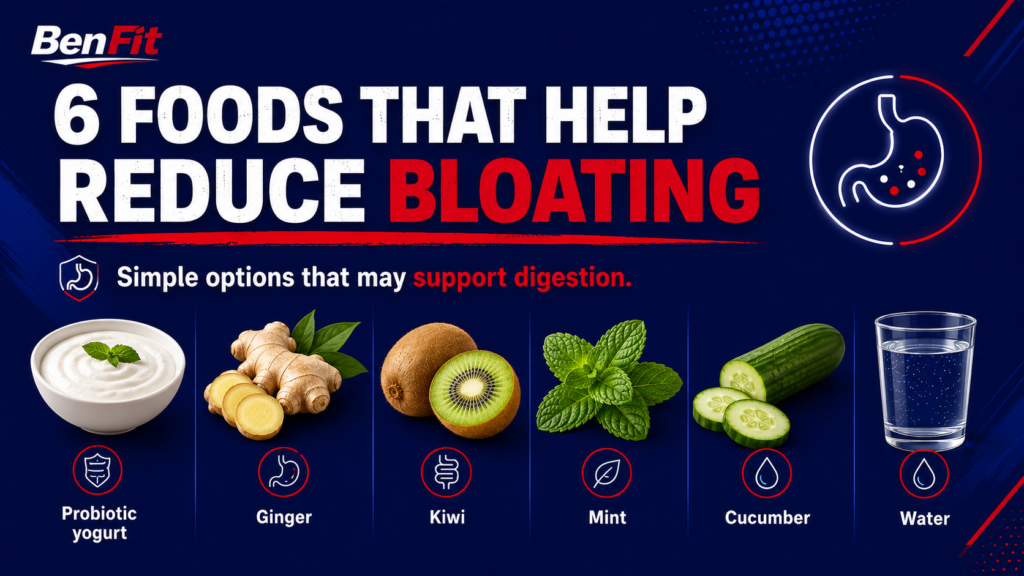
Six foods that can help reduce bloating
| Food | Why it may help | How to use it |
|---|---|---|
| Probiotic yogurt or kefir | May support gut bacteria balance | Choose unsweetened; avoid if dairy-sensitive |
| Ginger | Often used to calm digestion | Add to tea, meals, or smoothies |
| Kiwi | Provides fiber and digestive enzymes | Use as a snack or after meals |
| Peppermint tea | May relax the digestive tract for some people | Use after meals; avoid if reflux worsens |
| Cucumber | Hydrating and low in calories | Add to salads or protein bowls |
| Water | Supports normal digestion and bowel movement | Sip consistently, especially with fiber |
How to build an anti-bloating plate
A bloating-friendly meal is usually simple: lean protein, cooked or easy-to-digest vegetables, a moderate carbohydrate portion, and enough fluids. Huge salads can be healthy, but for some people they create more gas than cooked vegetables. A smart plan is personal, not extreme.
Example meals
- Breakfast: Greek yogurt, berries, kiwi, and chia seeds.
- Lunch: chicken, rice, cucumber, spinach, and olive oil.
- Dinner: salmon, potatoes, cooked zucchini, and ginger tea.
- Snack: cottage cheese or protein smoothie with a low-bloating fruit.
Food is only one part of bloating control
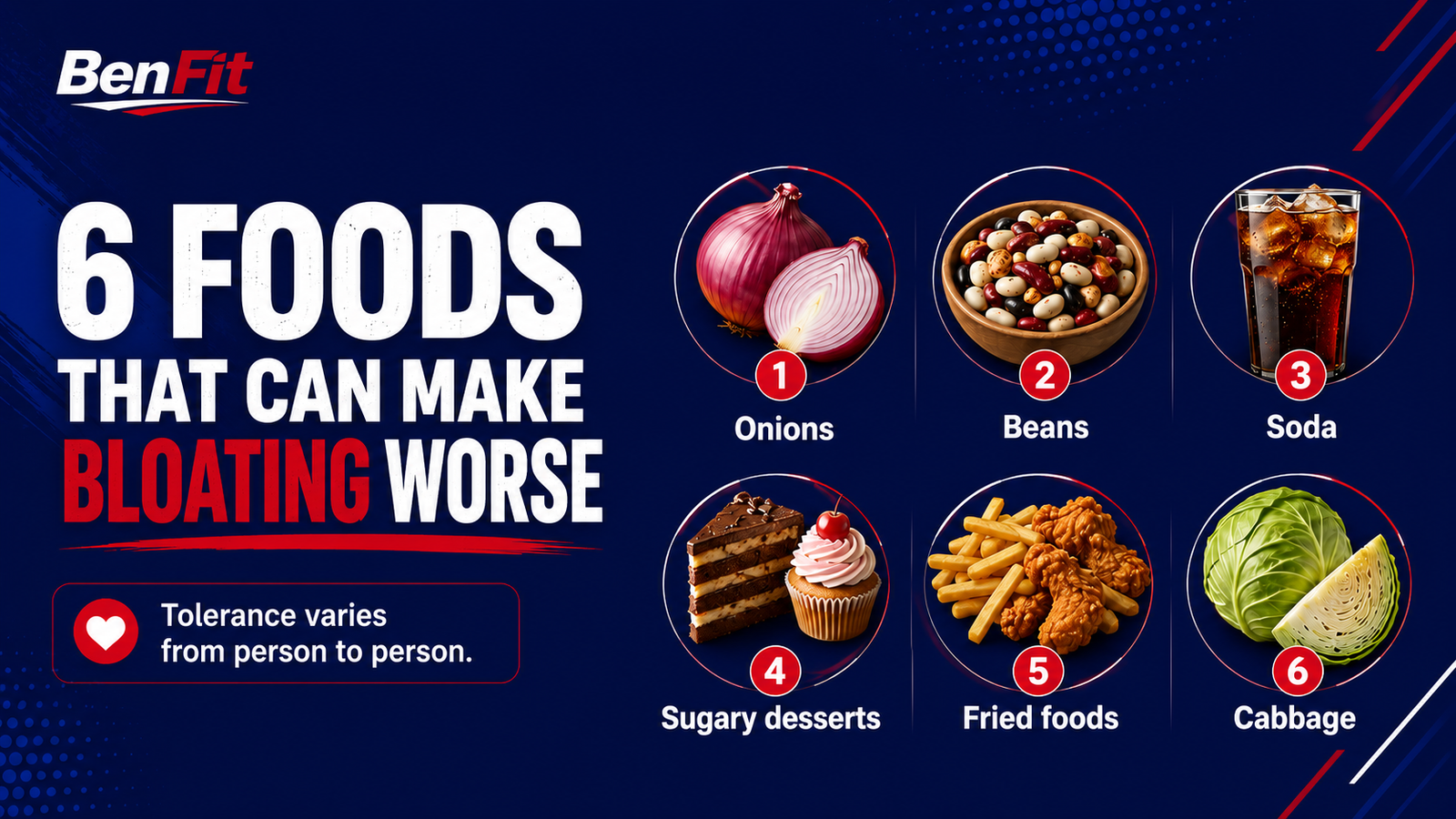
People often blame one food when the real issue is eating too fast, not chewing well, drinking carbonated beverages, eating late at night, or suddenly increasing fiber. A high-fiber diet is healthy, but jumping from very low fiber to very high fiber overnight can create gas and bloating.
| Habit | Why it matters | BenFit recommendation |
|---|---|---|
| Chewing slowly | Less swallowed air and easier digestion | Put the fork down between bites |
| Walking after meals | Supports digestion and glucose control | 10 minutes after large meals |
| Hydration | Fiber needs water to move well | Drink consistently, not only at night |
| Meal timing | Late heavy meals may worsen discomfort | Finish dinner earlier when possible |
| Fiber changes | Sudden increases can cause gas | Add fiber gradually over 2–3 weeks |
What to track for 7 days
Instead of guessing, track bloating triggers for one week. Write down your meals, eating speed, carbonated drinks, fiber amount, stress level, sleep, bowel movements, and symptoms. Patterns usually appear quickly. If the same meal only bloats you when sleep and stress are bad, the food may not be the only issue.
When bloating needs medical attention
Occasional bloating is common. But bloating with severe pain, vomiting, blood in stool, unexplained weight loss, fever, persistent diarrhea, constipation that does not improve, or new symptoms that continue should be evaluated by a healthcare professional.
BenFit takeaway
The best anti-bloating diet is not a punishment diet. It is a calm, consistent, protein-centered plan that supports digestion and fat loss at the same time. Start with water, protein, gentle fiber, walking, and a simple food log. Then adjust based on your body’s response.
Need a plan that fits your schedule? Explore BenFit online personal training or Orange County 1:1 coaching.
Scientific sources and editorial notes
- American Academy of Dermatology: cellulite treatment overview and realistic expectations.
- MedlinePlus: cellulite, subcutaneous fat, and connective tissue basics.
- NIDDK: insulin resistance, gas, bloating, diet changes, and healthy lifestyle guidance.
- U.S. Physical Activity Guidelines: adult aerobic and muscle-strengthening recommendations.
- International Society of Sports Nutrition: protein and exercise position stand.
Medical note: This article is educational and does not replace medical care. If symptoms are severe, sudden, painful, or linked with bleeding, unexplained weight loss, chest pain, fainting, or persistent digestive changes, speak with a qualified health professional.