After 40, your body becomes more honest.
You can get away with random workouts, poor sleep, skipped meals, stress, and weekend alcohol in your 20s and 30s. But after 40, those habits start showing up faster: belly fat, low energy, weaker workouts, poor sleep, low motivation, and slower recovery.
Many men immediately think the problem is testosterone. Sometimes it is. But often, the bigger issue is lifestyle.
Testosterone health is not only about hormones. It is about the environment your body lives in every day.
First: Do Not Guess — Measure When Needed
If you have symptoms such as chronic fatigue, low libido, loss of strength, increased belly fat, mood changes, or poor sleep, testing may be worth discussing with a healthcare provider.
The Endocrine Society recommends diagnosing testosterone deficiency only when symptoms are present and testosterone levels are clearly and consistently low. They also recommend confirming low results with repeat morning fasting testing.
BenFit’s approach is simple: measure, analyze, act, and track.
Read the full Testosterone After 40 guide for testing details.
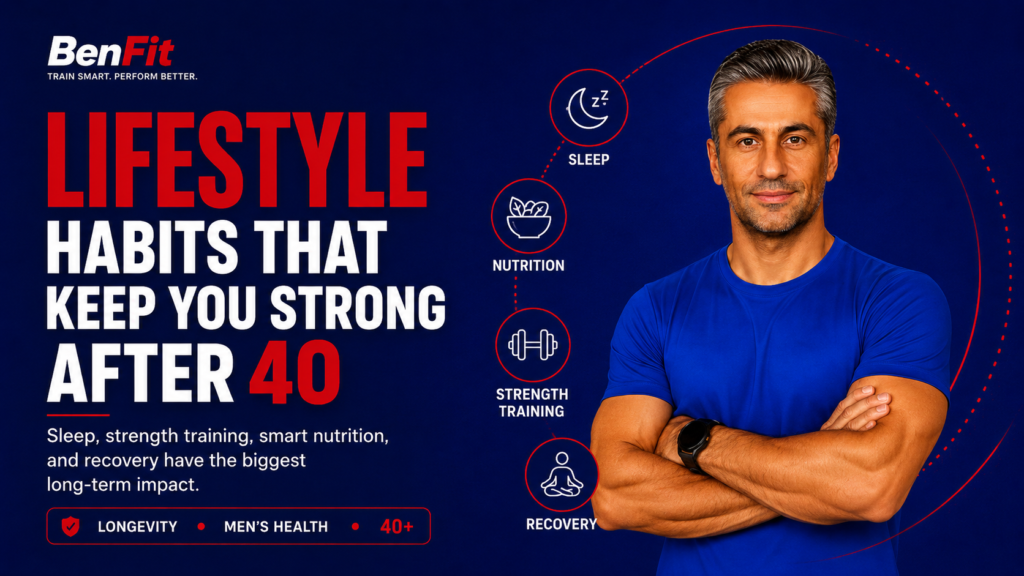
Habit 1: Sleep 7–9 Hours Like It Is Training
Sleep is not recovery’s assistant. It is recovery.
The CDC states that adults need at least 7 hours of sleep each day. If you consistently sleep 5–6 hours, you are asking your body to perform with a weak recovery system.
Poor sleep can affect:
- Hunger
- Cravings
- Training performance
- Mood
- Focus
- Recovery
- Hormone regulation
A better sleep routine after 40:
- Sleep and wake at consistent times.
- Stop heavy meals late at night.
- Reduce alcohol.
- Keep the room cool and dark.
- Get morning sunlight.
- Avoid late caffeine.
- Use a calm evening routine.
If your goal is better testosterone, better fat loss, and better strength, sleep comes before supplements.
Habit 2: Strength Train 2–4 Times Per Week
Strength training is one of the most important habits for men after 40.
The CDC recommends adults get at least 150 minutes of moderate-intensity activity per week and do muscle-strengthening activities at least 2 days per week.
But after 40, you should not train like a reckless teenager. You need progressive, structured training.
Focus on:
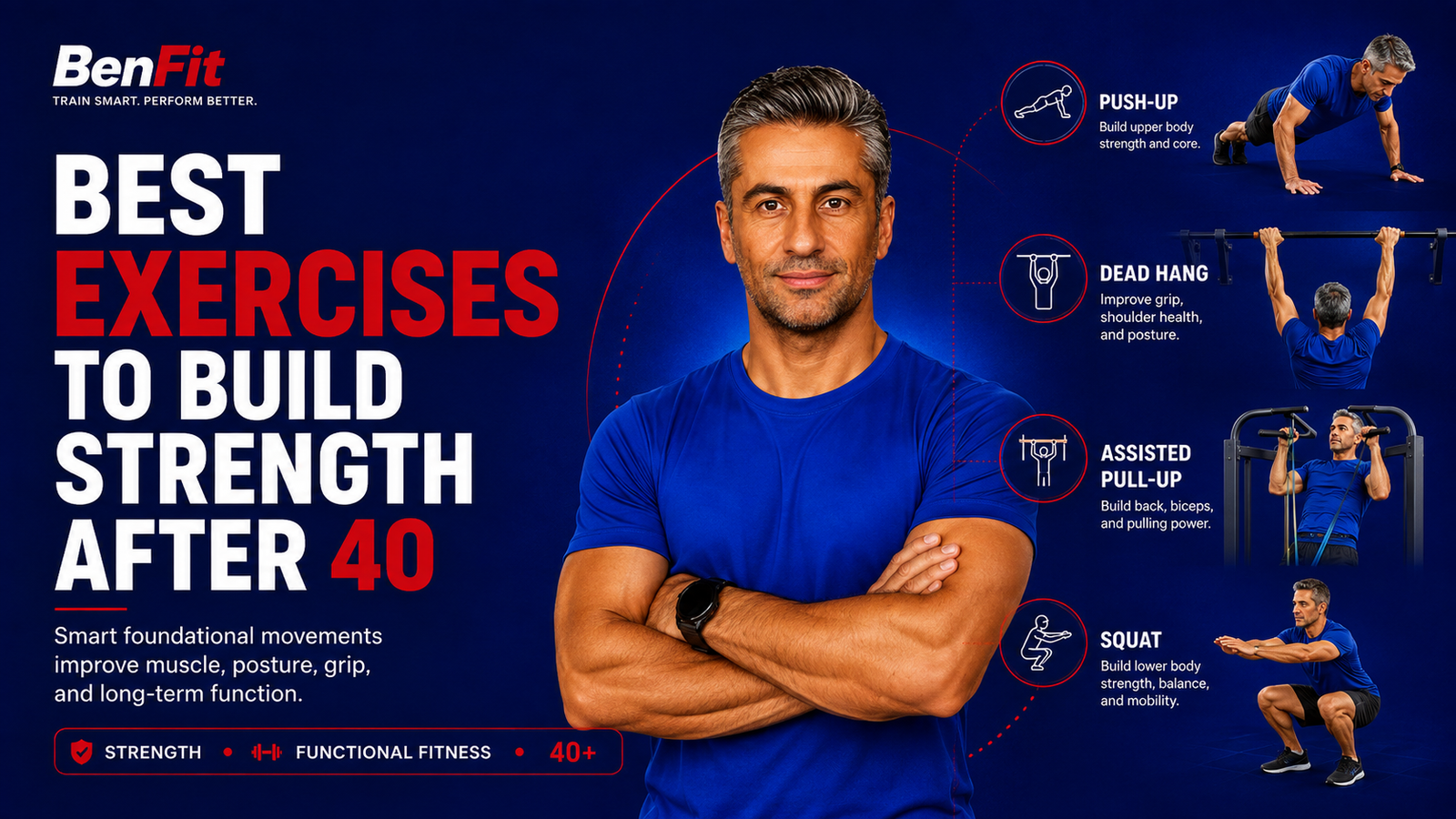
- Squats
- Hinges
- Push-ups
- Rows
- Pulling movements
- Carries
- Core stability
- Mobility work
The goal is not to destroy yourself. The goal is to build strength you can recover from.
For a deeper breakdown, read Strength Training, Protein, and Sleep After 40.
Habit 3: Build Meals Around Protein and Healthy Fats
Protein helps preserve muscle, supports recovery, and keeps meals more satisfying.
After 40, protein becomes even more important because losing muscle makes everything harder: fat loss, posture, metabolism, strength, and long-term independence.
Build meals around:
- Eggs
- Chicken
- Fish
- Lean beef
- Greek yogurt
- Turkey
- Protein-rich legumes
- High-quality protein powders if needed
Healthy fats also matter, but portion control matters too.
Good sources include:
- Olive oil
- Avocado
- Nuts
- Seeds
- Fatty fish
- Eggs
Do not confuse “healthy” with “unlimited.” Calories still count.
Habit 4: Reduce Belly Fat Without Extreme Dieting
Belly fat after 40 is not only a mirror problem. It often reflects a broader lifestyle problem: poor sleep, inactivity, high stress, overeating, alcohol, and inconsistent training.
The solution is not crash dieting.
The BenFit approach:
- Strength train consistently.
- Walk daily.
- Eat enough protein.
- Control portions.
- Sleep better.
- Drink less alcohol.
- Track waist, weight, strength, and energy.
- Adjust weekly.
Real progress comes from repeatable habits, not punishment.
You can see examples of sustainable progress on the BenFit transformation results page.
Habit 5: Manage Stress Before It Manages You
Stress is not always avoidable. But unmanaged stress can wreck your consistency.
It can lead to:
- Poor sleep
- More cravings
- Less training motivation
- Higher alcohol intake
- Poor recovery
- Emotional eating
- Lower focus
Better stress control does not need to be complicated.
Start with:
- 10-minute walks
- Breathing drills
- Fewer late-night screens
- More daylight
- Better planning
- Rest days
- Structured training instead of random intensity
A strong body needs a calm enough nervous system to recover.
Habit 6: Move Daily
Training 3 times per week is great. But if you sit all day outside the gym, your body still needs more movement.
Daily movement improves energy, calorie expenditure, circulation, and mood. It also helps with body composition without requiring extreme workouts.
Try:
- 7,000–10,000 steps per day
- Walking after meals
- Short mobility breaks
- Taking stairs
- Standing calls
- Weekend hikes
After 40, movement is medicine — but it works best when repeated daily.
Habit 7: Stop Chasing Quick Fixes
Supplements, hormones, detoxes, and “testosterone boosters” are attractive because they feel easy.
But the truth is simple: most men need better foundations first.
Before chasing quick fixes, fix these:
- Sleep
- Strength training
- Protein
- Body fat
- Stress
- Alcohol
- Daily movement
- Medical testing when needed
That is the BenFit lifestyle model.
Final Thoughts
After 40, your body responds to consistency more than intensity.
You do not need to become perfect. You need a repeatable system that protects strength, energy, body composition, and long-term health.
Sleep well. Strength train. Eat enough protein. Manage stress. Move daily. Track what matters.
That is how you build a body that lasts.
FAQ
What lifestyle habits help testosterone after 40?
Sleep, strength training, protein-rich nutrition, lower belly fat, stress management, and daily movement are the most important foundations.
How much sleep do men over 40 need?
Most adults need at least 7 hours per night. Many men perform best closer to 7–9 hours.
Is strength training more important than cardio after 40?
Both matter. Strength training preserves muscle and function, while cardio supports heart health and conditioning.
Can stress lower testosterone?
Chronic stress can affect sleep, appetite, recovery, and consistency, which can indirectly affect hormone health and performance.
Should I test testosterone after 40?
Testing may be useful if you have persistent symptoms such as low libido, fatigue, poor recovery, mood changes, or unexplained loss of strength.
Start Your BenFit Plan
Need a plan that connects training, nutrition, sleep, and recovery? Explore the BenFit coaching plans or learn more about BenFit.