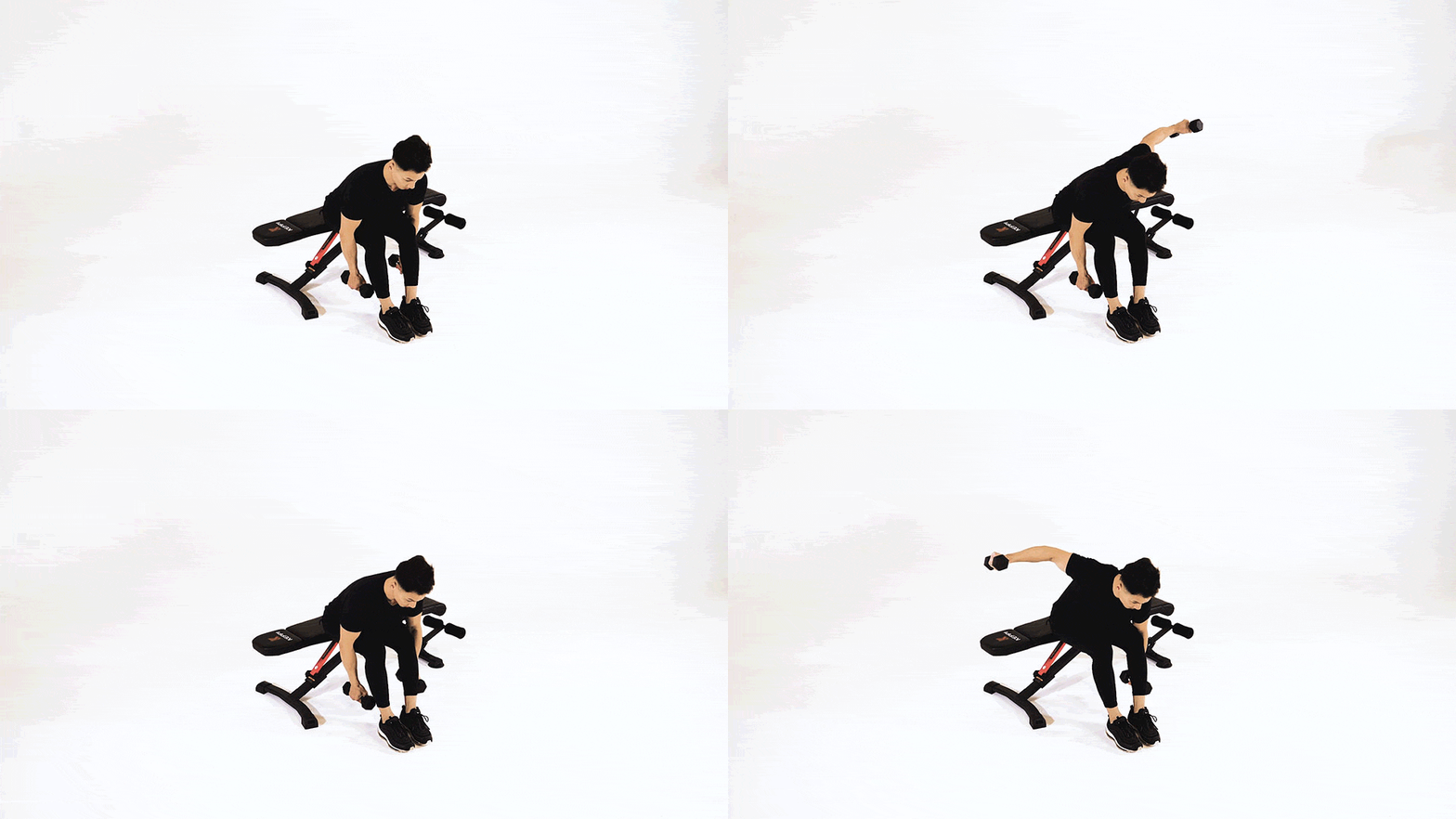
The “Seated Alternating Dumbbell Reverse Fly” is an effective exercise for strengthening the shoulder muscles, especially the posterior deltoids. This movement is performed alternately, meaning both arms move from a lower to an upper position sequentially. This exercise is particularly suitable for individuals looking to increase shoulder muscle strength and endurance, and improve their body balance. The seated alternating dumbbell reverse fly is not only effective for strengthening shoulder muscles but can also help improve the body’s motor function and increase strength in other upper body muscles. This exercise is especially beneficial for those who regularly engage in strength training and are looking for variety in their workout program.
Target Muscle
The primary muscle targeted in this exercise is the posterior deltoid. This muscle is located at the back of the shoulder and plays a crucial role in moving the arm backward. The posterior deltoid aids in pulling and rowing movements, and strengthening it can help improve shoulder strength and stability. In addition to the posterior deltoid, other muscles are indirectly engaged. The back and neck muscles are activated to maintain balance and prevent excessive body movement. These muscles play a role in maintaining posture and preventing injury during the exercise.
Secondary Muscles Involved
In this exercise, besides the main shoulder muscles, secondary muscles are also actively involved. The upper back muscles, particularly the trapezius and rectus abdominis, are engaged to maintain posture throughout the movement. These muscles help control the motion and maintain balance. Furthermore, the forearm and arm muscles are continuously active in holding the dumbbells and moving them. These muscles are very important for preventing extraneous movements and maintaining body stability while performing the exercise.
How to Perform
To perform the seated alternating dumbbell reverse fly, first sit on an incline bench and hold a dumbbell in each hand. Keep your back straight and hinge slightly at the hips. Then, lower your arms downwards and slightly rotate your palms outward. With complete control, raise one arm upwards simultaneously until your upper arm is roughly parallel to the ground. After performing this movement, return your arm to the starting position and repeat the same motion with the other arm. During this exercise, you should maintain your balance and perform the movements precisely without any jerky motions.
Equipment Needed
You will need two dumbbells to perform this exercise. The weight of the dumbbells should be chosen according to the individual’s capability. The dumbbells should not be too heavy to cause injury, yet they should provide enough resistance to adequately challenge the muscles. Additionally, you should sit on a comfortable and stable incline bench to perform the movement correctly. Wearing appropriate workout attire that allows for free body movement is very important for this exercise. The clothing should be flexible and allow the arms to move freely.
This exercise might be challenging for beginners as it requires balance and precise control. Beginners can first focus on more basic shoulder exercises and then gradually incorporate this movement into their training program.
The dumbbells should be of a weight that allows you to perform the movement with full control, without feeling unnatural strain. It is recommended to start with moderate weights and increase them as you get stronger.
For best results, performing 3 to 4 sets of 8 to 12 repetitions for each arm is appropriate. This number can be adjusted based on the individual’s fitness level.
Yes, the back muscles are indirectly engaged in this exercise. The back muscles are activated to maintain body balance throughout the movement and help strengthen the posterior muscles.
How to perform
-
Step 1
First, sit on the edge of a flat bench, bring your feet close together and place them on the floor in front of you, holding a dumbbell in each hand.
-
Step 2
Lower your torso until your chest rests on your thighs, and place the dumbbells beneath your feet.
-
Step 3
Slowly raise one dumbbell up to the level of your head, squeezing your shoulders.
-
Step 4
Hold this position for a moment, then return to the starting position and repeat the movement with the other hand.
-
Step 5
Complete the desired number of repetitions and sets in the same manner.