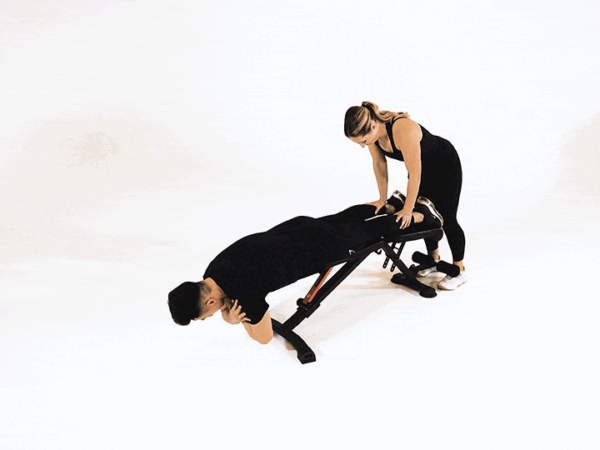
The “Standing Dumbbell Raise” exercise is a simple yet very effective movement for strengthening the shoulder muscles. In this exercise, you use a dumbbell to perform the motion of lifting your arm upwards. This movement specifically targets the deltoid muscles, but other muscles are also engaged. Performing this exercise regularly can help strengthen shoulder muscles, increase muscular endurance, and improve balance.
This movement is suitable for individuals of all experience levels, from beginner to advanced. It is a particularly good choice for those who want to focus specifically on their shoulder muscles. You don’t need any special equipment to perform this exercise, and you can do it in various settings, such as the gym or even at home.
Target Muscle
The primary muscle targeted in the “Standing Dumbbell Raise” exercise is the deltoid muscle (shoulder). The deltoid is the muscle located in the shoulder area, responsible for moving the arm forward, sideways, and backward. By performing this exercise, the deltoid muscles, especially the middle portion, are significantly strengthened.
In addition to the middle deltoid, this exercise can also affect other shoulder muscles, including the anterior and posterior deltoids, although these effects are indirect and not as pronounced as on the middle shoulder muscles. The core muscles are also engaged to maintain balance during the movement. This exercise helps strengthen the power and endurance of the shoulder muscles and can also improve the range of motion of the shoulders.
Secondary Muscles Engaged
Alongside the target muscles, other secondary muscles are also engaged in the “Standing Dumbbell Raise” exercise. The core muscles, including the abdominal and back muscles, are highly active in maintaining balance during the movement. These muscles are particularly engaged when lifting the dumbbell and preventing the body from swaying.
In addition to the core muscles, the muscles of the armpit, back, and forearms are indirectly involved for stability and to assist in arm movement. Finally, the calf muscles and lower body muscles are used to maintain stability in the standing position, especially when using a heavier dumbbell.
How to Perform the Exercise
To perform the “Standing Dumbbell Raise” exercise, first select a dumbbell of appropriate weight and hold it with one hand. Stand with your feet shoulder-width apart, keeping your body straight and upright. Then, slowly bring the dumbbell up in front of your body, so that your arm is in a vertical line. In this movement, your elbow should not be fully straightened but should remain slightly bent.
As you lift the dumbbell, be mindful not to let your shoulders rise towards your ears, and keep your body stable without unnecessary movement. Pause briefly at the highest point of the lift, then slowly lower the dumbbell back to the starting position. Perform the exercise for the desired number of repetitions, and then repeat with the other hand. Throughout the entire movement, focus on proper control and precise execution.
Equipment Needed
- Dumbbell: You need one dumbbell for this exercise. The weight of the dumbbell should be chosen according to your ability. Lighter dumbbells are recommended to start.
- Appropriate athletic shoes: Athletic shoes that provide good support and stability are essential for this exercise.
- Sufficient space: You need enough space to perform this movement without obstruction and to lift the dumbbell safely.
Yes, this exercise is suitable for beginners. By starting with lighter dumbbells and focusing on proper technique, beginners can also benefit from this exercise.
To prevent shoulder injury, maintain a straight posture throughout the movement and avoid lifting the dumbbell abruptly. Also, paying attention to controlling the movement during execution is very important.
Typically, 3 to 4 sets and 10 to 12 repetitions are recommended for this exercise. This number of repetitions helps strengthen the shoulder muscles and improve their endurance.
This exercise primarily affects the middle deltoid, but the posterior deltoid muscles are also indirectly engaged, especially in controlling the dumbbell’s movement.
How to perform
-
Step 1
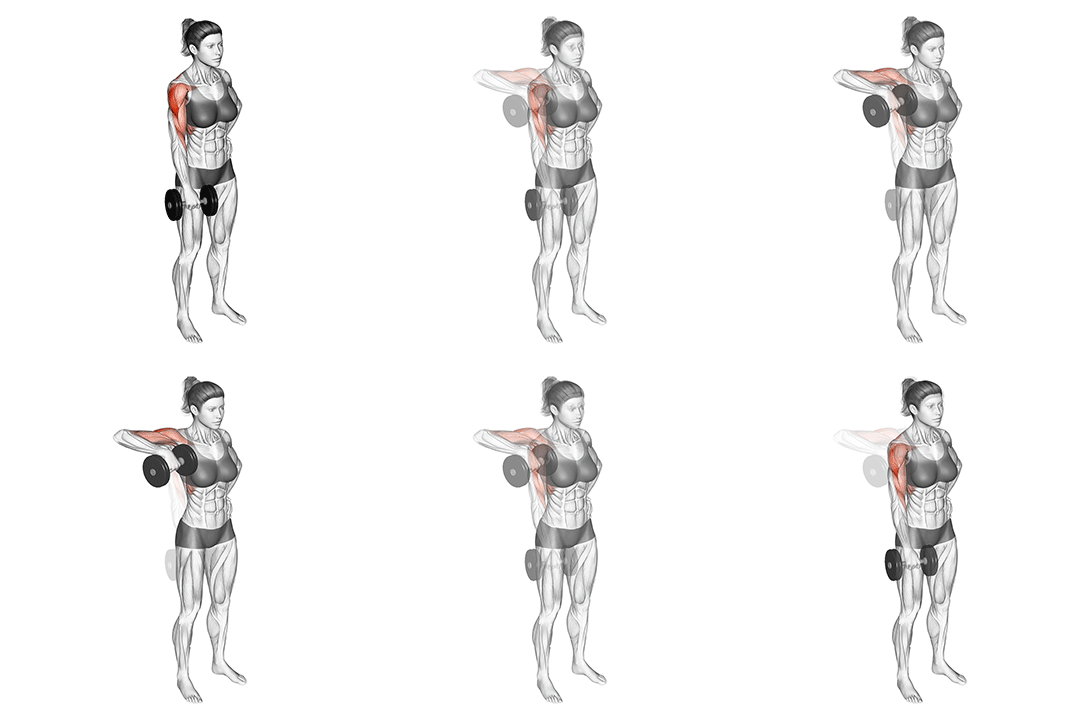
Stand with your feet shoulder-width apart. Hold a dumbbell in one hand with an overhand grip (palms facing your body), letting it hang in front of your thigh. Your other hand can rest on your hip or by your side for balance.
-
Step 2
Engage your abdominal muscles to keep your torso stable throughout the exercise.
-
Step 3
Begin the movement by lifting your elbow upwards and outwards, leading with your elbow. Keep the dumbbell close to your body. Continue until the dumbbell reaches chest level, with your elbow higher than your wrist. At the top of the movement, your hand should be in line with your shoulder.
-
Step 4
Briefly pause at the top of the movement, contracting your shoulder and upper back muscles.
-
Step 5
Slowly lower the dumbbell back to the starting position in a controlled manner, keeping it close to your body.