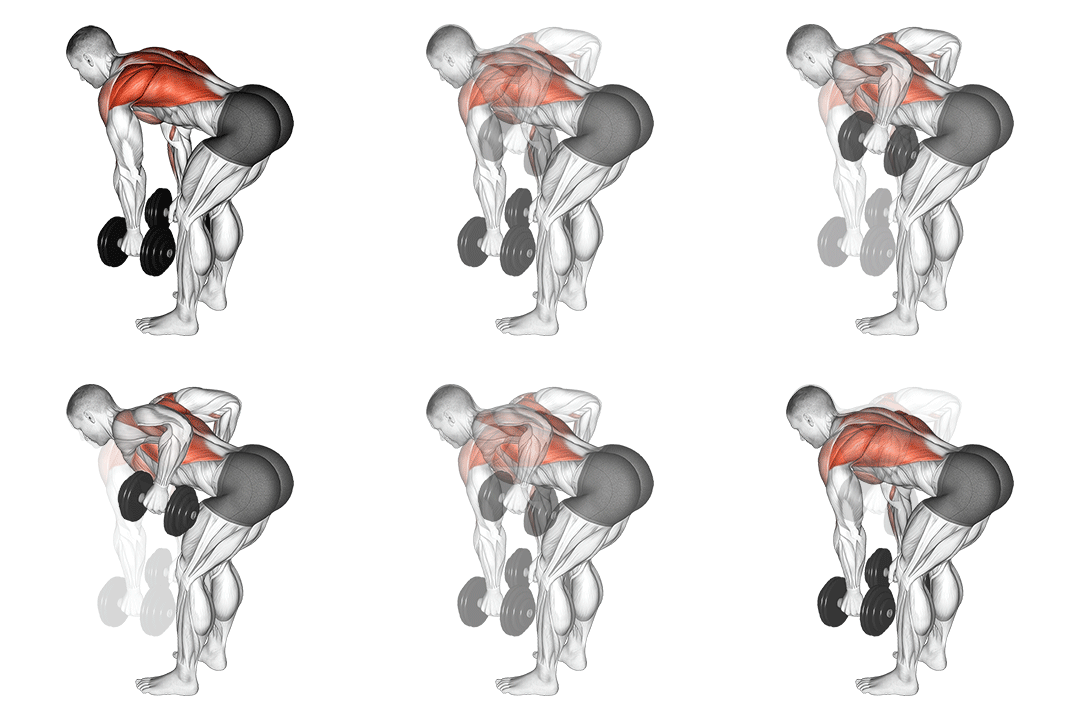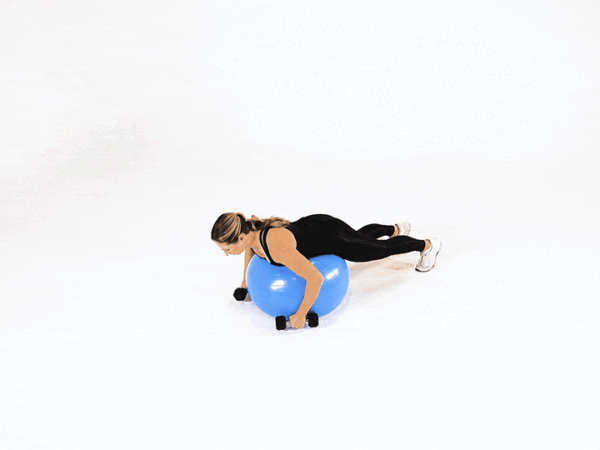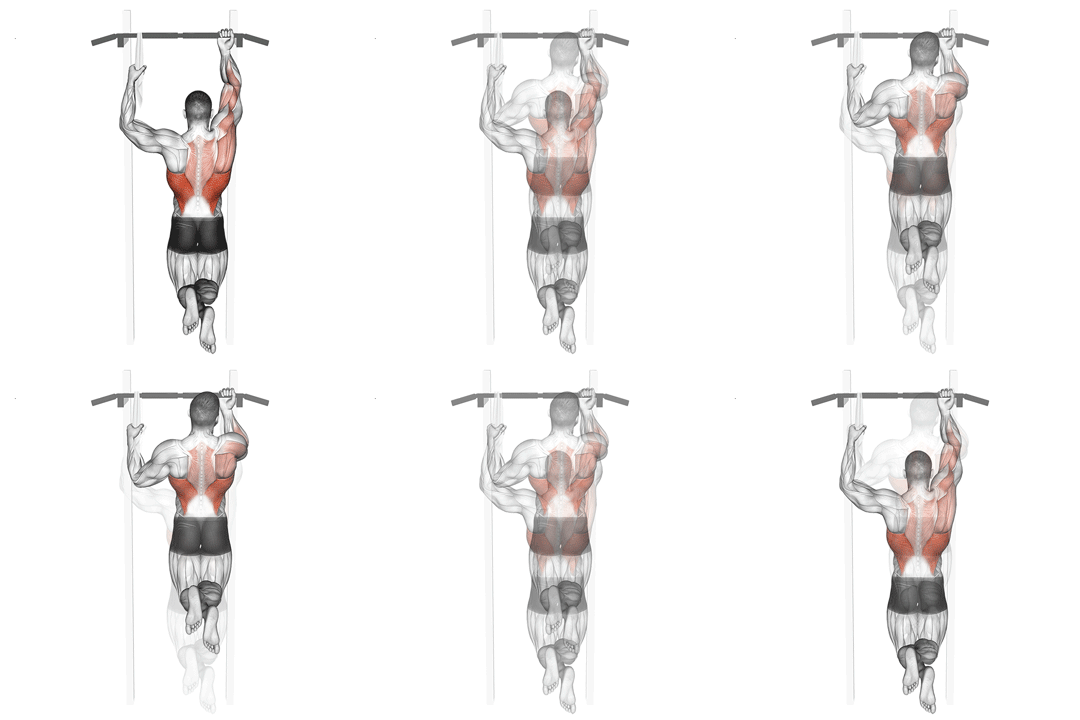

The Band Reverse Fly is an effective exercise for strengthening the muscles of the back and shoulders, performed using resistance bands. This exercise is highly beneficial for individuals looking to improve posture, reduce back pain, and strengthen the core muscles. It holds a special place in training programs for strengthening back muscles, balancing shoulders, and preventing sports injuries. The Band Reverse Fly is recognized as a low-risk yet effective exercise due to its gentle but focused pressure on the back and shoulder muscles. The use of resistance bands allows individuals to adjust the intensity of the exercise based on their needs and fitness level. This exercise is suitable for all levels, from beginner to advanced.
Target Muscles in Band Reverse Fly
The primary target muscles in the Band Reverse Fly are the upper back muscles, particularly the Trapezius and the Posterior Deltoid. These muscles are stressed during the movement and gradually become stronger and more defined with increased repetitions and band resistance. These muscles play a vital role in maintaining correct body posture and supporting the shoulders. Strengthening these areas helps improve performance in daily and athletic activities and prevents shoulder and neck injuries.
Secondary Muscles Involved in Band Reverse Fly
In addition to the target muscles, several secondary muscles are also activated during this exercise. The Rhomboids and the Erector Spinae muscles are significantly engaged. These muscles play an important role in stabilizing and supporting the back region. Furthermore, the core muscles are activated as stabilizers during this exercise. The core muscles help maintain balance and prevent the body from falling during the movement. Strengthening these muscles significantly aids in improving endurance and stability in daily and athletic movements.
How to Perform the Band Reverse Fly
To perform the Band Reverse Fly, first attach a resistance band to a fixed point such as a pole or door. Then, stand facing the band and grip the handles with both hands. Spread your feet shoulder-width apart and slightly bend your knees. Keep your spine straight and extend your arms in front of your body. Next, using your back and shoulder muscles, open your arms outwards and backward, pulling the resistance band. At the end of the movement, your arms should be parallel to your body. Slowly return your arms to the starting position and repeat the movement for the desired number of repetitions.
Equipment Needed
To perform the Band Reverse Fly, you only need a resistance band. Resistance bands come with varying degrees of resistance, which can be chosen based on your fitness level. A fixed point to attach the band is also necessary, which could be a pole, door, or any other stable point. This exercise does not require special equipment and can easily be done at home, at the gym, or even outdoors. The simplicity of the equipment and the ability to perform it anywhere make the Band Reverse Fly one of the popular exercises in fitness programs.
Yes, the Band Reverse Fly is completely suitable for beginners. By using lower resistance bands, you can gradually increase the strength and endurance of your back and shoulder muscles.
To increase the intensity, you can use bands with higher resistance or increase the number of repetitions and sets. You can also increase your distance from the attachment point to apply more pressure on the muscles.
To improve muscle condition and prevent shoulder injuries, you can include this exercise 2 to 3 times a week in your training program. However, the number of repetitions and intensity depends on your fitness level.
Yes, strengthening the back muscles and improving posture by performing the Band Reverse Fly can help reduce back pain. This exercise helps stabilize the back muscles and improve shoulder balance.
If performed with correct form and proper control, this exercise has a low risk of injury. However, incorrect execution or using excessive resistance may put too much strain on the shoulder and back muscles.
How to perform
-
Step 1
First, place a resistance band around a base or training machine.
-
Step 2
Engage your core and slightly bend your knees to feel tension in the band.
-
Step 3
Slowly and with control, pull your arms back until they are parallel to your sides.
-
Step 4
When you reach the final position, pause for a moment, contracting your back muscles, then return to the starting position.
-
Step 5
Ensure you are using a band that allows you to perform the exercise with proper form.