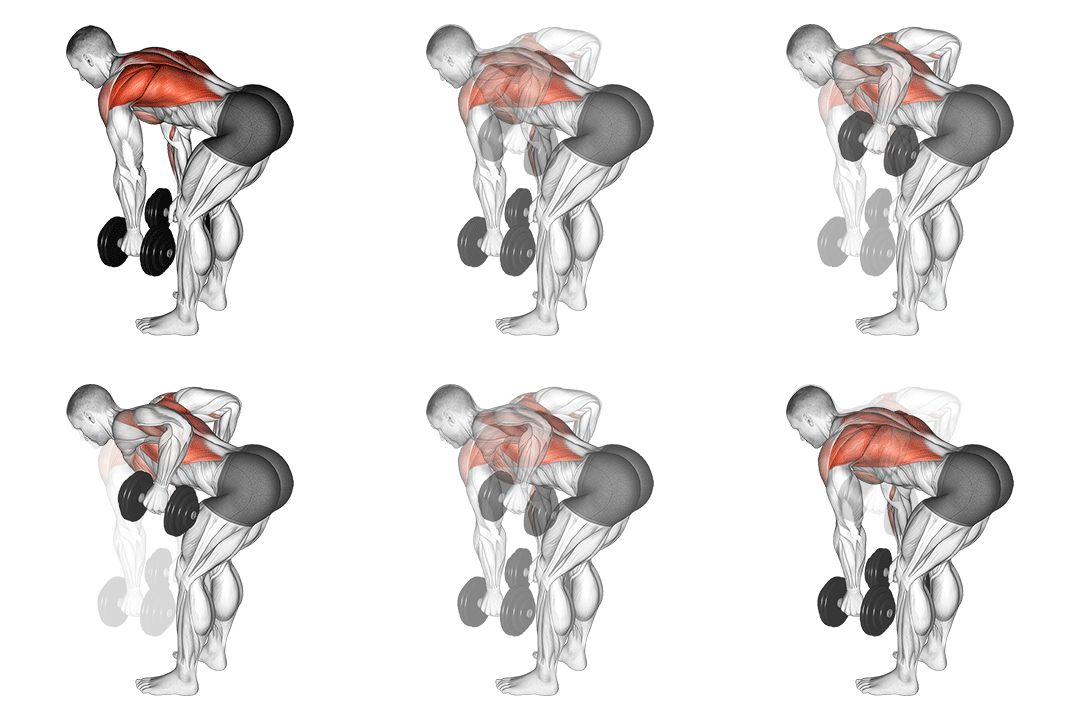
The Dumbbell Bent Over Row is one of the effective exercises in bodybuilding programs designed to strengthen and develop the upper body muscles, especially the back muscles. This exercise is particularly useful for targeting the muscles of the mid and upper back, such as the latissimus dorsi and rotator cuff muscles. Using dumbbells allows you to train each arm independently, reducing muscular imbalances. In this exercise, the body position is bent forward, thus applying more pressure to the back muscles. This exercise serves as a strength training movement to improve the strength and size of the back muscles, as well as strengthen the lower back and abdominal muscles. Since this exercise also helps strengthen the core muscles, it aids in improving posture and reducing the risk of lower back injuries.
Target Muscle in Dumbbell Bent Over Row
The primary target muscle in the Dumbbell Bent Over Row is the latissimus dorsi, located in the upper and middle back. This muscle is responsible for pulling and rotating the shoulders downward and backward, contributing to the thickness and strength of the back. Strengthening this muscle improves the appearance and power of the back, helping to create a balanced and aesthetically pleasing physique. In addition to the latissimus dorsi, other muscles such as the rhomboids and trapezius are also engaged during this exercise. These muscles play a role in stabilizing and moving the shoulders and back, contributing to improved strength and endurance in the back area. Strengthening these muscles also helps improve posture and reduce the risk of shoulder injuries.
Secondary Muscles Engaged in Dumbbell Bent Over Row
Alongside the primary target muscles, secondary muscles are significantly involved in the Dumbbell Bent Over Row. The biceps and brachialis muscles, located in the upper arm, are activated when pulling the dumbbells upward. These muscles assist in the pulling motion, facilitating the movement and contributing to arm strengthening. Furthermore, the abdominal and lower back muscles act as stabilizing muscles during this exercise. These muscles help maintain proper body posture and prevent excessive arching of the lower back throughout the movement. Strengthening these stabilizing muscles improves balance and body stability during workouts.
How to Perform the Dumbbell Bent Over Row
To perform the Dumbbell Bent Over Row, start by standing with your feet shoulder-width apart, holding a dumbbell in each hand. Slowly bend forward at the hips until your torso is nearly parallel to the ground. In this position, the dumbbells should hang straight down with your arms fully extended. Ensure your back remains straight throughout the movement. Now, using your back and arm muscles, pull the dumbbells upward towards your abdomen. At the top of the movement, you should feel a contraction in your back and arm muscles. Slowly lower the dumbbells back to the starting position and repeat for the desired number of repetitions. Note that the movement should be performed slowly and with full concentration to prevent injury to muscles and joints.
Equipment Needed
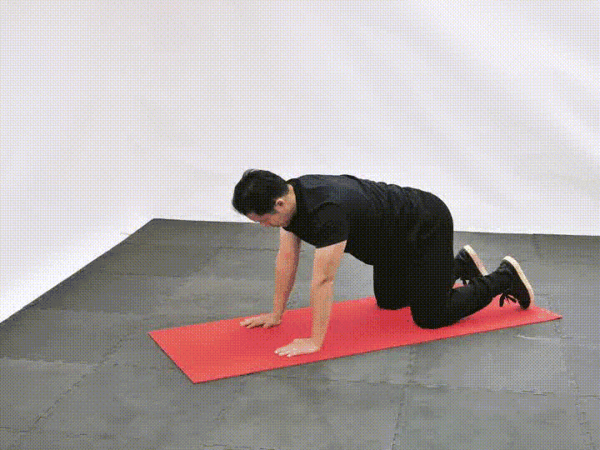
To perform the Dumbbell Bent Over Row, you will need two dumbbells. These dumbbells can be of different materials and weights, allowing you to choose the appropriate ones based on your strength level and ability. The choice of dumbbell weight significantly impacts the exercise, and it should be selected such that you can perform the movement correctly and with full focus. In addition to dumbbells, having a support for your knees or torso (such as a weight bench) can help maintain proper body posture and reduce stress on your lower back. While not essential, this support can improve comfort and exercise effectiveness. Additionally, using a suitable mat can prevent damage to the floor and aid in comfort during workouts.
No, this exercise is specifically designed for dumbbells to allow you to train each arm independently. Using dumbbells helps you strengthen your muscles symmetrically.
For best results, it is generally recommended to perform 3 to 4 sets of 8 to 12 repetitions per set. This number may vary depending on your experience level and goals.
Yes, this exercise is suitable for beginners, but you should start with light weights and gradually increase the weight. Focusing on proper form and injury prevention is crucial.
Rest between sets is typically recommended to be 60 to 90 seconds. This rest period provides sufficient recovery for strength and muscle capacity, allowing you to perform each set with full power.
How to perform
-
Step 1
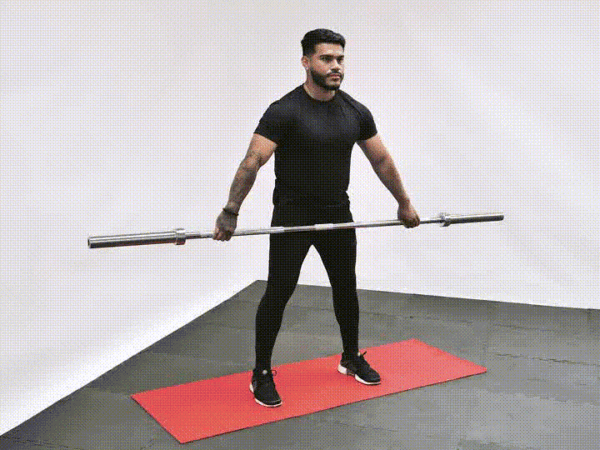
Start by standing with a dumbbell in each hand, palms facing your body. Slightly bend your knees and hinge at your hips, as if you are about to pick something up from the floor.
-
Step 2
Keep your arms extended straight down, then slowly lift the dumbbells towards your sides.
-
Step 3
At the highest point, hold the dumbbells for a few moments while contracting your back muscles. Then, slowly return to the starting position.
-
Step 4
Repeat this movement for the desired number of repetitions and sets.
-
Step 5
Do not arch or round your lower back.
-
Step 6
To increase the intensity of the exercise, perform the movement at a slower pace.
-
Step 7
Choose your weight carefully to prevent injury.