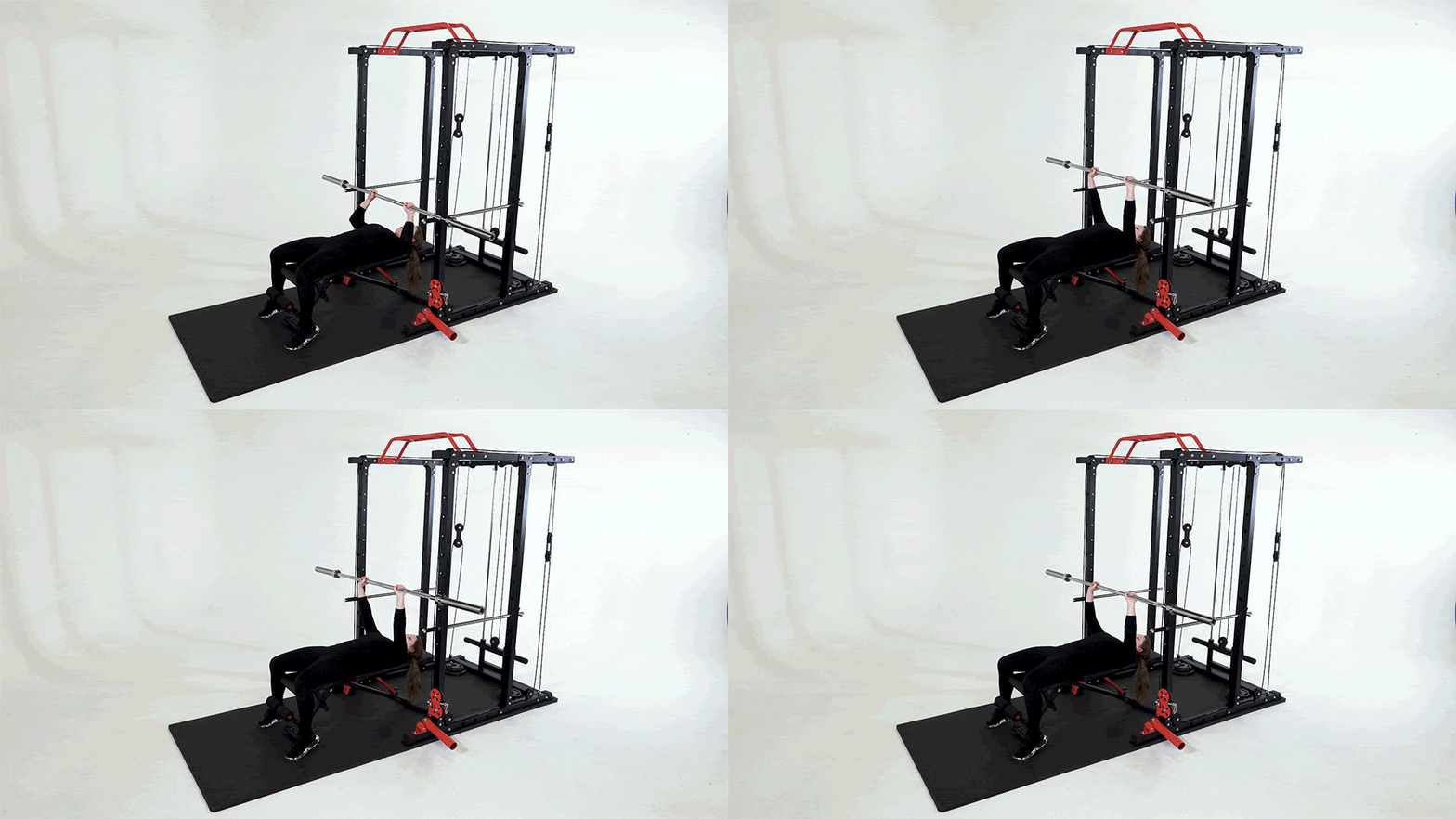
The Barbell Pin Press is an effective exercise for strengthening the upper body, particularly focusing on the chest, shoulders, and triceps. This exercise is performed isometrically and helps athletes increase their strength and endurance in horizontal pushing movements. Using a barbell and pins, athletes can perform the movements with more control and prevent potential injuries. This exercise is particularly suitable for improving strength and explosive power in strength and power training. By performing this exercise, athletes can improve the strength and size of their chest muscles, as well as the stabilizing muscles in the shoulder area, and enhance their performance in other movements like the Bench Press.
Target Muscles in Barbell Pin Press
The primary target muscles in the Barbell Pin Press are the pectoralis major. These muscles are crucial for pushing the load upwards and controlling the movement. Due to the isometric nature of this exercise, the chest muscles are put under significant tension, aiding in their strengthening and hypertrophy. In addition to the chest muscles, the triceps and deltoids are also well-engaged in this exercise. The triceps are essential for extending the arm and pushing the weight upwards, while the deltoids help stabilize the movement and play a role in generating the necessary power for lifting the weight.
Secondary Muscles Involved in Barbell Pin Press
Alongside the primary target muscles, other secondary muscles are also involved in the Barbell Pin Press. The core muscles are utilized to maintain balance and stability throughout the movement. These muscles help preserve proper form and prevent extraneous movements. Furthermore, the muscles of the back (rhomboids and trapezius) also assist in stabilizing the shoulders and maintaining the correct position during the exercise. By focusing on these secondary muscles, overall performance can be improved, and potential injuries can be prevented.
How to Perform the Barbell Pin Press
1. To perform the Barbell Pin Press, position yourself on a bench beneath the barbell and grip the bar with hands close together. Gently unrack the bar from the pins and bring it towards your chest. Note that your elbows should remain close to your body. 2. Then, press the weight upwards until your arms are fully extended and the bar returns to the pinned position. Throughout this exercise, pay close attention to proper form and controlled movement. Avoid sudden movements and oscillations to prevent potential injuries.
Equipment Required
To perform the Barbell Pin Press, you will need a barbell and safety pins. The safety pin mechanism should be set correctly to allow you to perform the movement comfortably and maintain proper form. Using appropriate weights is also very important. In addition to the barbell and pins, you may need an adjustable bench, which can help you be more comfortable during the exercise. Ensure that the equipment is properly adjusted and in good condition.
Yes, beginners can perform this exercise using lighter weights and focusing on proper form. It’s important to gradually increase their strength.
You can perform this exercise 1 to 2 times a week. Ensure adequate rest and recovery time between training sessions.
Yes, this exercise helps strengthen the chest muscles and can lead to increased size and strength in these muscles.
To prevent injuries, maintain proper form and avoid sudden movements. It’s also advisable to start with lighter weights and gradually increase the load.
Yes, you can use different weights. Ensure you select an appropriate weight to improve your strength and endurance.
How to perform
-
Step 1
Place a flat bench between a power rack, set the Smith machine safety pins at approximately chest level, and place the barbell on the pins.
-
Step 2
Lie flat on the bench so that the barbell is directly above your chest, then lock your feet under yourself, arch your lower back, and drive the barbell upwards with maximum force, feeling a stretch in your triceps.
-
Step 3
Hold the barbell at the top position for one second, then return to the starting position.
-
Step 4
Repeat for the desired number of repetitions and sets.