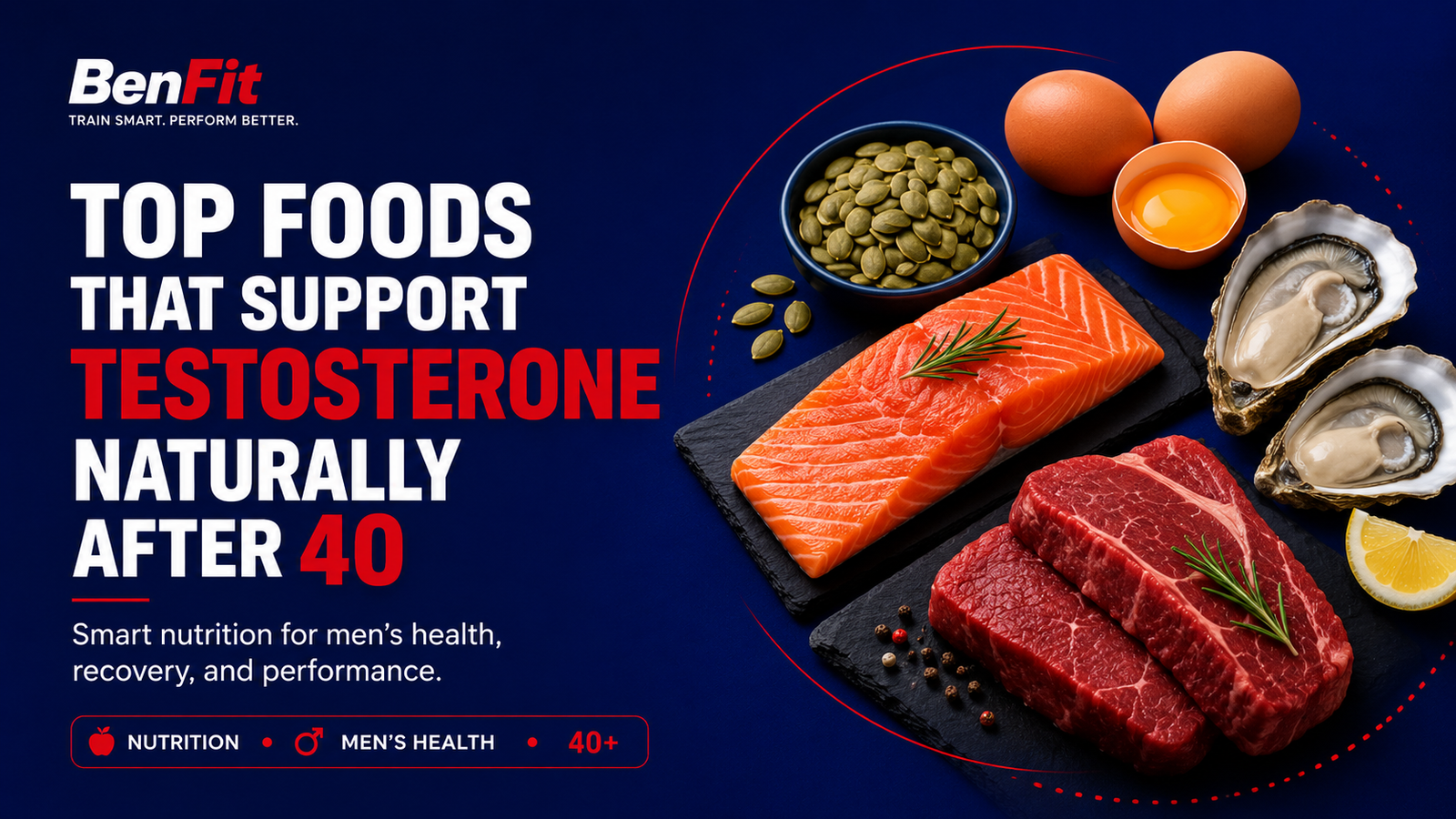
After 40, many men start asking the same question: “What should I eat to support testosterone, energy, strength, and performance?”
The honest answer is simple: no single food will magically boost testosterone overnight. Testosterone is affected by sleep, training, body fat, stress, alcohol, medical history, and overall lifestyle. But nutrition still matters because your body needs enough protein, minerals, healthy fats, and micronutrients to function well.
This article is not about “testosterone hacks.” It is about building a smarter nutrition foundation for men over 40.
For a full breakdown of symptoms, testing, and medical interpretation, read BenFit’s full guide here: Testosterone After 40: Symptoms, Testing, and Natural Support.
Food Supports the System — It Does Not Replace the System
If your sleep is poor, your training is inconsistent, your stress is high, and your body fat is rising, adding pumpkin seeds or oysters will not fix the whole problem.
The Endocrine Society recommends diagnosing low testosterone only when symptoms are present and testosterone levels are consistently low on accurate testing. That means food should be viewed as one part of the bigger system.
A testosterone-supportive lifestyle includes:
- Strength training
- Quality sleep
- Protein-rich nutrition
- Healthy body composition
- Stress management
- Medical testing when needed
Now let’s look at the foods that best fit that system.
1. Eggs: Complete Protein, Choline, and Practical Nutrition
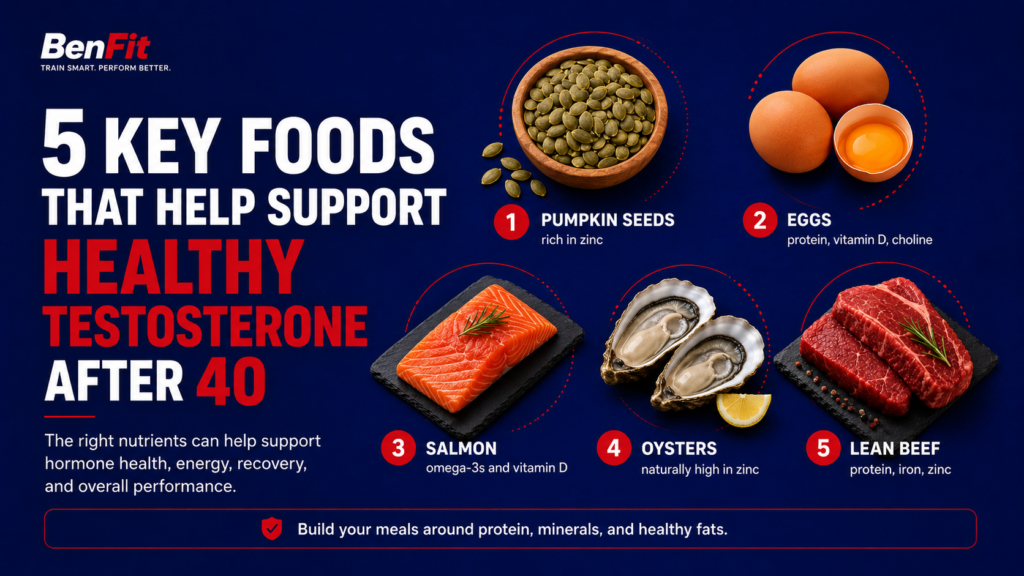
Eggs are one of the easiest foods to include in a testosterone-supportive meal plan because they provide high-quality protein, healthy fats, and useful micronutrients in a simple package.
According to the NIH Office of Dietary Supplements, egg yolks contain small amounts of vitamin D. Eggs also provide protein and choline, which support general health, recovery, and daily performance.
Why eggs matter after 40:
- They help support muscle repair.
- They are easy to prepare.
- They work well for breakfast or post-workout meals.
- They provide protein without needing a complicated diet.
A simple BenFit-style breakfast could be eggs, spinach, tomatoes, avocado, and a piece of whole-grain toast.
2. Salmon: Omega-3s, Vitamin D, and Recovery Support
Salmon is one of the strongest foods for men over 40 because it supports several areas at once: protein intake, omega-3 intake, vitamin D intake, and heart-friendly nutrition.
The NIH lists fatty fish like salmon, tuna, trout, and mackerel among the best natural sources of vitamin D. The NIH omega-3 fact sheet also lists cold-water fatty fish as key sources of omega-3 fatty acids.
For men over 40, salmon is useful because recovery becomes more important. You cannot train hard, sleep poorly, eat randomly, and expect your body to keep responding forever.
A smart goal is to include fatty fish 2–3 times per week if it fits your diet, budget, and preferences.
3. Lean Beef: Protein, Iron, and Zinc
Lean beef can be a useful food for men who tolerate it well and need more protein, iron, and zinc.
Zinc is especially relevant because the NIH zinc fact sheet lists meat, fish, seafood, and poultry as important food sources of zinc. Zinc should not be treated like a magic testosterone pill, but low intake can be a problem for overall health and normal body function.
The key is portion control and quality.
Choose:
- Lean steak
- Lean ground beef
- High-quality meat when available
- Balanced meals with vegetables and complex carbs
Avoid building your entire diet around heavy red meat. Think of lean beef as one protein option, not the whole plan.
4. Oysters: Naturally High in Zinc
Oysters are one of the richest natural sources of zinc. The NIH notes that oysters contain more zinc per serving than any other food.
That is why oysters often appear in men’s health and testosterone nutrition conversations.
But here is the important point: oysters are not a cure for low testosterone. They are simply a nutrient-dense food that can support zinc intake.
Use them occasionally if you enjoy seafood, but do not rely on them as a treatment.
5. Pumpkin Seeds: Small Food, Big Mineral Value
Pumpkin seeds are easy to add to meals and snacks. They contain zinc and magnesium, two minerals that matter for overall health, performance, and recovery.
The NIH lists pumpkin seeds as a zinc-containing food, and the NIH magnesium fact sheet notes that magnesium supports protein synthesis, muscle and nerve function, blood glucose control, and blood pressure regulation.
Use a small handful per day. More is not always better because seeds are calorie-dense.
Easy ways to use pumpkin seeds:
- Add them to Greek yogurt.
- Add them to salads.
- Add them to oatmeal.
- Mix them with walnuts or berries.
- Use them as a crunchy topping on rice bowls.
6. Green Vegetables: Micronutrients, Fiber, and Body Composition
Spinach, broccoli, kale, parsley, and other green vegetables support the bigger picture: digestion, calorie control, micronutrient intake, and heart-friendly eating.
They do not directly “raise testosterone,” but they help build the type of diet that supports a leaner, healthier body.
After 40, this matters because belly fat, blood sugar, poor sleep, and inactivity can all make energy and hormone-related symptoms worse.
7. Smart Carbs: Oats, Sweet Potatoes, Rice, and Fruit
Many men try to fix testosterone by cutting carbs too aggressively. That often backfires.
If you train, walk, work, and want energy, you need enough fuel.
Good options include:
- Oats
- Brown rice
- Sweet potatoes
- Potatoes
- Fruit
- Beans
- Lentils
The goal is not low carb or high carb. The goal is the right amount for your body, your training, and your fat-loss goal.
The BenFit Plate for Men Over 40
Use this simple structure:
- 1 palm of protein
- 1 fist of vegetables
- 1 cupped hand of carbs
- 1 thumb of healthy fats
- Water or a zero-calorie drink
Example meal:
- Salmon
- Sweet potato
- Spinach salad
- Olive oil dressing
- Pumpkin seeds
- Water
This is simple, repeatable, and realistic.
Final Thoughts
The best testosterone-supportive diet after 40 is not built on one food. It is built on consistency.
Use foods like eggs, salmon, lean beef, oysters, pumpkin seeds, green vegetables, and smart carbs to support energy, recovery, and body composition.
Then combine that with strength training, sleep, stress control, and medical testing when symptoms are serious.
For the full lifestyle system, read Strength Training, Protein, and Sleep After 40: The BenFit Formula.
FAQ
What foods are best for testosterone after 40?
Eggs, salmon, lean beef, oysters, pumpkin seeds, green vegetables, and smart carbs can support the nutritional foundation for men’s health after 40.
Can food increase testosterone naturally?
Food can support normal hormone health, but it should not be treated like medicine. Sleep, training, body fat, stress, and medical testing also matter.
Are oysters good for testosterone?
Oysters are very high in zinc, which is important for normal body function. They may support nutrient intake, but they are not a cure for low testosterone.
Should men over 40 take zinc supplements?
Only if needed. Food should come first. If you suspect deficiency, discuss testing and supplementation with a healthcare provider.
What is the best diet for men over 40?
A high-protein, minimally processed diet with vegetables, smart carbs, healthy fats, and consistent portions is usually the best starting point.
Start Your BenFit Plan
Want a nutrition and training plan built around your body, schedule, and goals? Explore the BenFit coaching plans, see real BenFit transformations, or contact BenFit to start your assessment.