The most important message is simple:
Better not drink.
Alcohol is not a health drink. It does not improve recovery, strength, sleep, fat loss, or long-term performance.
The World Health Organization states that when it comes to alcohol consumption, there is no safe amount that does not affect health. Alcohol is also classified as a Group 1 carcinogen by the International Agency for Research on Cancer.
So this article is not about making alcohol “healthy.” It is about reducing harm if someone chooses to drink.
At BenFit, the best recommendation for health, energy, body composition, and performance is clear:
If your results matter, drink less — or do not drink.
Why Alcohol Is a Problem for Health and Fitness
Alcohol affects the body far beyond the night you drink.
CDC states that drinking less is better for health, and choosing not to drink can lower health risks. It also notes that excessive alcohol use can have immediate and long-term effects.
Alcohol can negatively affect:
- Brain function
- Sleep quality
- Recovery
- Muscle repair
- Decision-making
- Fat loss
- Hydration
- Training performance
- Heart and liver health
CDC also links long-term alcohol use with increased risk of several cancers, high blood pressure, heart disease, liver disease, stroke, digestive problems, and weaker immune function.
Alcohol and Sleep: Why You Feel Worse the Next Day
Many people think alcohol helps them sleep because it can make them feel drowsy. But sleep is not just about falling asleep. It is about sleep quality.
Alcohol can disrupt sleep architecture and recovery. A systematic review found that higher doses of alcohol may shorten the time it takes to fall asleep, but this can come with later REM sleep disruption.
Poor sleep affects:
- Hunger
- Cravings
- Mood
- Focus
- Hormones
- Recovery
- Workout performance
CDC recommends adults get at least 7 hours of sleep per day. If alcohol ruins that sleep, your body pays for it the next day.
Alcohol and Muscle Recovery
If you train, alcohol is especially damaging because your body needs recovery to improve.
Research on post-exercise alcohol intake found that alcohol reduced muscle protein synthesis after exercise, even when protein was consumed with alcohol. The study concluded that alcohol suppresses the anabolic response in skeletal muscle and may impair recovery, adaptation, and later performance.
In simple terms:
You do not build muscle during the workout.
You build muscle when your body recovers from the workout.
Alcohol makes that process worse.
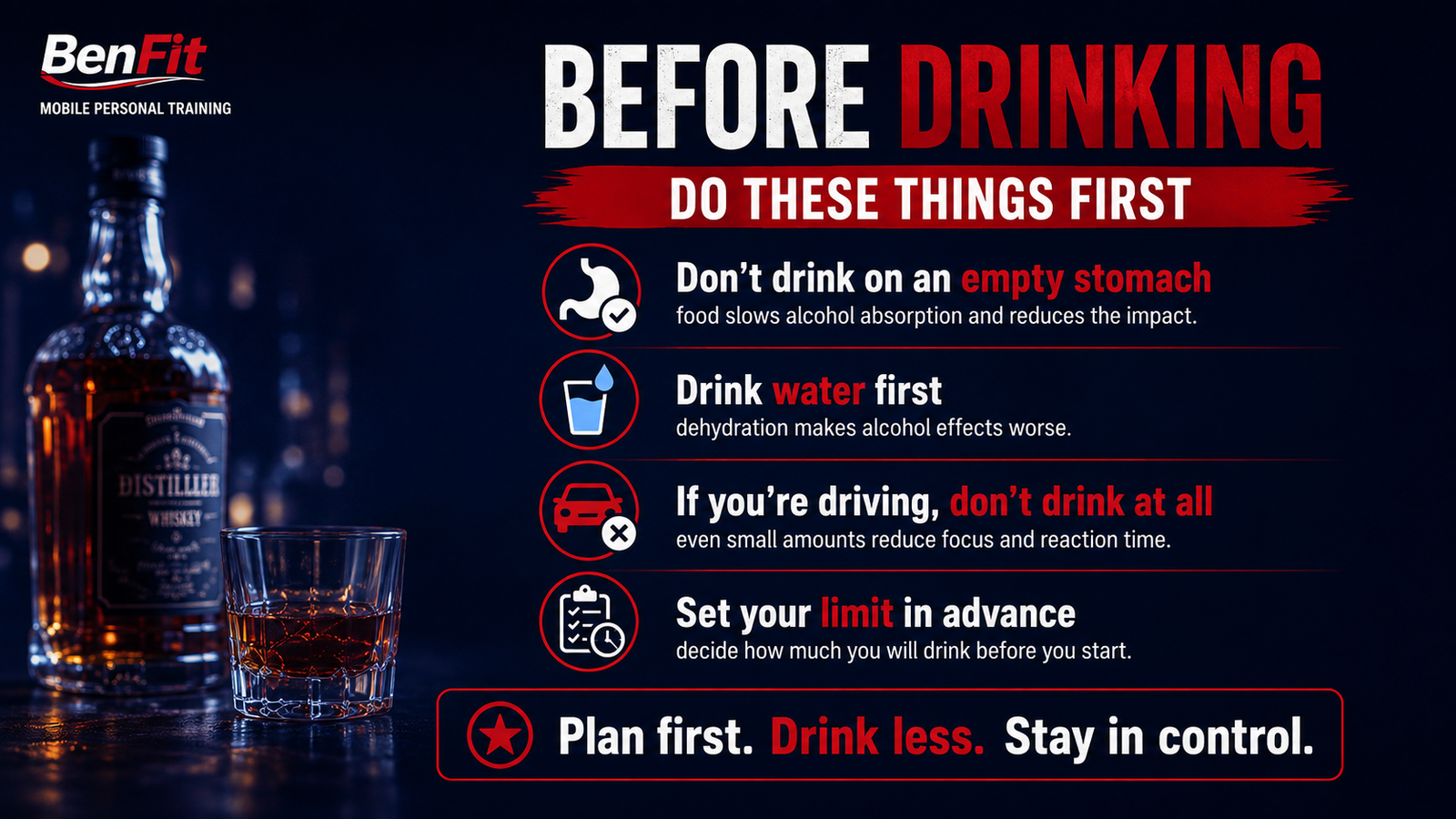
Before Drinking Alcohol: 4 Things to Do
Again, the best option is not to drink. But if someone still chooses to drink, the following steps may reduce harm.
1. Do Not Drink on an Empty Stomach
Food can slow alcohol absorption and reduce how quickly alcohol hits your system. A balanced meal before drinking is better than drinking while fasted.
Choose:
- Lean protein
- Vegetables
- Healthy fats
- Complex carbs
- Water
Example: grilled chicken, rice, salad, olive oil, and water.
2. Drink Enough Water First
Alcohol can contribute to fluid loss and dehydration-like symptoms. NIAAA notes that some people use electrolyte drinks for hangover symptoms because drinking can increase urination and fluid loss, although electrolytes are not a guaranteed hangover cure.
Before drinking, start hydrated.
3. Never Drink If You Are Driving
This is non-negotiable.
CDC states that safe driving requires focus, coordination, good judgment, and quick reactions, and that any alcohol use impairs the ability to drive safely. It also notes that impairment starts below the legal BAC limit.
If you drive, do not drink.
4. Set Your Limit Before You Start
Do not decide your limit after you have already started drinking.
Before the first drink, decide:
- How much you will drink
- When you will stop
- How you will get home
- What you will eat
- Whether training the next day needs to be changed
The goal is control, not damage control.
After Drinking Alcohol: 4 Things to Do
After drinking, the goal is not to “detox.” Your body needs time. The goal is to support hydration, sleep, food intake, and safety.
1. Drink Water and Rehydrate
Drink water gradually. Electrolytes may help some people feel better, but NIAAA notes that research has not found a clear correlation between the extent of electrolyte disruptions and hangover severity, and the body usually restores electrolyte balance once alcohol effects subside.
Use hydration as support, not as a magic fix.
2. Eat a Light Protein-Based Meal
A light meal can help stabilize appetite and energy.
Good options:
- Eggs and toast
- Greek yogurt and fruit
- Chicken and rice
- Soup with protein
- Salmon, potatoes, and vegetables
Avoid turning the day after drinking into a high-calorie binge.
3. Sleep and Recover
Do not force high performance after poor sleep and alcohol.
The next day, prioritize:
- Sleep
- Hydration
- Protein
- Walking
- Light movement
- Simple meals
If you slept badly, your body is not ready for a hard training session.
4. Do Not Drive Until Fully Sober
Feeling “okay” is not the same as being safe. Alcohol affects reaction time, coordination, judgment, and focus. CDC emphasizes that any alcohol use impairs safe driving ability.
If there is any doubt, do not drive.
After Drinking: Do Not Rush to Train
If you drank alcohol, do not rush into heavy training.
For the next 24 hours, avoid:
- Heavy lifting
- High-intensity intervals
- Max-effort training
- Long endurance sessions
- Complex technical training
Alcohol can reduce coordination, sleep quality, hydration, recovery, and muscle repair. That makes hard training riskier and less productive.
Better options:
- Walking
- Light stretching
- Mobility
- Easy cycling
- Breathing work
- Rest
If you want progress, recovery matters.
The BenFit Rule: Health First, Performance Second
If you care about your health and performance, alcohol works against your goals.
It can:
- Hurt your brain
- Increase disease risk
- Damage sleep and recovery
- Slow muscle repair
- Reduce training quality
- Increase poor food choices
- Make fat loss harder
CDC states that drinking less is better for your health and that you can lower health risks by drinking less or choosing not to drink.
That is the real message.
Final Thoughts
Alcohol does not help your body become stronger, leaner, healthier, or more athletic.
The best option is:
Do not drink.
But if you choose to drink, reduce harm:
- Do not drink on an empty stomach
- Drink water first
- Never drink and drive
- Set a limit before starting
- Rehydrate afterward
- Eat a light protein-based meal
- Sleep and recover
- Do not train hard for 24 hours
At BenFit, we do not build programs around perfection. We build systems around better decisions.
And one of the best decisions for energy, sleep, muscle, fat loss, and long-term health is simple:
Drink less — or skip it completely.
FAQ
Is any amount of alcohol healthy?
WHO states that there is no safe amount of alcohol that does not affect health. CDC also states that drinking less is better for health and choosing not to drink can lower risk.
Can I work out after drinking?
It is better to avoid hard training after alcohol, especially within 24 hours. Alcohol can affect sleep, recovery, coordination, hydration, and muscle repair.
Does alcohol hurt muscle growth?
Yes, alcohol can impair recovery. Research found alcohol reduced post-exercise muscle protein synthesis, even when consumed with protein.
Can I drive after one drink?
Do not rely on “feeling fine.” CDC states that any alcohol use impairs the ability to drive safely and that impairment starts below the legal BAC limit.
What should I eat after alcohol?
Choose a light protein-based meal with water. Avoid greasy binge meals that add calories and make digestion worse.