
The “Dumbbell Front Raise on Incline Bench (Hammer Grip)” is an effective exercise for strengthening the shoulder muscles, particularly targeting the anterior deltoids (front of the shoulder) and the middle deltoids. In this exercise, you lift dumbbells in a hammer grip (with hands in a semi-pronated position) while on an incline bench. This method of performing the exercise places more emphasis on the shoulder muscles while also engaging the forearm and wrist muscles.
The incline front raise with a hammer grip, due to the angled bench, helps increase the range of motion and add variety to shoulder training. By performing this exercise, you can strengthen the deltoid muscles, specifically the anterior and medial deltoids, increasing shoulder size and strength. This exercise is particularly suitable for individuals looking to strengthen their shoulders and improve the balance between different shoulder muscle groups.
Target Muscle
The primary muscle targeted in this exercise is the anterior deltoid, which forms the front of the shoulder. This muscle is responsible for lifting the arm forward, and strengthening it helps increase shoulder size and strength. The dumbbell front raise with a hammer grip on an incline bench specifically focuses on the anterior deltoid, subjecting it to greater stress and tension, which aids in its growth.
In addition to the anterior deltoid, the medial deltoid is also indirectly engaged. This muscle, along with the anterior deltoid, assists in overhead movements. The hammer grip front raise exercise is particularly beneficial for building mass and strength in the shoulder area, generally improving shoulder aesthetics.
Secondary Muscles Engaged
In this exercise, besides the anterior and medial deltoid muscles, secondary muscles such as the forearm muscles, wrist muscles, and core stabilizing muscles are also engaged. The forearm and wrist muscles are activated to hold the dumbbells and move them along the correct path. Additionally, the core muscles (abdomen and lower back) help maintain balance and stability of the body throughout the movement. These secondary muscles prevent excessive body sway and aid in the correct execution of the exercise.
Alongside these muscles, the posterior shoulder muscles and upper back muscles are also indirectly involved. Overall, this exercise utilizes a series of muscles in different parts of the body for correct and safe execution, contributing to shoulder strength and posture maintenance.
How to Perform the Exercise
To perform the dumbbell front raise with a hammer grip on an incline bench, first sit on an incline bench and hold two dumbbells in your hands. Position your hands in front of your body at an angle of approximately 30 to 45 degrees with the ground. Your thumbs should point forward, and your other fingers should be slightly curled so that the dumbbells are in a hammer grip position.
With complete control, lift the dumbbells forward and upward until your arms are roughly parallel to your shoulders. Ensure that your elbows remain slightly bent throughout the movement, and the motion originates solely from the shoulder joint. After reaching the highest point, pause briefly, then slowly lower the dumbbells back to the starting position. Perform this exercise for the desired number of repetitions, maintaining full control throughout each rep.
Equipment Required
To perform this exercise, you will need two dumbbells of appropriate weight and an adjustable incline bench. The choice of dumbbell weight depends on your fitness level, but to prevent shoulder injuries, it is advisable to start with lighter dumbbells and gradually increase the weight.
The incline bench should be adjustable to allow you to select the appropriate angle for performing the exercise. It must also be sturdy and stable to prevent any excessive movement or instability during the workout.
Yes, beginners can perform this exercise using lighter dumbbells. However, they should pay attention to proper form to prevent shoulder injuries.
This exercise can be performed 2 to 3 times a week. It is best to allow sufficient recovery time for the shoulder muscles between training sessions.
Using heavier weights may put excessive strain on the shoulders. It is advisable to start with lighter weights and gradually increase the load.
This exercise specifically targets the anterior and medial deltoid muscles. However, by altering the angles of the movement, other shoulder muscles can also be strengthened.
How to perform
-
Step 1
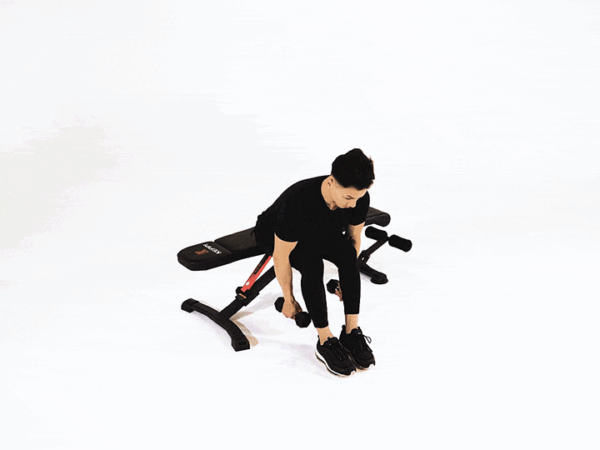
Begin by sitting on a flat bench, holding dumbbells with a neutral grip, hands at your sides.
-
Step 2
Slowly raise both dumbbells forward to shoulder level. Focus on contracting your shoulder muscles during the movement. Maintain a pronated grip (palms facing down) throughout the exercise.
-
Step 3
Hold this position for one second, then return to the starting position.
-
Step 4
Repeat for the desired number of repetitions and sets.