
The “Standing Dumbbell Shrug” is a simple and effective exercise for strengthening the shoulder and neck muscles. This exercise is specifically designed to increase the mass of the trapezius muscles (Trap), located in the upper back and neck. In this movement, you should hold dumbbells in your hands and raise and lower your shoulders, which puts pressure on and stimulates the shoulder and neck muscles. The shrug is an excellent exercise for those looking to strengthen their upper body and optimize the use of their neck and back muscles. This movement is particularly beneficial for individuals active in strength sports or bodybuilding who aim to improve their muscle endurance. The primary focus of this exercise is on the muscles of the back of the neck and shoulders, helping to achieve a strong and balanced shape in these areas.
Target Muscle

The main target muscles for this exercise are the trapezius muscles (Trap). These muscles are located in the upper back and neck area and are responsible for raising the shoulders and supporting the neck bones. By performing the shrug movement, these muscles are directly stressed, leading to their strengthening and increased mass. The trapezius muscles are particularly important in bodybuilding and strength sports, as they improve shoulder and neck endurance. In addition to the trapezius muscles, the medial deltoid muscles (mid-shoulder) and forearm muscles are indirectly involved in this exercise. Overall, this movement strengthens and tones the upper body muscles, especially the shoulder and neck areas.
Secondary Muscles Involved
In this exercise, besides the main muscles like the trapezius, the medial deltoid muscles and forearm muscles are also secondarily involved. The medial deltoid is responsible for moving the shoulders sideways and is indirectly activated in this movement to raise the shoulders. Also, the forearm muscles are engaged to hold the dumbbells and prevent them from slipping during the exercise. Furthermore, the abdominal and lower back muscles work to maintain body balance and prevent excessive movement during the exercise. These muscles are particularly important when performing heavy lifts and are crucial for preventing injuries.
How to Perform
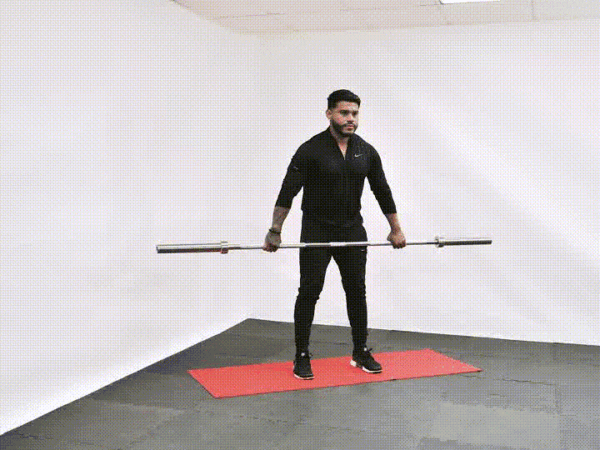
To perform the standing dumbbell shrug, first stand with your feet shoulder-width apart and hold dumbbells in each hand. Ensure the dumbbells are positioned at your sides. Then, slowly raise your shoulders as if trying to bring them towards your ears. At the highest point, pause for a moment, and then slowly lower your shoulders back to the starting position. It is important to avoid quick, jerky movements and maintain complete control over the dumbbells throughout the exercise. Also, to prevent excessive strain on your lower back and neck, you must maintain proper posture during the movement. Performing this exercise with correct form is crucial to prevent injuries.
Equipment Needed
To perform the standing dumbbell shrug, you will need a pair of suitable dumbbells. The weight of the dumbbells should be appropriate for your strength and fitness level. For beginners, it is recommended to start with lighter dumbbells and gradually increase the weight. Athletic shoes with adequate support are also recommended to maintain balance and prevent foot injuries. Using a weightlifting belt to support your lower back, especially when performing the exercise with heavier weights, can be beneficial.
Yes, this exercise is suitable for beginners. By starting with lighter weights, you can learn the correct form and gradually increase the weight.
For strengthening the shoulder and neck muscles, typically 3 to 4 sets of 8 to 12 repetitions per set are recommended.
Yes, the shrug exercise helps strengthen the neck muscles and the upper shoulder areas, as these muscles are directly stressed.
Yes, this exercise is one of the best for strengthening shoulder muscles and improving their endurance.
How to perform
-
Step 1
Stand with your feet shoulder-width apart, holding a dumbbell in each hand with a neutral grip (palms facing your body). The dumbbells should hang in front of your thighs. Your arms should be fully extended with a slight bend in the elbows.
-
Step 2
Engage your abdominal muscles to stabilize your torso throughout the exercise.
-
Step 3
Begin to raise your shoulders upward and outward. Keep the dumbbells close to your body as you lift them to chest level or slightly below your chin. Your elbows should be higher than your wrists at the top of the movement.
-
Step 4
Pause briefly at the top of the movement, focusing on the contraction of your shoulder and upper back muscles.
-
Step 5
Slowly and with control, return the dumbbells to the starting position, keeping them close to your body.