The Barbell High Snatch is a complex and technical exercise commonly used in strength and Olympic training programs. This movement is known as one of the advanced variations of the Squat Power Snatch and challenges a combination of strength, speed, and proper technique. In this movement, the barbell is pulled from the ground to overhead, and then lifted overhead with a quick and powerful jump. This exercise requires high muscular coordination, balance, and flexibility, and is mostly performed by professional weightlifters and advanced bodybuilders. Due to its complexity, performing the movement correctly is crucial to prevent injuries. This exercise is very beneficial for increasing explosive power, speed, and strengthening the entire body, especially in sports that require high leg and shoulder strength.
Target Muscles in Barbell High Snatch
The primary target muscles in the “Barbell High Snatch” are the deltoids and trapezius. These muscles are heavily engaged, especially in the phase of pulling the barbell upwards and bringing it overhead. The deltoids help control the movement and bring the barbell overhead, while the trapezius muscles are responsible for shrugging the shoulders and keeping the barbell in the correct position. Additionally, the upper back muscles and neck muscles are also activated for stability and control of the barbell throughout the movement. These muscles help maintain body balance and prevent forward or backward leaning, playing a significant role in preventing potential shoulder and back injuries.
Secondary Muscles Involved in Barbell High Snatch
In addition to the target muscles, the leg muscles, particularly the quadriceps and hamstrings, are also heavily involved in this exercise. These muscles are used at the beginning of the movement to generate initial force and jump upwards. Furthermore, the gluteal muscles, which play a vital role in producing power and speed in the legs, are highly active in this movement. The core muscles, including the abdominals and lower back, are also intensely engaged to maintain body balance and stability throughout the exercise. Moreover, the forearm and hand muscles require strength and control to grip and hold the barbell during the movement. Finally, the lower back muscles act as a support to maintain spinal stability and prevent injury during this exercise.
How to Perform the Barbell High Snatch
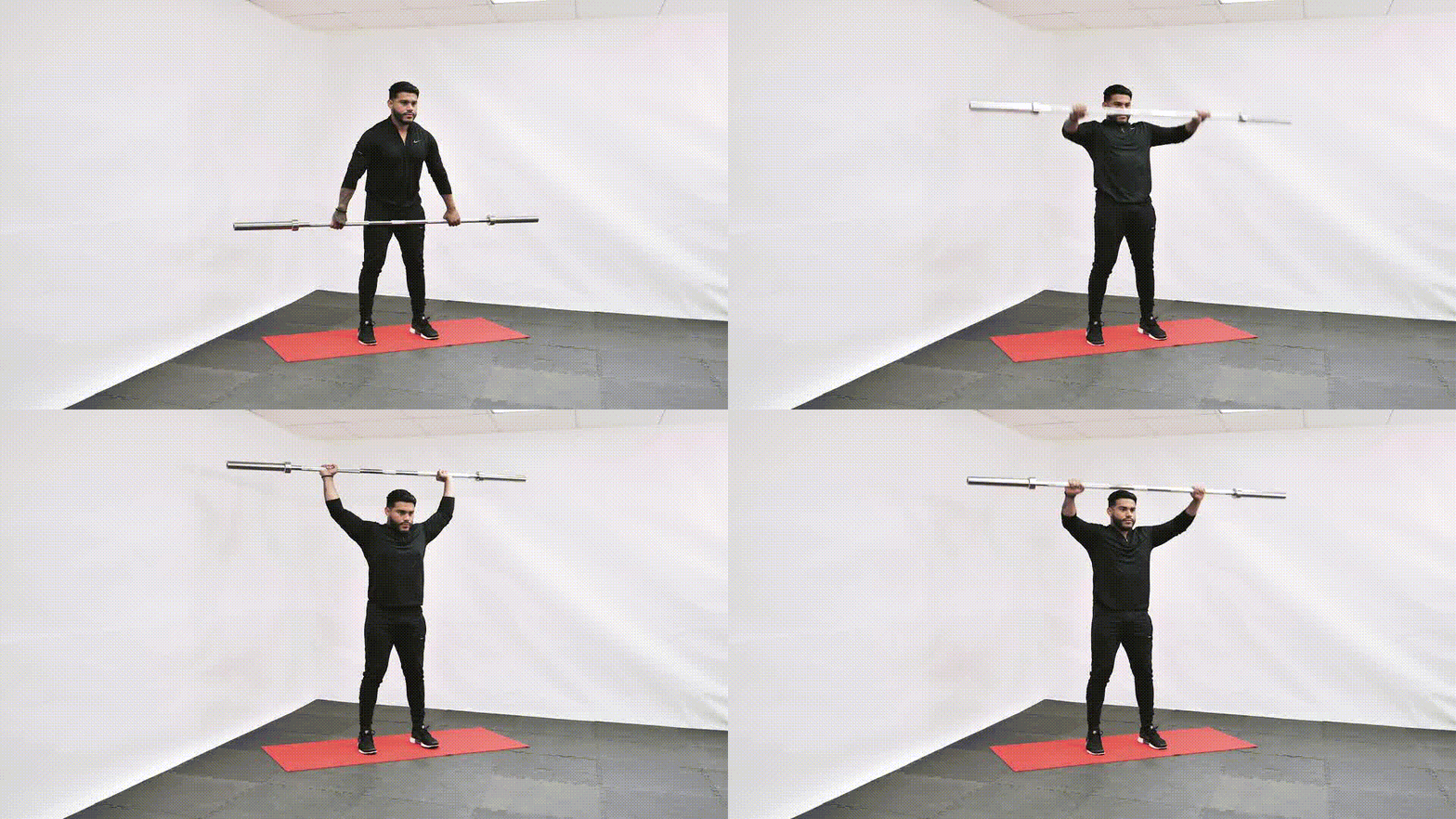
To perform the “Barbell High Snatch,” first place the barbell on the ground and grip it with both hands at a wide distance (shoulder-width or wider). Stand with feet shoulder-width apart and knees slightly bent. From this position, with an explosive movement, lift the barbell off the ground while simultaneously pulling your body upwards. As the movement continues, shrug your shoulders and quickly bring the barbell overhead. Throughout this movement, the body should remain straight and stable, avoiding excessive forward or backward leaning. The movement should be performed with a focus on explosive power and precise control. After bringing the barbell overhead, hold the position for a moment to ensure complete stability and control, then slowly return the barbell to the starting position. Perform this exercise for the specified number of repetitions.
Equipment Required
To perform the “Barbell High Snatch,” you need a barbell with adjustable weights. Choosing the appropriate weight is very important, as this exercise requires high control and proper technique. Also, using barbell collars to prevent weights from slipping during the movement is essential. Using suitable weightlifting shoes with a firm sole and good ankle support can help improve balance and movement control. Additionally, some individuals may use a weightlifting belt to support their lower back and reduce pressure on the spine. These additional pieces of equipment can aid in performing the movement correctly and safely, but their use depends on the individual’s experience level and needs.
Due to its complexity and the need for high technique, this movement is more suitable for experienced weightlifters and professional bodybuilders. Beginners should start with simpler exercises and gradually progress to performing this movement.
In the “High Snatch,” the focus is more on lifting the barbell with greater power and speed, while the “Regular Snatch” focuses more on technique and balance. Also, lighter weights are typically used in the “High Snatch” to increase the speed and height of the movement.
The weight should be chosen such that the movement is performed with correct form and without losing control. Starting with lighter weights and gradually increasing them as you progress in training is recommended.
If performed correctly and with proper form, the “Barbell High Snatch” can help strengthen the shoulders. However, if performed with excessive weight or incorrect technique, it may cause injury to the shoulder joints or back.
Using a weightlifting belt can help reduce pressure on the spine, but it is not mandatory. This depends on individual needs and training level.
How to perform
-
Step 1
Stand in front of a barbell, feet shoulder-width apart, and grip the barbell with both hands (palms facing down).
-
Step 2
Grip the barbell about twice shoulder-width apart and bring it up to mid-thigh level.
-
Step 3
Then, by driving through the heels and raising the barbell, perform a second quick pull with extension through the hips and knees to bring the barbell up as quickly as possible.
-
Step 4
Continue to pull the barbell overhead without bending your knees again and hold for a moment.
-
Step 5
Slowly return the barbell to the starting position.
-
Step 6
Perform the exercise for the desired number of repetitions and sets.