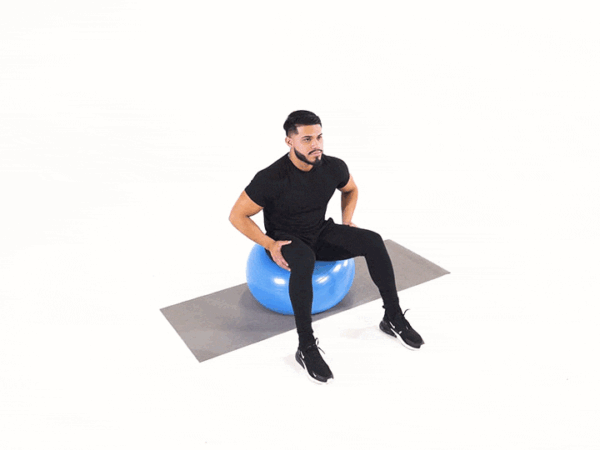

The “Reverse Fly with External Rotation” is a complex exercise designed to strengthen the rear shoulder muscles and the middle and upper back. This movement is a variation of the reverse fly exercise, with the addition of external shoulder rotation, which places more emphasis on specific muscles in the shoulder and back area. In fact, this movement combines exercises that help strengthen the shoulder stabilizer muscles, the posterior deltoid muscles, and the trapezius muscles. The goal of this exercise is to improve range of motion, strengthen the shoulders, and prevent common shoulder injuries.
This movement is very suitable for individuals looking to strengthen their shoulders and improve upper body muscular endurance. Furthermore, adding external rotation to the reverse fly movement not only strengthens the shoulder muscles but also improves the ability to control shoulder movement during the exercise. Overall, the reverse fly with external rotation is an excellent exercise for creating balance in the shoulder and back muscles.
Target Muscle
The primary muscle targeted in this exercise is the posterior deltoid (rear shoulder) muscles. These muscles are particularly engaged during external shoulder rotation and while performing the reverse fly movement. This exercise is specifically beneficial for strengthening the rear shoulder muscles, which are often indirectly addressed in many other exercises. Since the posterior deltoid muscles are located in the back of the shoulder, they are intensely activated in this movement.
In addition to the posterior deltoids, other muscles such as the trapezius muscles (located in the middle and upper back area) are also engaged in this exercise. The upper back muscles, especially in the middle and lower parts, are activated for body stability and balance. The trapezius muscles in the upper back also play an important role in preventing excessive strain during external rotation.
Secondary Muscles Engaged
Alongside the primary muscles involved, other muscles are also activated secondarily. The upper back and shoulder area muscles, particularly the medial deltoids, are involved in performing this movement. These muscles actively work to control shoulder movement and prevent excessive motion in the shoulder area, especially during external rotation. Additionally, the core and lower body stabilizer muscles, such as the abductor muscles and neck stabilizers, are indirectly engaged to maintain body posture.
The reverse fly with external rotation also indirectly engages the forearm and wrist muscles, as you need to apply the necessary tension to the cable and your arm and forearm muscles must be engaged to maintain control. This additional engagement helps strengthen other body muscles, making this movement a complete exercise for upper body strengthening.
How to Perform the Exercise
To perform the reverse fly with external rotation, first sit on a reverse fly machine or lie on your back and grasp the handles of the machine. Then, carefully move your shoulders backward and upward, keeping your elbows slightly bent. After this initial movement, simultaneously perform external shoulder rotation so that your hands rotate slightly outward, applying pressure to the posterior deltoid position.
While performing this exercise, ensure your back remains stable, and only your shoulders move. The shoulder rotation should be performed in a controlled manner to avoid unnecessary stress on the shoulder joints. This movement must be done with complete control to prevent injury. Maintain regular breathing throughout the movement, exhaling as you raise your hands and inhaling as you return them to the starting position.
Equipment Required
To perform the reverse fly with external rotation, you will need a cable machine or a reverse fly machine. This machine allows you to perform the movement with correct form and apply appropriate resistance to the shoulder muscles. The machine is specifically designed to allow controlled movement and prevent potential injuries. Using a cable machine with adjustable settings allows you to adjust the intensity of the exercise according to your ability.
In addition to the cable machine, you may need workout gloves to prevent cuts or injuries to your hands. Also, if you are using heavy weights, using a weightlifting belt to support your lower back can be beneficial.
Yes, this exercise is particularly beneficial for strengthening the posterior deltoid muscles and the shoulders.
Yes, the back muscles are activated to maintain body balance during this exercise, contributing to lower back strengthening.
To prevent injury, maintain correct form and avoid using weights heavier than you can handle.
To start, 3 sets of 12-15 repetitions are suitable, and you can gradually increase the number of sets and repetitions.
This exercise is suitable for beginners, but it’s best to start with lighter weights to maintain proper form.
How to perform
-
Step 1
To begin this exercise, first lie prone on an incline bench, holding dumbbells in each hand with your palms facing the floor and the dumbbells resting on the floor in front of you.
-
Step 2
Then, raise your arms until they are parallel to your shoulders, opening them in a manner similar to a standard fly movement.
-
Step 3
Hold this position for a few seconds.
-
Step 4
Return to the starting position.
-
Step 5
Perform this exercise for the required number of repetitions.