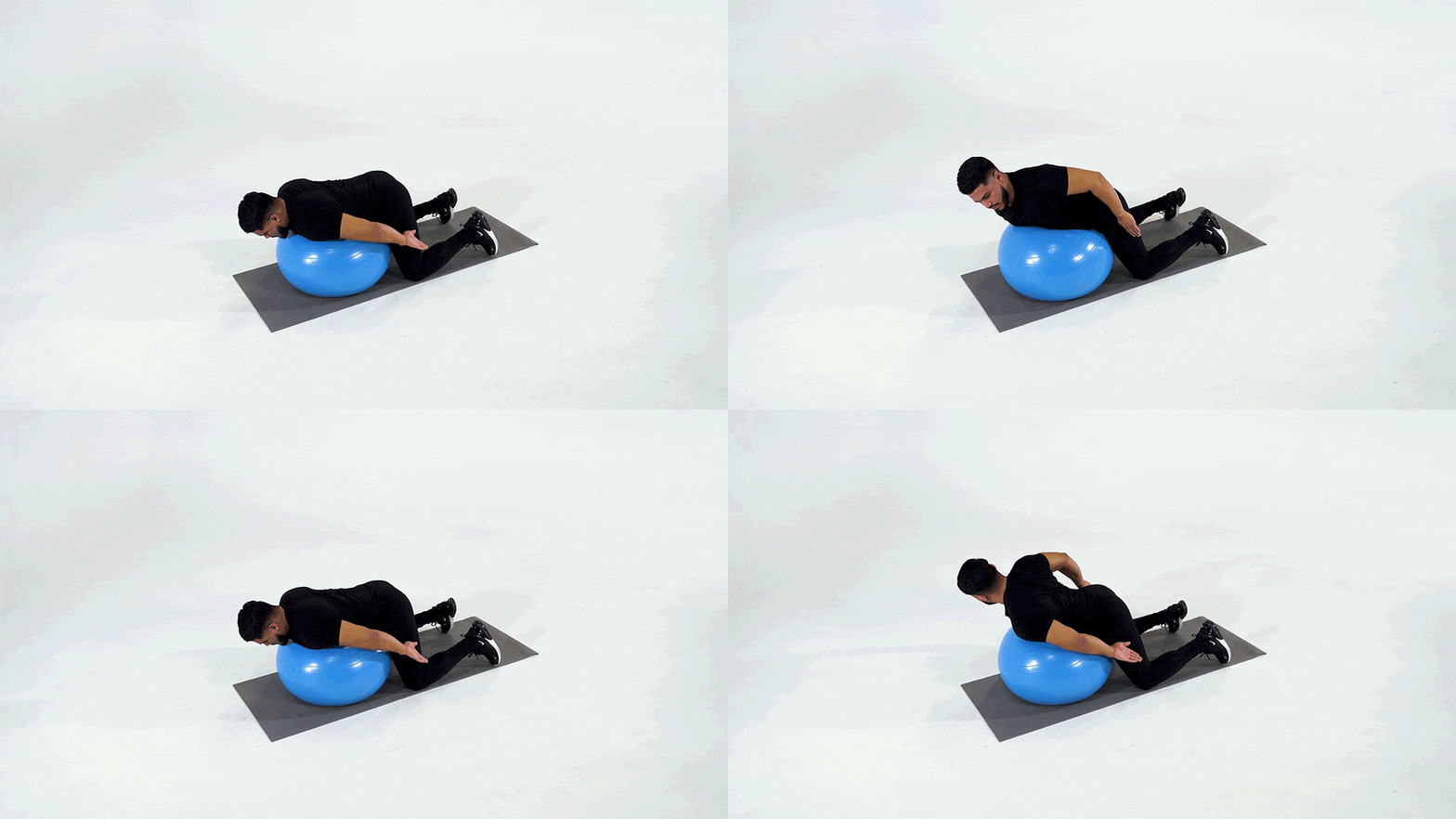
The “Stability Ball Back Extension with Rotation” is an advanced exercise for strengthening the lower back muscles and improving balance and core stability. This exercise uses a stability ball, which creates instability and thus greater activation of the core muscles. This movement not only strengthens the back muscles but, by adding rotation to the exercise, helps improve flexibility and control of the lateral muscles.
This exercise combines back movements and torso rotation, engaging a wide range of back, abdominal, and oblique muscles. Performing this exercise correctly helps increase the strength and flexibility of the spine and can also be effective in reducing back pain caused by muscle weakness.
Target Muscles in Stability Ball Back Extension with Rotation
The primary target muscles in the “Stability Ball Back Extension with Rotation” are the erector spinae along the spine. These muscles are responsible for maintaining the stability and strength of the spine and play a vital role in performing rotational and backward bending movements. By strengthening these muscles, problems such as back pain and weakness in the lower back can be prevented.
In addition to the erector spinae, the latissimus dorsi also act as secondary muscles in this exercise. They help maintain balance throughout the movement and are also effective in improving overall strength in the back of the body.
Lateral Muscles Involved in Stability Ball Back Extension with Rotation
The lateral muscles involved in this exercise include the abdominals, particularly the internal and external obliques, and the gluteals. The internal and external obliques play an important role in controlling and stabilizing the body with the addition of rotation to the movement. These muscles help prevent sudden and uncontrolled movements in the lower back.
The gluteals also play a role in maintaining balance and controlling the movement. By stabilizing the pelvis and maintaining strength throughout the movement, these muscles help improve overall back function and prevent potential injuries.
How to Perform Stability Ball Back Extension with Rotation
1. To begin the exercise, lie on the stability ball so that your hips and abdomen are on the ball, with your feet flat on the floor. Place your hands behind your head and keep your spine in a neutral position.
2. Slowly lift your upper body upwards until your body is in a straight line. While lifting, rotate to one side. Then return to the starting position and repeat the same movement to the other side. Note that throughout the movement, maintain control and slowness to prevent injury.
Equipment Needed
To perform the “Stability Ball Back Extension with Rotation,” you need a stability ball. Due to the unstable surface it creates, this ball challenges the core muscles more and strengthens them. Also, use a soft mat or pad for more comfort and to prevent slipping.
Sufficient space to perform this exercise is also essential. Make sure you are exercising in a flat area without obstacles so that you can fully execute the movement and prevent potential injuries.
This exercise, due to the need for balance and body control, may be a bit challenging for beginners. It is recommended that beginners first start with simpler exercises like “Back Extension” without rotation, and add this exercise after strengthening their back muscles.
For best results, perform this exercise 2 to 3 times a week. Adjust the number of repetitions and sets according to your fitness level and strength. You can gradually increase the number of repetitions.
Yes, by strengthening the back muscles and improving flexibility, this exercise can help reduce pain caused by muscle weakness in the lower back. However, if you have serious back problems, be sure to consult a doctor or physical therapist.
To prevent injury, perform the movement with control and slowness, and avoid excessive arching of your back. Also, ensure that the stability ball is in the correct position and placed on a stable, flat surface.
How to perform
-
Step 1
: Place your body on the exercise ball, bend your knees towards the ball, and engage your abdominal muscles.
-
Step 2
: After getting into the proper position, slowly arch your back into a plank position and extend your arms backward and upward.
-
Step 3
: While extending your back upwards and backward, slowly rotate to one side, return to the starting position, and then repeat on the opposite side.
-
Step 4
: Repeat this movement for your desired number of repetitions and sets.