The “Dumbbell Decline Bench Lunge” is an advanced exercise designed to strengthen the lower body muscles and improve balance and body stability. This movement is performed in a decline position, which, due to the use of a decline bench, places increased pressure on the quadriceps and gluteal muscles. This exercise is also very beneficial as a functional movement for improving leg muscle strength and endurance. By using dumbbells in this exercise, one can effectively strengthen various lower body muscles and, at the same time, help improve the coordination and stability of the core muscles. This exercise can be included in advanced training programs for athletes and enthusiasts looking to strengthen their lower body muscles.
Target Muscles in Dumbbell Decline Bench Lunge
The primary target muscle in the “Dumbbell Decline Bench Lunge” is the quadriceps. During this exercise, the quadriceps muscles are intensely engaged due to the pressure from the dumbbells and the decline angle of the bench, contributing to leg strength and stability. Strengthening these muscles can improve athletic performance and reduce the risk of injury in daily activities. In addition to the quadriceps, the gluteal muscles (Glutes) are also targeted in this movement. When descending in the lunge, the gluteal muscles activate to maintain balance and provide greater stability in the lower body. Strengthening the gluteal muscles not only helps improve strength and balance but is also beneficial for preventing back and knee problems.
Secondary Muscles Involved in Dumbbell Decline Bench Lunge
While performing the “Dumbbell Decline Bench Lunge,” the hamstrings and core muscles are also significantly engaged. The hamstrings are activated to control the movement and provide additional stability in the lower body, aiding in leg balance and strength. Furthermore, the core muscles are activated to maintain balance while using dumbbells and on the decline bench. In addition to these, the inner and outer thigh muscles (Adductors and Abductors) are also active during this exercise. These muscles are utilized to control leg movement and maintain body stability throughout the workout, contributing to improved motor function and prevention of potential injuries.
How to Perform Dumbbell Decline Bench Lunge
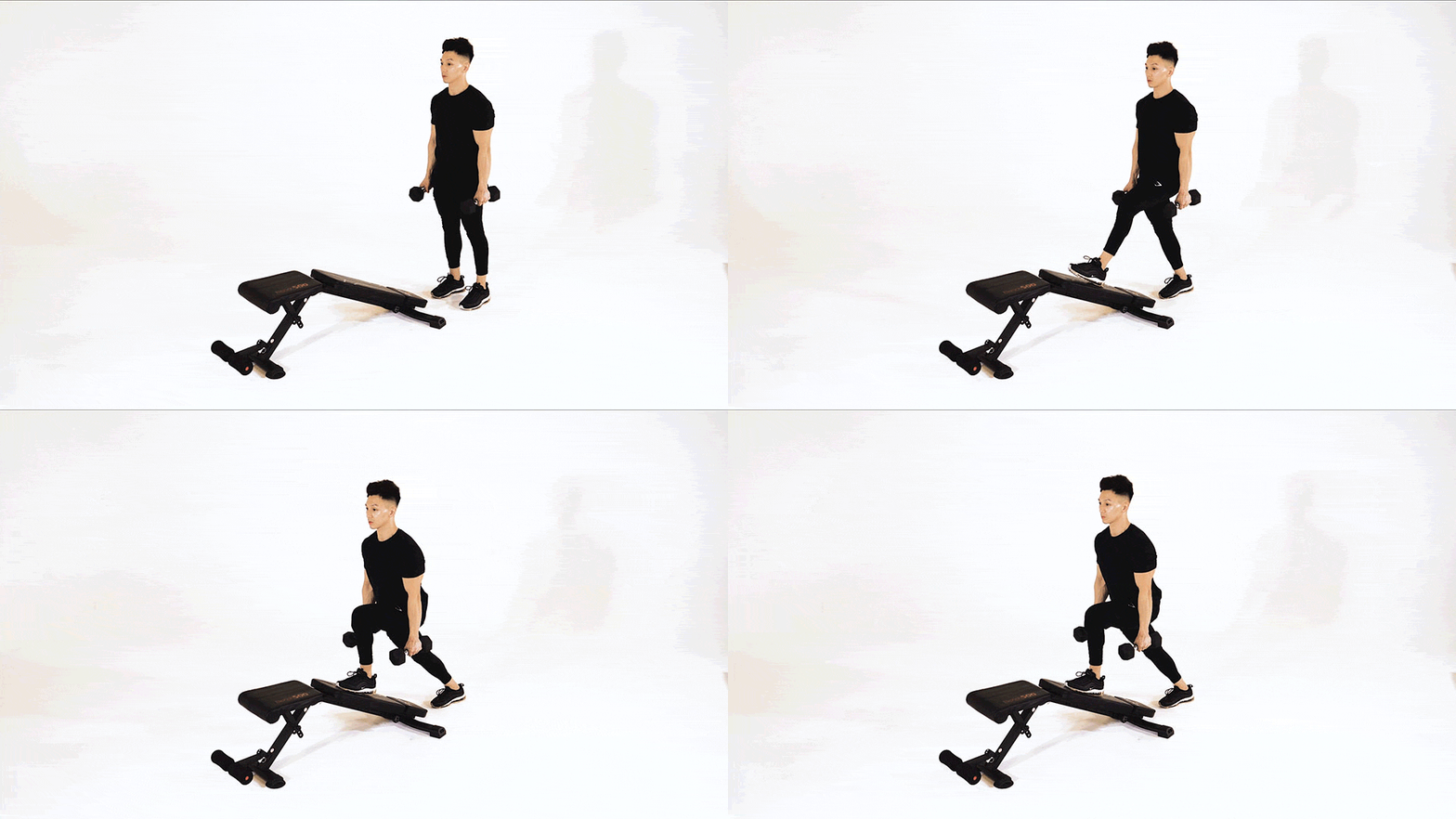
To perform the “Dumbbell Decline Bench Lunge,” first stand in front of a decline bench, holding a dumbbell in each hand. Place one foot on the bench and bring the other foot forward into a lunge position. Bend the knee of the front leg so it is perpendicular to the ground, and bring the knee of the back leg close to the ground. Ensure that the knee does not go past the toes of the front foot. After reaching the lowest point, slowly return to a standing position and repeat the movement for the other leg. While performing this exercise, focus on maintaining balance and controlling the movement. Also, move slowly and with control to prevent potential injuries.
Equipment Needed
To perform the “Dumbbell Decline Bench Lunge,” you will need a decline bench and two dumbbells. The bench should be adjusted to have an angle of approximately 30 to 45 degrees downwards. The dumbbells should be chosen at an appropriate weight that allows you to perform the exercise with correct technique and without risk of injury. Additionally, wearing suitable athletic shoes with non-slip soles is crucial for maintaining balance during the exercise. If you feel unstable initially, perform the movement without dumbbells and add them once your balance improves.
Yes, this exercise can be suitable for all fitness levels. Beginners can start without dumbbells and using a bench with a lower incline, while advanced athletes can train with heavier dumbbells and a steeper incline.
To prevent knee injuries, ensure that the front knee is aligned with the toes and does not extend beyond the toes. Also, perform the movement with control and precision to avoid potential injuries.
Typically, 8 to 12 repetitions per leg for 2 to 3 sets are suitable. Depending on your strength and endurance level, you can increase the number of repetitions and sets. You can also adjust the number of sets based on your ability and goals.
No, using dumbbells is optional for this exercise. Dumbbells are used to increase the intensity of the workout and strengthen muscles further. If you feel unstable initially, you can perform the exercise without dumbbells.
Yes, during the movement and body rotation, the core muscles are significantly activated. Strengthening the core muscles helps improve balance, stability, and overall body function.
How to perform
-
Step 1
First, place a decline bench in front of you, place your right foot on the bench, keep the leg extended, and hold a dumbbell in each hand.
-
Step 2
Then, slowly, while maintaining your balance, lunge forward and lower yourself until you feel a stretch in your quadriceps muscles. Hold for one second, then return to the starting position.
-
Step 3
Repeat for the desired number of repetitions and sets.