The “Reverse Lunge with Rotation” is an excellent exercise for strengthening the lower body and increasing flexibility and body stability. This movement combines a reverse lunge with a torso rotation, which helps strengthen the leg muscles and improve rotational movements. By performing this exercise, you can increase the strength and stability of your lower body muscles and prevent injuries related to muscle weakness. This exercise is very beneficial for strengthening the glutes, quadriceps, and abdominal muscles, and it helps improve performance in sports and daily activities. By incorporating this exercise into your training routine, you can observe significant improvements in your body’s strength and mobility, and also enhance your body’s ability to perform more complex movements.
Target Muscles in Rotational Reverse Lunge
The “Reverse Lunge with Rotation” primarily targets the quadriceps and glutes. During the reverse lunge movement, the quadriceps and glutes are activated to control and maintain body position. This exercise helps strengthen these muscles, leading to improved endurance and strength.
Additionally, the hamstrings and adductors are indirectly activated during this exercise. These muscles are used to control the movement of the opposite leg and maintain balance throughout the movement. Strengthening these muscles helps improve body mobility and strength and prevents potential injuries.
Secondary Muscles Involved in Rotational Reverse Lunge
While performing the “Reverse Lunge with Rotation,” the core muscles and obliques are also heavily activated. The core muscles are used to maintain balance and prevent body displacement during the movement, and the obliques are engaged to maintain stability and control the body’s rotation. Strengthening these muscles helps improve athletic performance and prevent potential injuries.
In addition to the core muscles, the lower body muscles and dual muscles are also involved in this movement. These muscles are activated to control the movement of the opposing leg and maintain balance throughout the exercise. Strengthening these muscles helps improve performance in sports and daily activities and increases body strength and mobility.
How to Perform the Rotational Reverse Lunge
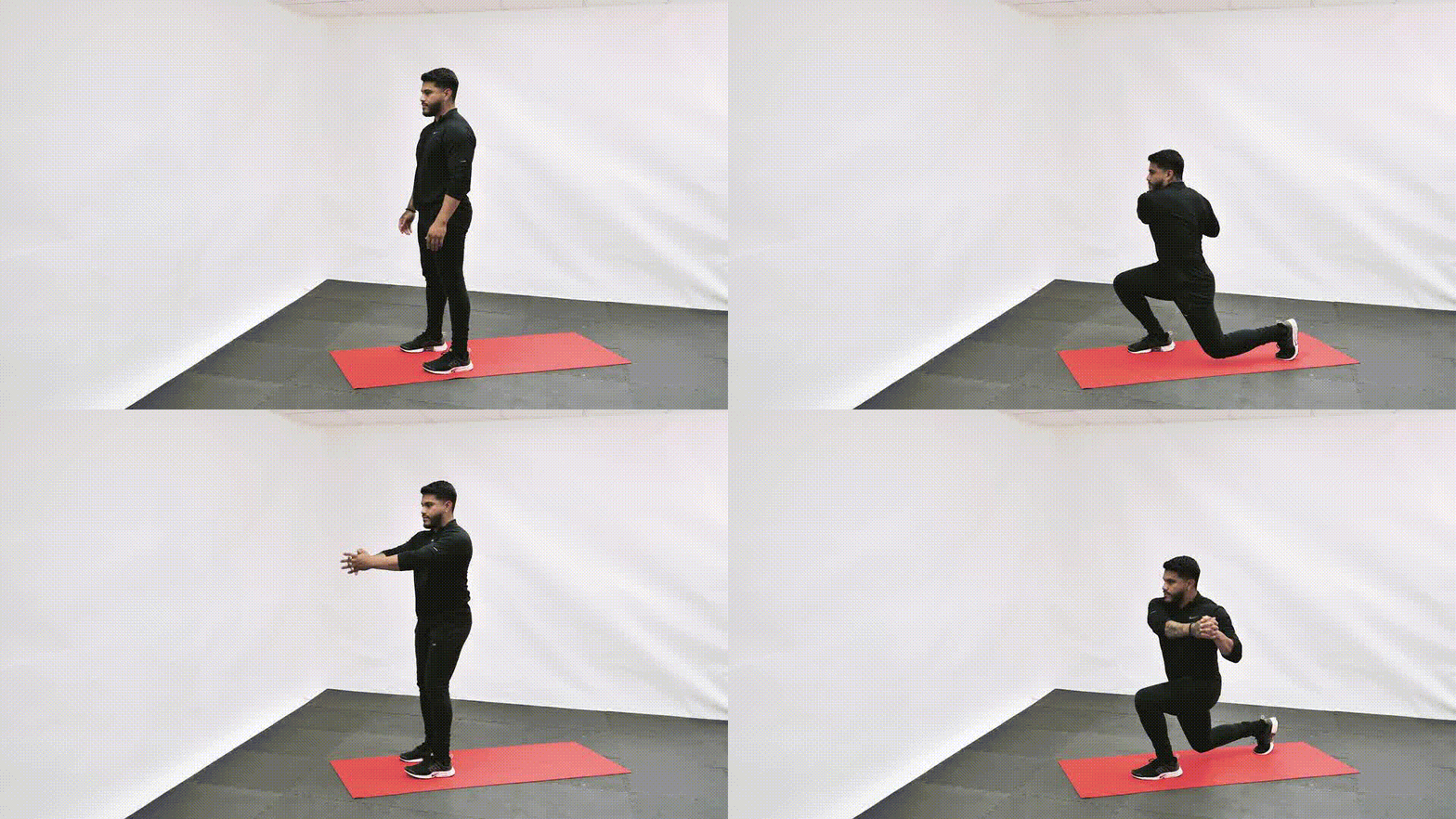
To perform the “Reverse Lunge with Rotation,” first stand with your feet shoulder-width apart. Then, step your right foot back and lower yourself slowly until your right knee is close to the ground. In this position, rotate your torso to the left and extend your arms to the left. This rotation helps increase mobility and strengthen the abdominal muscles.
After completing the rotation, slowly return to the starting position and bring your right foot forward. Repeat the movement with your left foot. Perform this exercise for 8 to 12 repetitions per leg, ensuring you maintain a correct and balanced posture throughout the exercise.
Equipment Needed
The “Reverse Lunge with Rotation” does not require special equipment and can be easily performed on the floor or an exercise mat. However, if you wish to increase the intensity of the exercise, you can use dumbbells or resistance bands. These tools help further strengthen the muscles and improve performance, but for beginners, performing the exercise without equipment is also very effective.
If you are using dumbbells, it is best to start with light weights and gradually increase their weight. Also, using an exercise mat is beneficial for greater comfort and to prevent injury to the knees and joints.
Yes, the “Reverse Lunge with Rotation” can be suitable for beginners. Beginners can start by performing this exercise without equipment and with fewer repetitions, gradually increasing the intensity of the workout.
To prevent knee injuries, ensure that your knee does not go past your toes when moving forward. Also, perform the movement slowly and with control, and avoid putting excessive pressure on your knees.
Yes, the “Reverse Lunge with Rotation” can be used as part of a warm-up routine before intense workouts due to its combination of strengthening and stretching. This exercise helps increase blood flow and prepare the muscles for subsequent training.
Depending on your strength level and goals, you can perform the “Reverse Lunge with Rotation” 2 to 3 times a week. This exercise can be considered part of a full-body workout or as a stretching exercise.
Yes, during this exercise, the core muscles are heavily activated to maintain balance and control the movement. Strengthening the core muscles helps improve athletic performance and prevent potential injuries.
How to perform
-
Step 1
Start by standing with your feet hip-width apart and your hands at your sides. Engage your core to stabilize your spine.
-
Step 2
Take a large step backward with your right foot, landing on the ball of your foot.
-
Step 3
Lower your body by bending both knees until your left thigh is parallel to the floor and your right knee is hovering just above the ground. Ensure your front knee is directly over your ankle and your back knee is bent at a 90-degree angle, with your shin perpendicular to the floor.
-
Step 4
Once in the lunge position, rotate your torso to the left, twisting from your waist. Extend your arms straight out in front of you, then simultaneously rotate your torso and arms to the left. Keep your core engaged and your hips facing forward.
-
Step 5
Slowly return to the center, bringing your arms back to the starting position.
-
Step 6
Push off from the heel of your front foot to rise up and bring your right foot back to the starting position, next to your left foot.
-
Step 7
Repeat the movement on the other side, stepping back with your left foot and rotating to the right. Inhale as you enter the lunge position and exhale as you rotate your torso.