The “Dumbbell Reverse Lunge” is a strength and cardio exercise designed to strengthen the lower body muscles, especially the quadriceps, hamstrings, and glutes. This exercise involves performing a reverse lunge while using dumbbells to add resistance and increase the intensity of the workout. By performing this exercise, you can improve the strength and endurance of your lower body muscles, as well as enhance your balance and coordination.
Due to its cardio and strength nature, this exercise is very beneficial for individuals looking to strengthen and tone their lower body muscles and increase their fitness level. Adding dumbbells to this exercise increases the training load and improves workout results, which in turn helps strengthen muscles and boost metabolism.
Target Muscles in Dumbbell Reverse Lunge
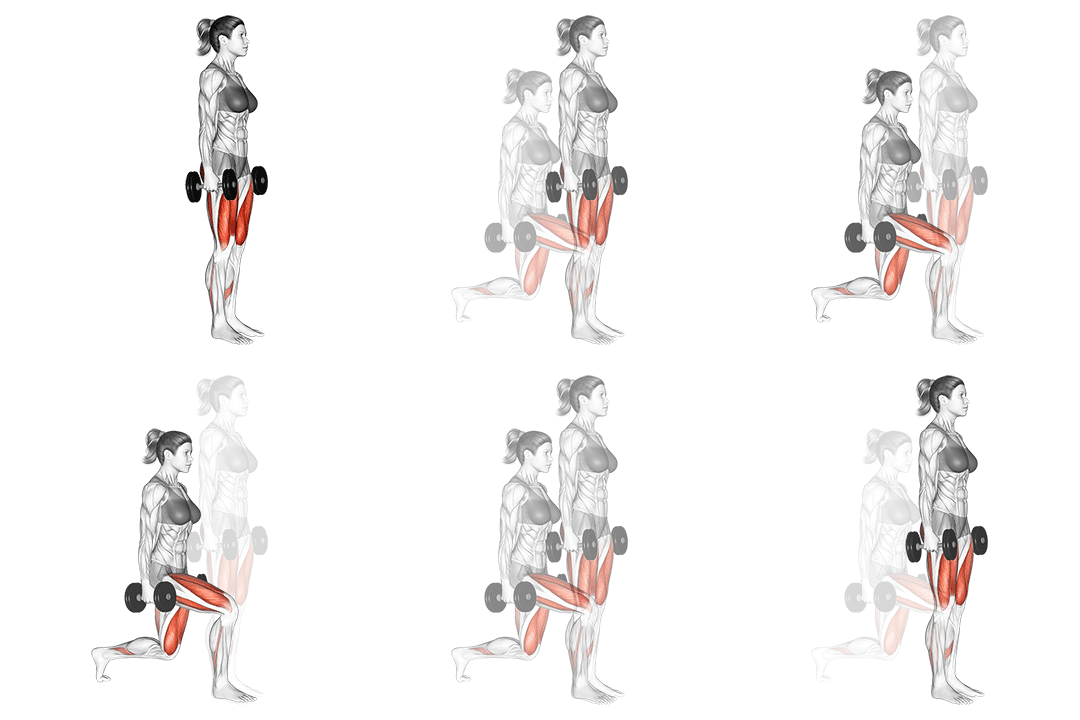
The primary target muscles for the “Dumbbell Reverse Lunge” are the quadriceps and glutes. During the reverse lunge movement, these muscles are activated to control the motion and maintain body position. Strengthening the quadriceps and glutes helps improve body strength and balance, and reduces the risk of sports injuries associated with weakness in these muscles.
In addition to the primary target muscles, the hamstrings and adductors are also indirectly activated during this exercise. These muscles help control the movement of the back leg and maintain balance throughout the exercise, and strengthening them aids in improving athletic performance and preventing potential injuries.
Secondary Muscles Involved in Dumbbell Reverse Lunge
While performing the “Dumbbell Reverse Lunge,” the core muscles and obliques are also highly engaged. The core muscles are used to maintain balance and prevent body sway during the movement, and the obliques are engaged to maintain stability and control the body during the reverse lunge motion. Strengthening these muscles helps improve athletic performance and prevent potential injuries.
Furthermore, the lower leg muscles and dual muscles are also involved in this exercise. These muscles are activated to control the movement of the trailing leg and maintain balance throughout the exercise. Strengthening these muscles helps improve performance in athletic and daily activities, and increases body strength and mobility.
How to Perform the Dumbbell Reverse Lunge
To perform the “Dumbbell Reverse Lunge,” start by standing with your feet shoulder-width apart, holding a dumbbell in each hand. Then, step your right foot back and lower your body slowly until your right knee is close to the ground, keeping your left thigh perpendicular to the floor. Ensure that your left knee does not go past your toes.
After lowering yourself, push back to the starting position with your left foot, bringing your right foot forward. Repeat the movement with your left leg. Perform this exercise for 8 to 12 repetitions per leg, ensuring you maintain a correct and balanced posture throughout the exercise.
Equipment Needed
To perform the “Dumbbell Reverse Lunge,” you will need dumbbells. You can start with lighter weights and gradually increase their weight to increase the intensity of the workout. If you don’t have dumbbells, you can perform this exercise without equipment, but adding dumbbells increases the training load and further strengthens the muscles.
In addition to dumbbells, you can use an exercise mat for added comfort and to prevent knee and joint injuries. The mat helps make the workout more comfortable and reduces pressure on the knees.
Yes, the “Dumbbell Reverse Lunge” is suitable for beginners. Beginners can start with lighter dumbbells and fewer repetitions, gradually increasing the intensity of the workout.
To prevent knee injuries, ensure that your knee does not go past your toes when stepping forward. Also, perform the movement slowly and with control, and avoid excessive pressure on your knees.
Depending on your strength level and goals, you can perform the “Dumbbell Reverse Lunge” 2 to 3 times a week. This exercise can be part of a full-body workout routine or lower body training.
Yes, the “Dumbbell Reverse Lunge” can be performed without dumbbells. If you don’t have dumbbells, you can do this exercise with your body weight and start using dumbbells as you progress and gain strength.
In each repetition of the “Dumbbell Reverse Lunge,” it is best to hold the lowered position for a few seconds to effectively engage the muscles, then slowly return to the starting position.
How to perform
-
Step 1
Stand with dumbbells in each hand, holding them at your sides.
-
Step 2
With dumbbells in hand, step your right foot backward and lower your upper body while maintaining balance.
-
Step 3
Do not let your right knee touch the ground, and hold this position for a few seconds.
-
Step 4
Then, push up with your left foot to return to the starting position, and repeat with the other leg.
-
Step 5
Perform this exercise for the required number of repetitions.