The Trap Bar Jump Squat is a dynamic strength exercise performed explosively. This exercise combines a squat with a jump, performed using a trap bar. The main goal of this movement is to increase the body’s explosive power and speed, especially for athletes who need jumping power and reaction speed. This exercise strengthens the lower body muscles and improves overall body performance. Athletes looking to enhance their athletic performance, especially in sports like football, basketball, and volleyball that require jumping, can benefit from this exercise.
Target and Secondary Muscles Involved in the Trap Bar Jump Squat
The primary target muscle in the Trap Bar Jump Squat is the quadriceps. These muscles are heavily engaged with each jump and squat. This exercise also increases the strength and endurance of these muscles while enhancing their explosive power. In addition to the quadriceps, many secondary muscles are involved in this movement. These include the hamstrings, glutes, and calf muscles. The core muscles also help maintain balance and control the body throughout the jump.
How to Perform the Trap Bar Jump Squat

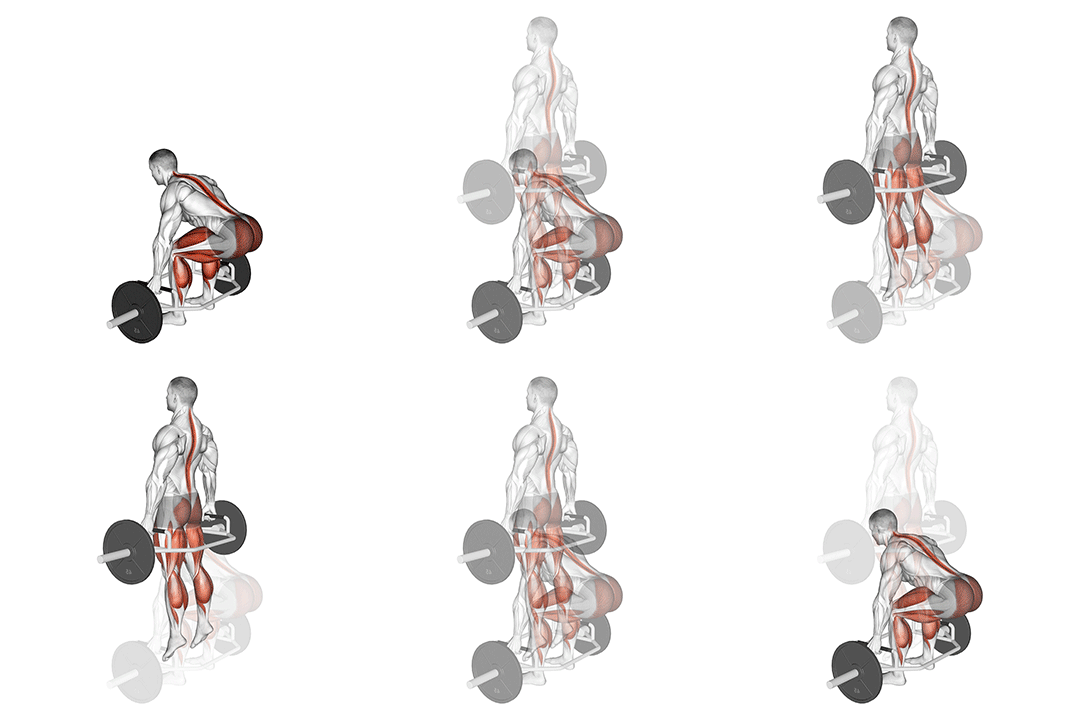
To perform the Trap Bar Jump Squat, first prepare the trap bar with an appropriate weight and stand inside it. Position your feet shoulder-width apart and grip the handles firmly. Then, lower yourself into a squat position by bending your knees, so your thighs are parallel to the ground. After reaching the lowest point of the squat, jump explosively upwards. During the jump, extend your body fully and control the bar throughout the movement. Land softly and return to the squat position. Repeat this movement continuously, gradually increasing the number of repetitions.
Equipment Required
To perform the Trap Bar Jump Squat, you need a trap bar and appropriate weights. The trap bar is a hexagonal piece of equipment with handles for gripping. The weight used should be such that you can perform the movement with complete control and explosiveness. You also need sufficient space for jumping and suitable athletic shoes to prevent slipping and maintain balance. The trap bar can be adjusted with different weights to perform the exercise according to your fitness level.
No, due to its explosive nature and the need for body control during the jump, this exercise is more suitable for advanced athletes. Beginners should start with more basic exercises like the regular squat.
3 to 4 sets of 6 to 8 repetitions are generally recommended for this exercise. This number of repetitions helps increase muscle strength and explosive power.
Medium to heavy weights are typically used for advanced athletes. It’s best to start with a weight that allows you to perform the movement with correct form and full control.
Yes, the Trap Bar Jump Squat, due to its explosive nature, helps improve jumping ability and reaction speed in athletes.
Yes, this exercise effectively strengthens the quadriceps, hamstrings, and glutes, improving performance in daily activities and sports.
No, you only need a trap bar and appropriate weights. This exercise can be performed in any gym with standard facilities.
How to perform
-
Step 1
Place a trap bar on the ground and load it with an appropriate amount of weight. Start with a lighter weight to get comfortable with the movement.
-
Step 2
Stand inside the trap bar with your feet shoulder-width apart and your toes slightly pointed outwards.
-
Step 3
Grip the handles of the trap bar with a reverse grip (palms facing backward) or a neutral grip (palms facing each other). Ensure your grip is firm.
-
Step 4
Lower yourself by bending your knees and hips, while keeping your chest up and your back straight. Keep your weight on your heels and ensure your knees do not go past your toes.
-
Step 5
Once you reach the bottom of the squat position, jump upwards explosively by driving through your heels, simultaneously extending your hips, knees, and ankles. Use the momentum you've created to lift the trap bar off the ground and extend your body fully. Keep your core engaged and your back straight.
-
Step 6
Land softly back into the squat position, absorbing the impact with your muscles. Immediately proceed to the next repetition, maintaining continuous and fluid movement.
-
Step 7
Inhale as you lower into the squat position and exhale forcefully as you jump upwards.