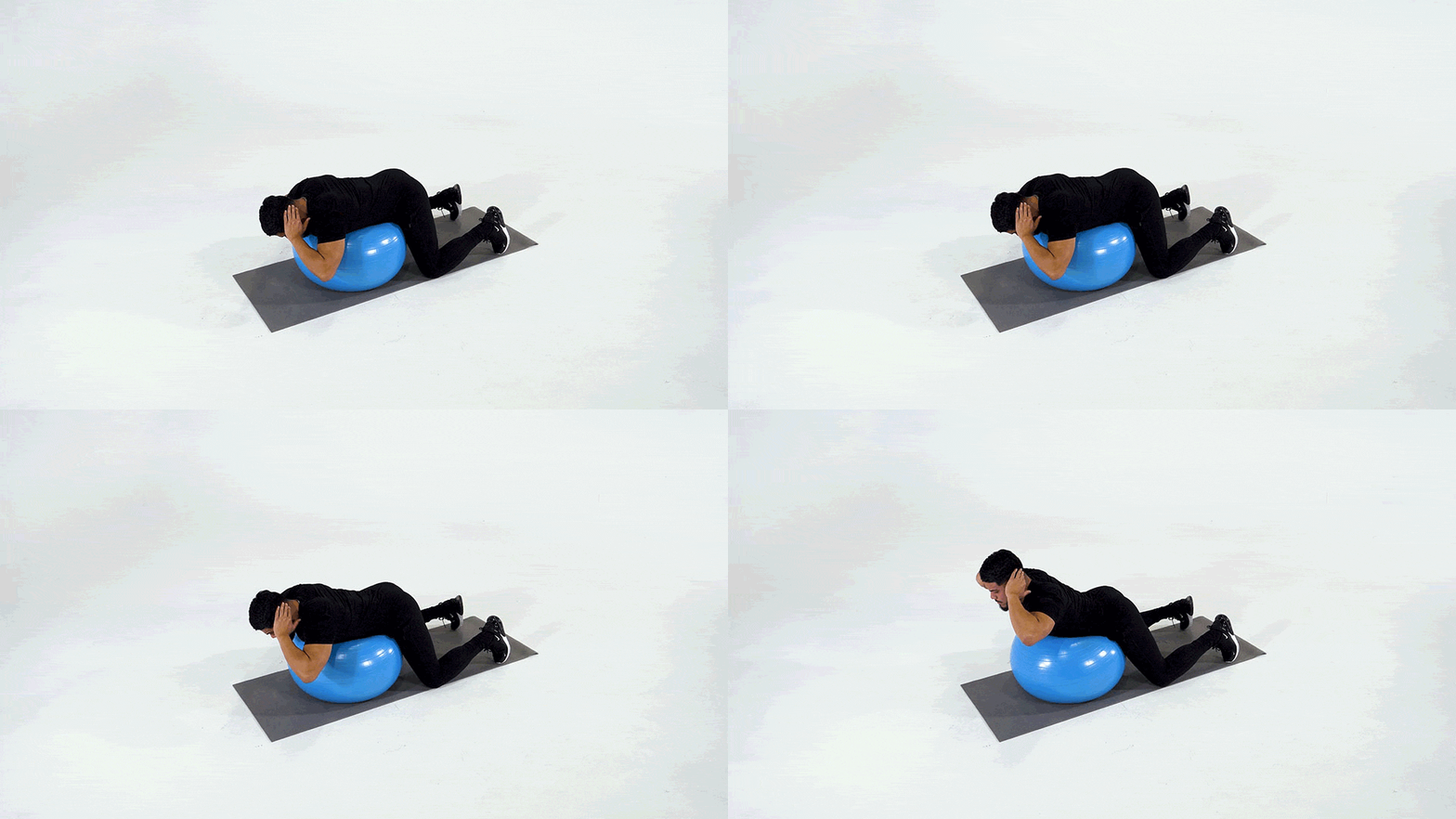
The Stability Ball Back Extension with Hands Behind Head exercise is one of the effective exercises for strengthening the back muscles and improving the strength and flexibility of the spine. This exercise is performed using a stability ball and helps you strengthen your back muscles more precisely. Placing your hands behind your head in this exercise increases the intensity and effectiveness of the workout, strengthening the back and abdominal muscles simultaneously. This exercise is particularly suitable for individuals looking to strengthen their back muscles and improve their posture. With regular practice, you can achieve reduced back pain, improved standing and sitting posture, and increased overall strength in your back muscles. This exercise also helps improve balance and body coordination.
Target Muscles in Stability Ball Back Extension with Hands Behind Head
In the “Stability Ball Back Extension with Hands Behind Head” exercise, the primary target muscles are the Erector Spinae muscles. These muscles run along the spine and are responsible for maintaining correct body posture and supporting the spine against external pressures. Strengthening these muscles helps improve spinal strength and control and can prevent back pain caused by muscle weakness. In addition to the Erector Spinae muscles, the abdominal muscles (Rectus Abdominis) and the internal and external obliques are also indirectly involved in this movement. These muscles help improve back strength and stability by maintaining body balance and controlling rotational movements.
Secondary Muscles Involved in Stability Ball Back Extension with Hands Behind Head
In the “Stability Ball Back Extension with Hands Behind Head” exercise, the internal and external obliques and the abdominal muscles (Rectus Abdominis) are actively involved. These muscles help improve back strength and stability by maintaining body balance throughout the movement and controlling rotational movements. The internal and external obliques help prevent potential injuries in the lower back and improve overall body function. Additionally, the gluteal muscles also play a supportive role in this exercise. These muscles are activated when lifting the body and maintaining balance, contributing to overall lower back strength and reducing the likelihood of muscle injuries.
How to Perform Stability Ball Back Extension with Hands Behind Head
1. To begin, sit on the stability ball and then slowly position yourself with your abdomen on the ball so that your feet are on the ground and your hands are behind your head. Your body should be horizontally straight in the air. 2. Slowly lift your upper body off the ball until your body is in a straight line. While performing this movement, ensure you keep your back straight and avoid excessive arching. Then, slowly return to the starting position and repeat the movement.
Equipment Needed
To perform the “Stability Ball Back Extension with Hands Behind Head” exercise, you need a stability ball. This ball helps you perform the movement with greater precision and control, contributing to improved back function. Using a soft mat or cushion can also provide more comfort and prevent pressure on the body. If you are interested in adding resistance, you can use dumbbells or weight machines to increase the intensity of the exercise. However, ensure you use appropriate weights and correct technique to prevent potential injuries.
Yes, this exercise can be suitable for beginners, but it should be performed carefully and with attention to body posture. It is recommended that beginners start with the stability ball and then gradually increase the intensity of the exercise.
For best results, perform this exercise 2 to 3 times a week. Adjust the number of repetitions and sets according to your fitness level and strength. It is best to have adequate rest between training sessions.
Yes, strengthening the back muscles with this movement can help reduce back pain and prevent back problems. However, if you have serious issues, it is best to consult with a doctor or physical therapist.
To prevent injury, ensure you keep your back straight throughout the movement and avoid excessive arching. Also, perform the movement with control and slowness, and use appropriate weights.
How to perform
-
Step 1
: Kneel and lean onto the exercise ball, with your toes on the ground and your hands behind your head.
-
Step 2
: Extend your spine upwards, pressing your hips into the ball as you move up.
-
Step 3
: Slowly return to the starting position and repeat the exercise for your desired number of repetitions and sets.