The “Medicine Ball Pass” exercise is a very effective movement for strengthening the body, improving endurance, and increasing coordination between the body and mind. This movement is often used in rehabilitation programs, physical therapy, and sports training for muscle and joint recovery. The medicine ball is a tool used for various exercises such as passing, rotating, and strengthening the body. This exercise is not only beneficial for individuals with sports injuries but is also recommended for increasing flexibility and strengthening the core muscles. The medicine ball pass exercise is usually performed in group settings with the cooperation of two or more people. This movement helps increase coordination and cooperation between different body muscles and, in addition to strengthening the main muscles, challenges the lower and upper body muscles. As a result, this exercise is very useful for strengthening the body’s stability, improving balance, and strengthening the abdominal and back muscles.
Target Muscles
The primary muscles targeted in the “Medicine Ball Pass” exercise are the core muscles. These muscles include the abdominal, back, and oblique muscles, which are responsible for body stability and balance during various movements. The main focus in this movement is on strengthening the abdominal and back muscles, as these muscles play an important role in maintaining correct body posture and preventing potential injuries. In addition to the core muscles, this exercise indirectly affects the shoulder, arm, and chest muscles. When passing the ball, the shoulder and arm muscles must move in coordination, and through this exercise, the strength and endurance of these muscles are enhanced. The leg and thigh muscles are also activated during this movement, as they are used to maintain balance and endurance throughout the exercise.
Secondary Muscles Involved
Alongside the primary muscles targeted in the “Medicine Ball Pass” exercise, various secondary muscles are also involved. The back muscles, especially the trapezius and rotator cuff muscles of the shoulder, are actively engaged in this exercise to maintain balance and coordinate movement. These muscles are particularly active when throwing and receiving the ball from another person, for shoulder stability and correct movement. In addition, the calf and thigh muscles are actively involved when performing the movement and maintaining correct body position. Especially when the ball is thrown from your hands to another person, you must exert significant pressure on your legs to maintain balance and perform the movement correctly. This strengthens the lower body muscles, contributing to overall body stability and balance.
How to Perform the Movement
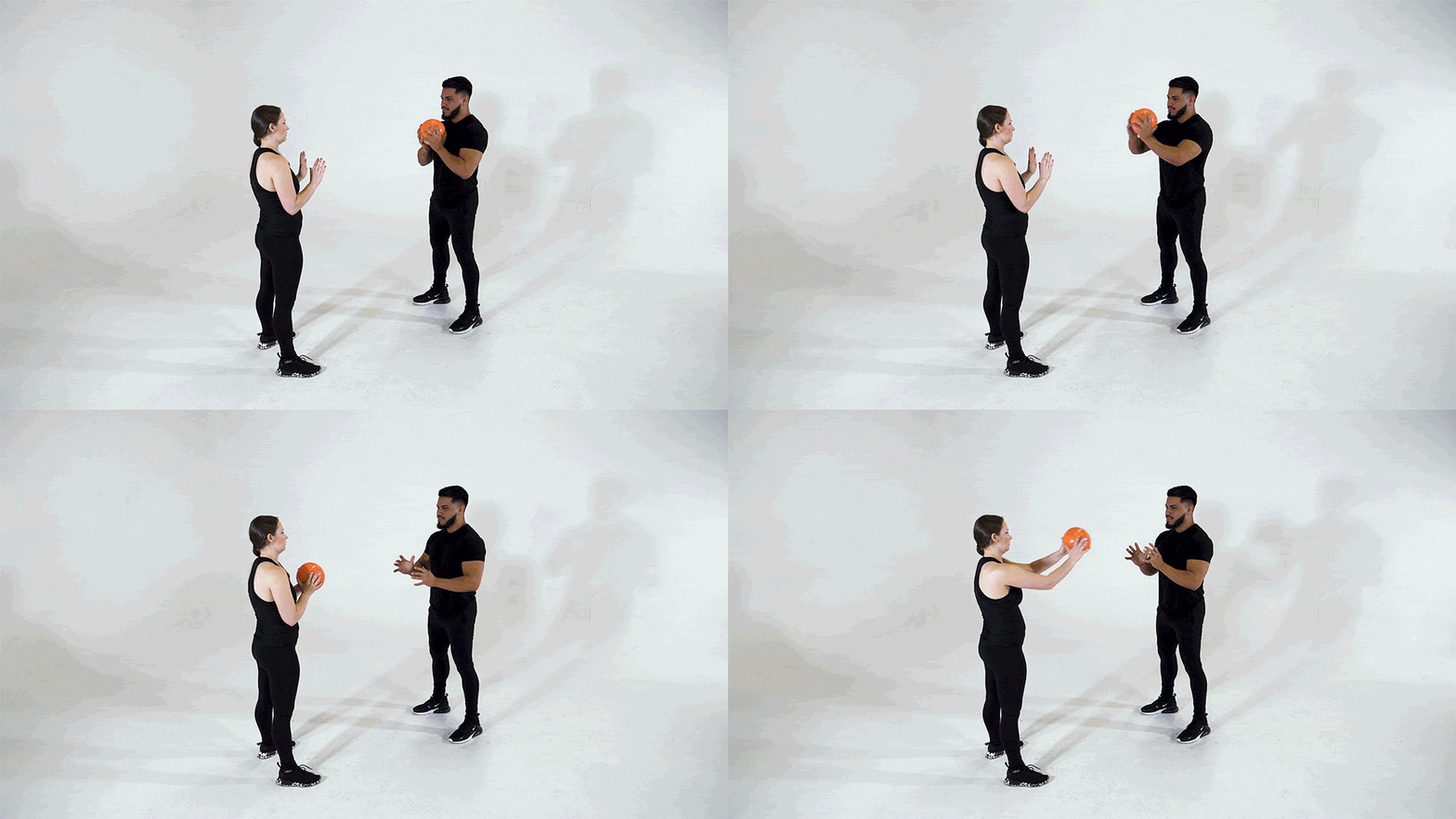
To perform the “Medicine Ball Pass” exercise, first stand with your feet shoulder-width apart. Then, hold the medicine ball in your hands and face another person. Initially, throw the ball forward with your hands while actively engaging your abdominal and back muscles. When receiving the ball, you should strengthen your core muscles to maintain balance and prevent your back from arching. To perform this exercise effectively, you should move smoothly and without interruption. When throwing the ball to the person opposite you, be mindful that the force for the throw should come from your core muscles, not your arms. This technique ensures the focus remains on strengthening the abdominal and back muscles, while also preventing injury to the shoulders and arms.
Equipment Required
The main equipment for the “Medicine Ball Pass” exercise is a medicine ball of appropriate weight. Medicine balls are typically available in various weights, from 1 kg to 10 kg and more. The choice of ball weight depends on the individual’s ability level and the exercise goal. For beginners, it is recommended to use lighter balls to learn the correct technique. Besides the medicine ball, no other equipment is essential for this exercise. Of course, to perform this exercise in a group, you need a suitable space with a flat and safe surface to prevent any potential hazards. Performing this exercise in a larger space will help you move more comfortably and have enough room to pass the ball.
Yes, this exercise is suitable for beginners. By using a lighter ball and focusing on the correct technique, this movement can be performed effectively.
To start, 3 sets of 12 to 15 repetitions are appropriate. Depending on your ability level, you can increase the number of repetitions.
Yes, this exercise effectively strengthens the back and abdominal muscles, improving body endurance and stability.
This exercise is typically done with a partner, but you can use a wall or a sturdy surface to throw the ball to yourself.
If you can perform the exercise with a light ball without difficulty and your goal is to increase strength and endurance, you can gradually choose a heavier ball.
How to perform
-
Step 1
In this exercise, you can use a partner or a wall.
-
Step 2
Stand straight with your feet shoulder-width apart, holding the exercise ball between your hands and pressing it towards your chest.
-
Step 3
Using your elbows, push the ball forward to throw it to your partner or the wall.
-
Step 4
Receive the throw with both hands at chest level and repeat for your desired number of repetitions and sets.