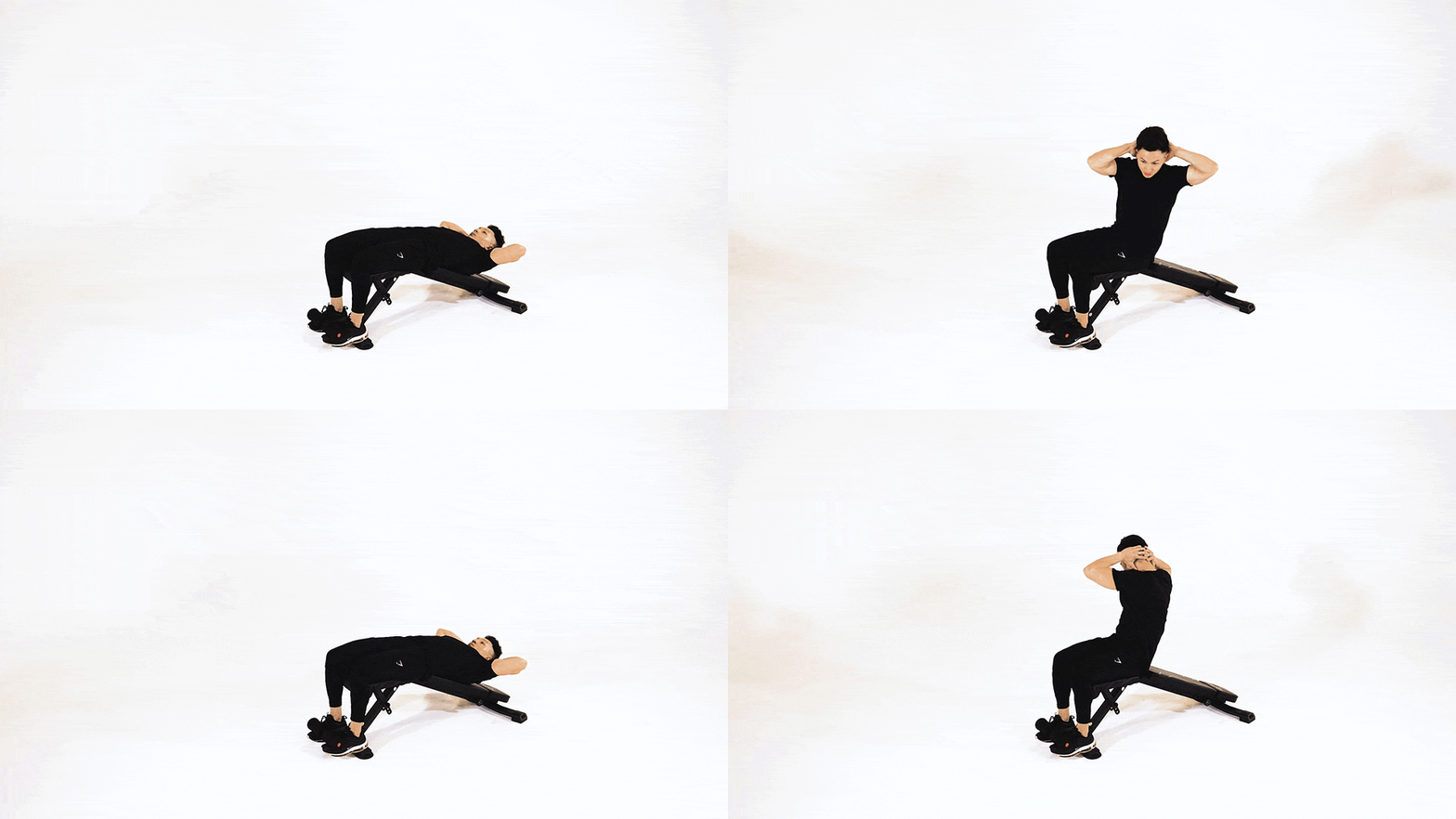
The Decline Bench Rotational Sit-Up is an advanced exercise for strengthening the abdominal muscles and the core. This exercise is performed while the body is positioned on an inclined bench, and by rotating during the upward movement, the obliques are also challenged. Performing this exercise requires sufficient strength and balance, and it helps improve abdominal muscle endurance and body control. This exercise is suitable for experienced athletes and those looking to further strengthen their abdominal muscles and core. The inclined bench, by increasing the angle and incorporating rotation during the movement, applies more pressure to the muscles, aiding in strengthening the obliques and improving balance and coordination.
Target Muscle in Decline Bench Rotational Sit-Up
The primary target muscle in this exercise is the Rectus Abdominis, which is responsible for lifting the body from a lying position to a seated one. Using an inclined bench increases the intensity of the pressure on these muscles, leading to greater strengthening. The Rectus Abdominis is particularly engaged in the lower region due to the movement being performed at an incline.
Due to the rotational component of the movement, this exercise affects all areas of the abdominal muscles, leading to the strengthening of the Rectus Abdominis in both longitudinal and transverse directions. The pressure on these muscles also increases during rotation, improving muscle coordination.
Obliques Engaged in Decline Bench Rotational Sit-Up
In this exercise, in addition to the Rectus Abdominis, the Obliques are also extensively engaged. Rotating the body during the upward movement actively engages the obliques and helps strengthen this area. These muscles play a vital role in maintaining balance and controlling body rotation, and performing the movement correctly without excessive strain on the lower back depends on their proper activation.
In addition to the obliques, the Hip Flexors are also engaged during the movement. These muscles help keep the legs in the correct position on the inclined bench, especially during rotation and body elevation. The lower back muscles are also utilized to maintain balance and prevent the body from collapsing during the exercise.
How to Perform the Decline Bench Rotational Sit-Up
To perform this exercise, first lie down on an inclined bench and secure your feet at the lower end of the bench to keep them stable. Place your hands behind your head and slowly lift your body upwards from the waist. As you come up, rotate your body to one side to engage the obliques more. Then, slowly return to the starting position and repeat the movement for the other side.
During this exercise, it is important to use your abdominal muscles to lift your body and avoid putting excessive strain on your lower back. Also, maintain regular and controlled breathing throughout the movement. Ensure your body remains balanced at all stages of the movement and that the rotation is performed evenly on both sides.
Equipment Needed
For this exercise, you will need a Decline Bench. This bench changes the angle of your body relative to the ground, applying more pressure to the abdominal muscles. The decline bench should be adjusted so that your feet are held securely, allowing you to perform the movement correctly.
Additionally, if you wish to increase the intensity of the workout, you can use dumbbells or a medicine ball. You can hold these weights in your hands and, by rotating during the upward movement, apply more pressure to your abdominal and oblique muscles. This method helps increase workout intensity and leads to greater muscle strengthening.
No, due to the need for balance and rotation, this exercise is recommended more for experienced individuals. Beginners should start with simpler exercises.
To prevent lower back injury, avoid using excessive force from your back and focus on engaging your abdominal muscles and controlling the movement. Perform the movement slowly and with precision.
Initially, you can train without weights to master the correct technique. Then, you can gradually add light weights, such as a medicine ball, to your workout.
The number of repetitions and sets depends on your fitness level. Typically, 3 sets of 10 to 15 repetitions are suitable to start, and you can gradually increase the number of repetitions.
Yes, rotating the body during the movement engages the oblique muscles, helping to improve balance and body control.
How to perform
-
Step 1
Start by lying on your back on a decline bench, with your hands placed across your chest or behind your head, and your feet secured under the footpads.
-
Step 2
Slowly lift your torso upwards, rotating towards your left side until you feel a stretch in your abdominal muscles.
-
Step 3
Hold this position for one second, then slowly rotate your torso to the right side, holding this position for one second.
-
Step 4
Then, return to the starting position.
-
Step 5
Perform this movement for the desired number of repetitions and sets.