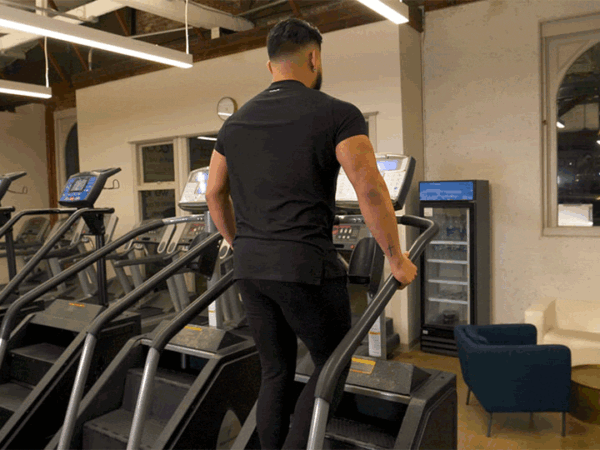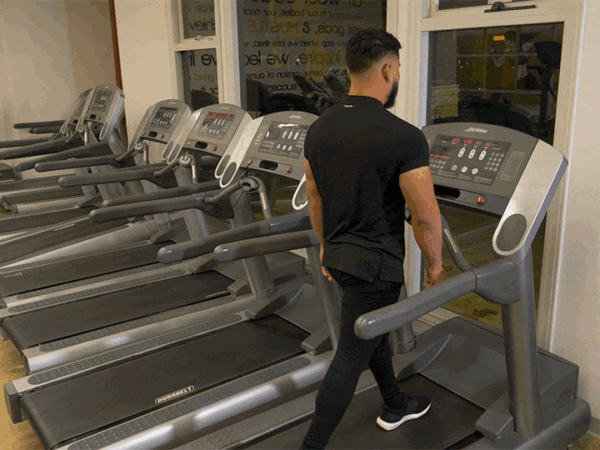
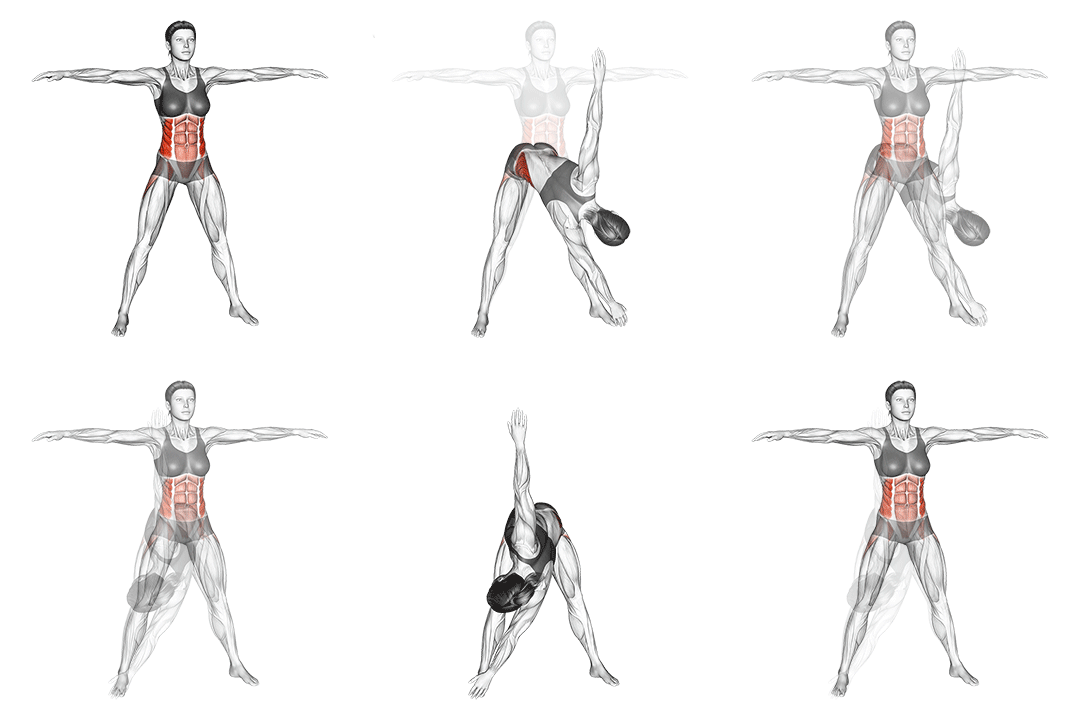
Aerobics, or cardio, refers to a set of exercises performed with the aim of improving cardiovascular function and increasing the body’s endurance. These exercises involve rhythmic and continuous activities that increase heart rate and breathing. The history of this movement dates back to the 1960s when Dr. Kenneth Cooper, a United States Air Force physician, recognized the importance of aerobic exercise for improving cardiovascular health. In addition to improving cardiovascular function, this movement strengthens muscles, improves flexibility, and increases coordination between body parts. These exercises are performed in groups and with music, which makes them attractive and motivating. Some popular types of aerobics include Zumba, step aerobics, water aerobics, and strength aerobics.
Target Muscles and Secondary Muscles Involved in Aerobics

The main goal of aerobic exercises is to improve cardiovascular function, but these exercises also affect various muscles. The primary muscles strengthened in these exercises are the heart and lungs. As the intensity of the exercises increases, the heart needs to pump more blood, which strengthens the heart muscles. In addition to the heart muscles, this movement affects various muscles including the legs, arms, abdomen, and back. For example, in Zumba exercises, the leg and glute muscles are highly active, while in water aerobics, the arm and shoulder muscles are also engaged. Consequently, aerobics is considered a full-body workout that helps strengthen and increase the endurance of various muscles.
How to Perform Aerobics
To perform the exercises, you should first find a suitable space with a soft, non-slip floor. Wear comfortable clothing and appropriate athletic shoes. Before starting the workout, you should warm up your body for 5-10 minutes. This warm-up can include simple movements like brisk walking or stretching exercises. After warming up, you can begin your exercises. These exercises are usually performed as a series of repetitive movements synchronized with rhythmic music. For example, you can start by stepping forward and backward, doing short jumps, or performing rotational movements. Perform each movement for 30-60 seconds and then move on to the next. During the workout, pay attention to deep and regular breathing.
Equipment Needed
You don’t need much equipment to perform aerobic exercises. The main equipment includes comfortable clothing and appropriate athletic shoes. Athletic shoes should have adequate support to prevent potential injuries. Additionally, a towel and a water bottle are recommended to maintain body hydration. Some types of this movement may require additional equipment. For example, step aerobics uses a step or platform. In water aerobics, a pool and some floating aids like water noodles may be used. Also, some aerobics classes use light dumbbells or resistance bands to increase the intensity of the exercises.
Yes, it is suitable for people of all ages and fitness levels. However, individuals with heart problems or other medical conditions should consult their doctor before starting a training program.
To improve cardiovascular health, it is recommended to exercise at least 3-5 times a week for 30-60 minutes. This duration may vary based on an individual’s fitness level.
Yes, aerobic exercises can help with weight loss by increasing heart rate and burning calories. Combining aerobics with a healthy diet can yield better results.
While having a trainer can help improve your form and technique, many exercises can be done by watching instructional videos or participating in online classes.
How to perform
-
Step 1
Cardiovascular exercises focus on cardiovascular fitness, muscular strength, and endurance, achieved through performing cardiovascular exercises. In this type of exercise, by continuously performing light movements, the heart rate is increased and we try to maintain it at that level. Or, the heart rate is rhythmically increased and decreased.