The Assisted Hyperextension exercise is an important movement for strengthening the lower back and back muscles. This exercise, typically performed using a special machine or bench, helps improve the strength and endurance of the lower back muscles. Given that the lower back muscles play a vital role in many daily and athletic activities, strengthening these muscles is of high importance.
This exercise is particularly beneficial for individuals who have weakness in their lower back or are looking to improve back stability and flexibility. By performing the Assisted Hyperextension correctly and regularly, one can help strengthen the back muscles, improve posture, and reduce the risk of back-related injuries.
Target Muscle in Assisted Hyperextension

The primary target muscle in the Assisted Hyperextension exercise is the Erector Spinae muscles. These muscles are located along the spine and are responsible for stabilizing and supporting the spine during flexion and extension. Strengthening these muscles improves lower back strength and endurance and can help reduce back pain and improve overall body posture.
Regularly performing the Assisted Hyperextension exercise helps strengthen the Erector Spinae muscles, increasing strength and flexibility in the lower back area. These muscles are especially important for those who engage in heavy physical activities or spend a lot of time sitting.
Secondary Muscles Involved in Assisted Hyperextension
In addition to the Erector Spinae muscles, the Glutes and Hamstrings are also activated as secondary muscles in this exercise. The gluteal muscles are located in the buttocks and play an important role in hip flexion and extension movements. The hamstrings are located at the back of the thigh and assist in knee flexion and hip stabilization.
Furthermore, the abdominal muscles are indirectly involved in this exercise, helping to maintain balance and body stability. Strengthening these secondary muscles can contribute to overall body strength improvement and reduce the risk of injury.
How to Perform Assisted Hyperextension
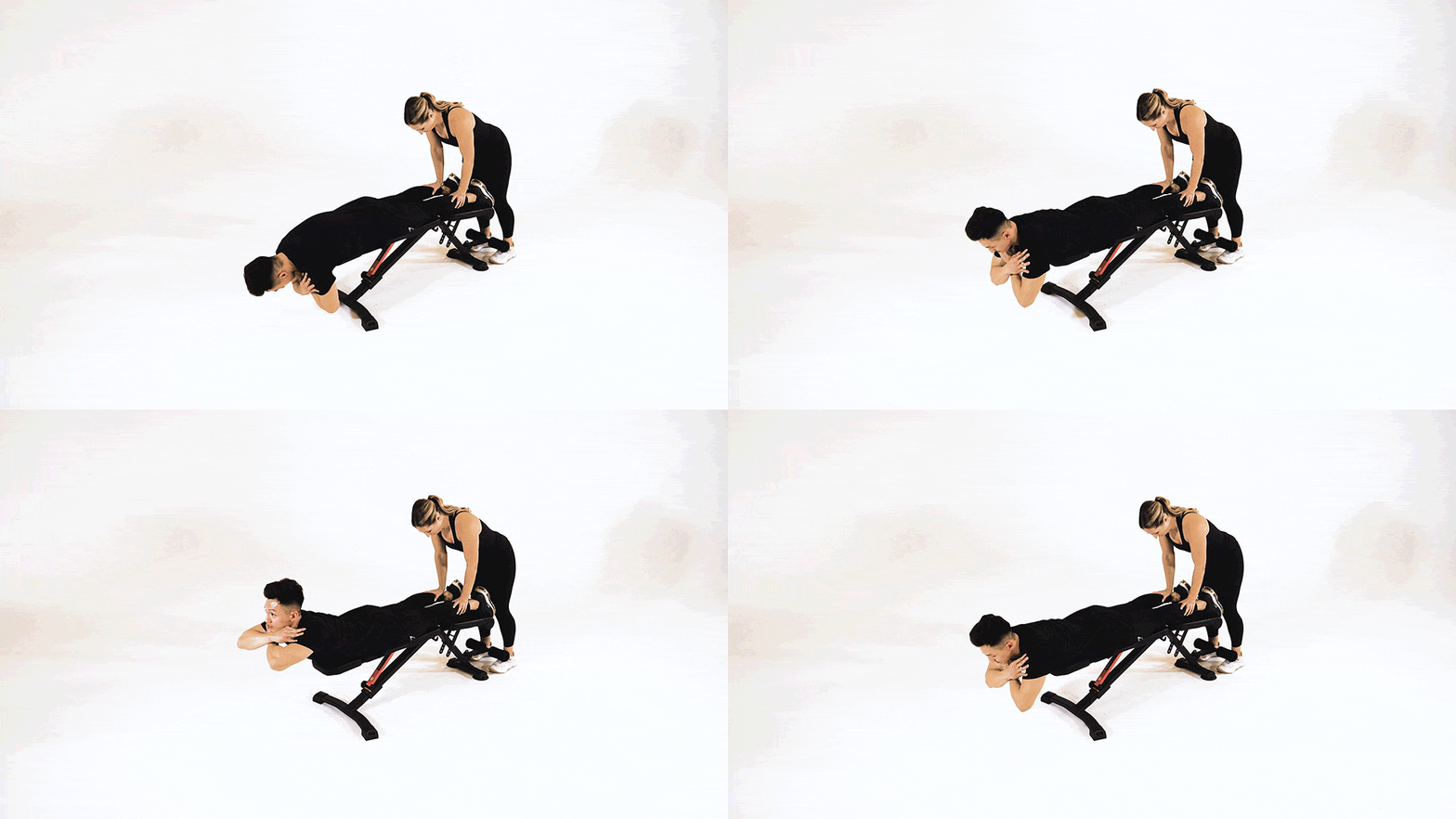
To perform the Assisted Hyperextension, first position yourself on the special machine or bench. Place your feet in the designated area and secure your body using the available pads. Keep your spine in a neutral position and place your hands behind your head or across your chest.
Slowly bend your upper body forward from the hip joint until your body is almost parallel to the ground. Then, slowly return to the starting position, ensuring you maintain complete control over your body throughout the movement. Perform this exercise for the specified number of repetitions and ensure correct technique.
Equipment Required
To perform the Assisted Hyperextension exercise, you will need a special hyperextension machine or bench. These machines are designed to allow for body stabilization and safe execution of the movement. Additionally, using extra weights such as dumbbells may be possible to increase resistance and further strengthen the muscles.
Wearing appropriate athletic shoes with non-slip soles is recommended to maintain balance and prevent slipping during the exercise. It is also important to have sufficient space to perform this exercise and ensure correct body form throughout the workout.
Yes, this exercise is suitable for beginners due to its controlled nature and the ability to adjust intensity. However, you should start with lighter weights and gradually increase to heavier ones.
To prevent injury, always keep your spine in a neutral position and avoid rounding your back. Also, perform the movement with complete control and slowly.
Depending on your experience level and training program, you can perform this exercise 2 to 3 times a week. Be sure to allow adequate rest for your body between training sessions.
Indirectly, yes. The abdominal muscles are activated during the movement to maintain balance and body stability.
Yes, if you are ready, you can use additional weights such as dumbbells to increase the intensity of the workout.
How to perform
-
Step 1
To begin this exercise, your training partner should hold your ankles while you lie face down on a flat bench with your hips at the edge of the bench.
-
Step 2
Keep your body straight and cross your arms over your chest, then begin to bend downwards as far as you can, getting as close to the floor as possible.
-
Step 3
Using your back muscles, return to the starting position, exhaling during this movement.
-
Step 4
Repeat this exercise for the required number of repetitions.