The “Kneeling Warrior Lunge” is a very effective exercise for increasing flexibility and strengthening the lower body muscles. This movement is inspired by yoga and focuses on stretching and strengthening the thigh, hip, and back muscles. Also, considering the knee position and focus on body stability, this exercise helps improve balance and endurance in individuals. In the “Kneeling Warrior Lunge” movement, the kneeling position helps maintain body balance and puts less pressure on the knees. This feature makes this exercise suitable for all fitness levels, from beginner to professional. Furthermore, by focusing on breathing and correct body posture, this movement can help reduce stress and improve mental state.
Target Muscle in Kneeling Warrior Lunge
The primary target muscle in the “Kneeling Warrior Lunge” is the quadriceps. These muscles are highly active during the knee flexion and extension phases, contributing to the stability and strength of the lower body. Increased flexibility and strength in these muscles also lead to improved performance in other lower body exercises. In addition to the quadriceps, the gluteal muscles (Glutes) are also heavily involved in this exercise. During this movement, contracting these muscles helps stabilize the pelvis and improves overall body balance. Strengthening the glutes not only increases lower body power but also helps prevent injuries in the lower back area.
Secondary Muscles Involved in Kneeling Warrior Lunge
Alongside the target muscles, the hamstrings are also engaged during the “Kneeling Warrior Lunge.” These muscles play a crucial role in knee flexion and extension and contribute to overall balance during the movement. Focusing on stretching and strengthening the hamstrings can help improve flexibility and prevent sports injuries. The core muscles are also activated in this exercise. Throughout the movement, you should keep your abdominal and back muscles contracted to help maintain balance and proper body posture. Strengthening the core muscles not only improves performance in exercises but also leads to better overall body posture.
How to Perform the Kneeling Warrior Lunge
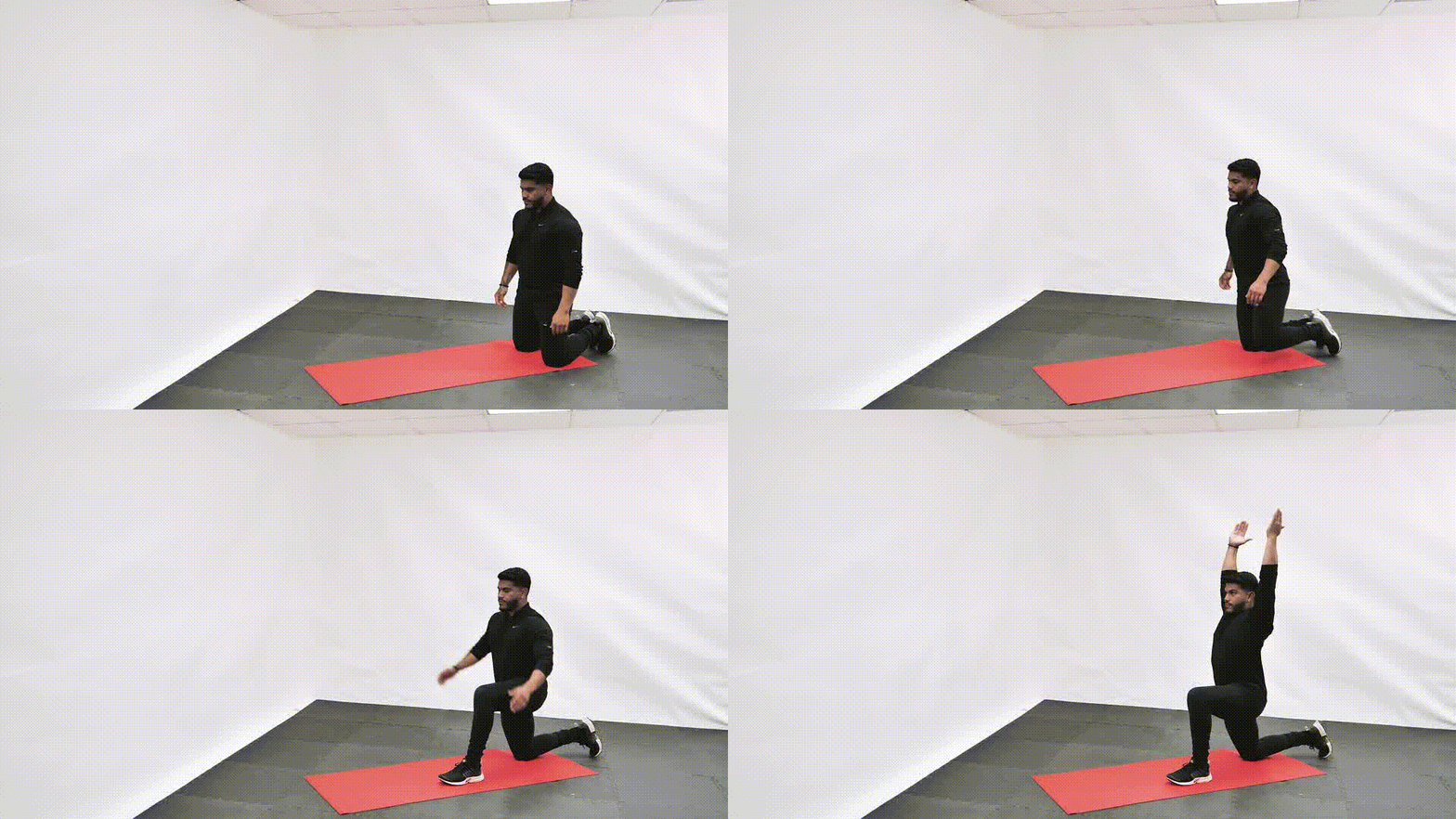
To perform the “Kneeling Warrior Lunge,” first kneel on one knee and place the other foot forward, bent, so that the front knee is at a 90-degree angle. Then, with a slow and controlled movement, move your hips forward until you feel a stretch in the muscles of the front thigh and hip. Ensure your spine remains straight and elongated. In this position, raise your arms upwards and take a deep breath. Hold this position for a few seconds and then return to the starting position. Repeat this movement for the other leg. While performing the exercise, pay attention to your breathing and body relaxation to ensure correct execution.
Equipment Needed
No specific equipment is required to perform the “Kneeling Warrior Lunge.” However, for added comfort, you can use a mat or yoga mat to reduce pressure on your knees. Also, if you need more support, you can use a wall or chair to maintain balance. Wearing comfortable and appropriate sportswear is recommended for this exercise. If you wish to increase the intensity, you can use ankle weights or light dumbbells. However, performing this exercise without weights is also sufficiently effective and helps improve flexibility and balance.
Yes, due to the kneeling position and reduced pressure on the knees, this exercise is also suitable for beginners. However, individuals should pay attention to their breathing and body balance to ensure correct execution.
To increase the intensity, you can use ankle weights or light dumbbells. You can also increase the duration of the stretch hold or the number of repetitions.
Yes, during the “Kneeling Warrior Lunge,” the core muscles are activated, helping to maintain balance and proper body posture. Strengthening these muscles can improve overall performance in exercises and help prevent injuries.
For best results, you can perform the movement for 30 seconds to 1 minute on each side, then rest. Regular and gradual practice can help improve flexibility and muscle strength.
Yes, the “Kneeling Warrior Lunge” helps improve balance and body coordination by focusing on the knee position and engaging the core muscles. Regular performance of this exercise can lead to better balance in other physical activities.
How to perform
-
Step 1
Begin by kneeling on a soft surface, with your knees hip-width apart. Take a large step forward with your right foot, placing it flat on the ground in front of you. Ensure your right knee is directly above your ankle, forming a 90-degree angle with your shin. Your left knee should remain on the ground behind you, with the top of your left foot pressing into the ground.
-
Step 2
Engaging your glute muscles, gently press your hips forward to deepen the stretch in your left hip flexor. Keep your hips level and avoid arching your lower back excessively.
-
Step 3
Keep your torso upright, stacked directly over your hips. Avoid leaning too far forward or backward, maintaining a neutral spine. You can place your hands on your right thigh, or if you prefer, extend your arms towards the ceiling. Keep your shoulders down and away from your ears, and your chest open.
-
Step 4
Hold this kneeling lunge position for 20-30 seconds, breathing deeply and steadily. Focus on relaxing into the stretch, feeling the stretch in your left hip flexor and right quadriceps. After holding the stretch on one side, gently bring your hands back to the ground and return your right foot to the starting position. Repeat the same steps with your left leg lunging forward.
-
Step 5
Perform this exercise 2 to 3 times on each side, gradually increasing the hold time as you become more comfortable with the stretch.