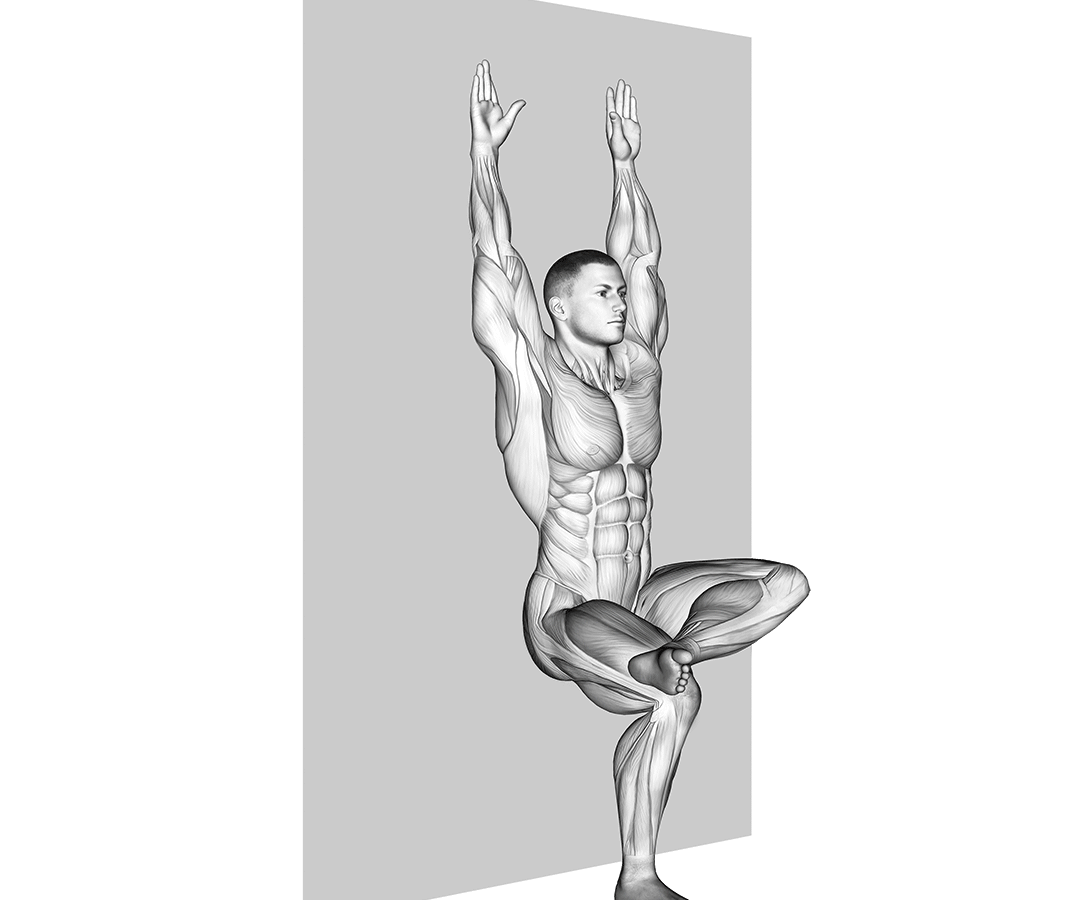
The Single-Leg Wall Squat is a strength and balance exercise that helps strengthen the lower body muscles. This movement is performed by leaning against a wall and using one leg, and it helps strengthen the quadriceps, hamstrings, and gluteal muscles. Additionally, this exercise helps improve balance and muscle endurance. This movement is particularly suitable for those looking to strengthen their leg muscles and improve their balance. Performing this exercise correctly helps with better control of daily movements and prevention of sports injuries. Furthermore, this exercise also aids in strengthening the core muscles.
Target Muscle and Secondary Muscles Involved in the Single-Leg Wall Squat
The primary target muscle in the Single-Leg Wall Squat is the quadriceps. These muscles are stressed during sitting and standing and help improve lower body strength and endurance. In addition to the quadriceps, the glutes and hamstrings are also significantly engaged in this movement. The core muscles are also activated to maintain balance and control the movement. This exercise helps improve lower body muscle strength and better body control.
How to Perform the Single-Leg Wall Squat
To perform the Single-Leg Wall Squat, first lean against a wall and extend one leg straight forward. Position your feet parallel to the wall and slowly move down using your other leg until your knee forms a 90-degree angle. Then, push your foot down to return to a standing position. During the movement, ensure your knee does not go past your toes and keep your back straight. Perform this movement for a specified number of repetitions, then switch legs so both legs are strengthened equally. Regular performance of this exercise helps strengthen lower body muscles and improve balance.
Equipment Required
To perform the Single-Leg Wall Squat, you only need a stable wall to lean against. This wall should be sturdy and non-slip to prevent potential injuries. In addition to the wall, supportive athletic shoes help maintain balance and control the movement. Also, to prevent injury and improve exercise results, you can use a mat or a soft cushion for added comfort. This equipment helps you maintain the correct form and prevent potential injuries.
Yes, the Single-Leg Wall Squat is suitable for beginners, but it’s important to perform the movement with correct form and use a stable wall.
To prevent injury, ensure you keep your back straight and your knees aligned with your toes. Also, using appropriate footwear and a stable wall is crucial.
While the wall is helpful for maintaining balance, you can perform this exercise without it, but controlling balance may be generally more challenging.
Typically, 3 sets of 10 to 12 repetitions per leg are recommended. This can vary depending on your fitness level and goals.
Yes, the Single-Leg Wall Squat also helps strengthen the core muscles, as they are activated throughout the exercise to maintain balance and control the movement.
How to perform
-
Step 1
First, find a clear, flat spot on the wall with enough space to perform the exercise. Stand with your back against the wall and place your feet hip-width apart and a few inches away from the wall. Your feet should be parallel to each other.
-
Step 2
Lift one leg off the ground and extend it forward, keeping your knee slightly bent. This will be your working leg for the exercise.
-
Step 3
Lean your back against the wall, ensuring your spine is in a neutral position and your shoulders and hips are in contact with the wall.
-
Step 4
Engage your abdominal muscles to maintain stability throughout the exercise. This helps support your spine and prevents excessive rounding or arching of the lower back.
-
Step 5
Slowly lower your body by bending the standing knee, while keeping your working leg lifted off the ground. Lower yourself as far as comfortable, aiming for a 90-degree angle at the knee.
-
Step 6
Keep your torso upright and your chest lifted throughout the movement. Avoid leaning forward or letting your knees cave inward.
-
Step 7
Push through the heel of your standing foot to return to the starting position, straightening your standing leg. Focus on using your quadriceps, hamstrings, and glutes to lift your body. Complete the desired number of repetitions on one leg before switching to the other.