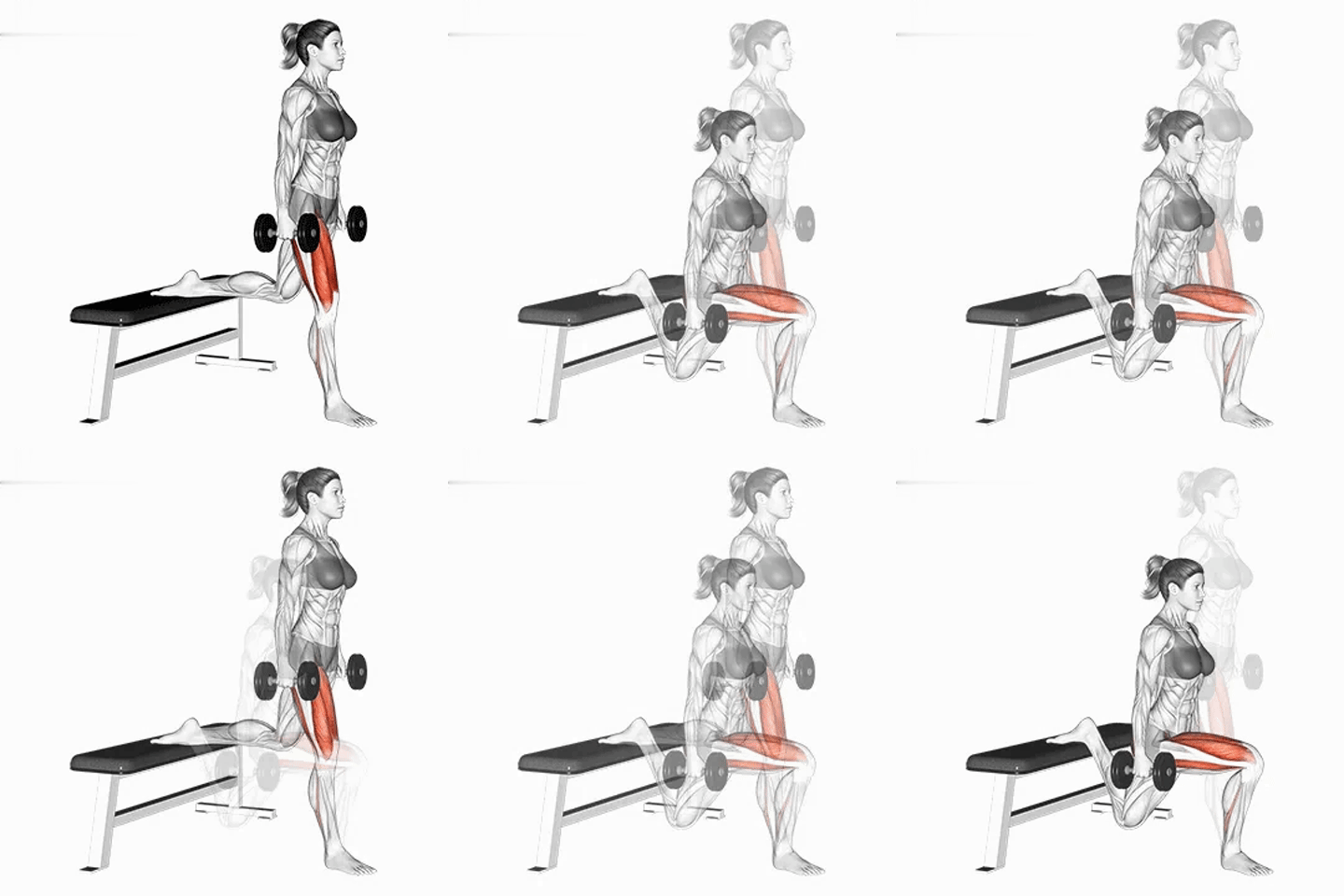
The Dumbbell Bulgarian Split Squat is an effective and challenging exercise for strengthening and shaping the lower body muscles. Due to the use of dumbbells and the need for balance, this movement can specifically target the leg and glute muscles. By performing this exercise, in addition to strengthening the target muscles, it also helps improve balance and motor coordination. In this exercise, one leg is placed stably on an elevated surface (like a bench), and the other leg is forward in a standing position. This position helps the exerciser focus more on the front leg and glute muscles and leverage the movement’s challenges to strengthen these muscles.
Target Muscle and Secondary Muscles Involved in the Dumbbell Bulgarian Split Squat
The primary muscle targeted in the Dumbbell Bulgarian Split Squat is the Quadriceps. This muscle is located at the front of the thigh and experiences significant pressure during the movement. Strengthening this muscle can improve leg strength and endurance and enhance motor abilities. In addition to the quadriceps, other muscles are also active in this exercise. The Gluteus Maximus in the gluteal region and the Hamstrings at the back of the thigh are involved as secondary muscles. Furthermore, the core muscles are activated to maintain balance and control the body throughout the movement. This exercise helps strengthen these muscles and improve motor function.
How to Perform the Dumbbell Bulgarian Split Squat
To perform the Dumbbell Bulgarian Split Squat, you should first choose two appropriate dumbbells. Place one leg on an elevated surface like a bench or step, and position the other leg forward. Hold the dumbbells in your hands and, by bending the knee of your front leg, slowly lower your body until your front thigh is almost parallel to the ground. Then, slowly return to the standing position. Throughout the exercise, paying attention to correct form and maintaining balance is crucial. Ensure your knees are aligned with your toes and use an appropriate weight. Also, adequate warm-up before the workout and stretching after the workout can help reduce the risk of injury.
Equipment Needed
To perform the Dumbbell Bulgarian Split Squat, you will need two dumbbells. These dumbbells should have a weight suitable for your fitness level. You will also need an elevated surface like a bench or step to place your back foot on. Wearing athletic shoes with good soles for increased stability and comfort is also recommended. If dumbbells are unavailable, you can use your body weight as an alternative, but using dumbbells helps increase the challenge and improve results. Additionally, ensuring you have enough space to perform the movement and maintain correct form is of high importance.
Yes, this exercise is suitable for beginners, but it is recommended to start with lighter weights and focus on maintaining correct form.
Typically, 8 to 12 repetitions per set are suitable for the Dumbbell Bulgarian Split Squat. You can adjust the number of sets and repetitions based on your fitness level and goals.
Yes, the Dumbbell Bulgarian Split Squat helps strengthen the Gluteus Maximus (glutes) and can be beneficial for glute hypertrophy and strengthening.
To prevent injury, ensure you maintain correct form and use an appropriate weight. Additionally, adequate warm-up before the workout and stretching after the workout can help reduce the risk of injury.
Yes, the Dumbbell Bulgarian Split Squat, due to the need for balance and coordination, can help improve balance and muscle coordination.
Yes, this exercise can be part of a weight loss program, but for effective weight loss, it should be performed along with cardio exercises and a proper diet.
How to perform
-
Step 1
Stand one step ahead of the surface where you will place your foot. Hold a dumbbell in each hand.
-
Step 2
Lift one leg and place it on the bench or box. You can keep your foot on your toes or let it rest flat.
-
Step 3
Once you are in a stable and appropriate position, hold the dumbbells down by your sides. Brace your core, then slowly lower yourself down and slightly backward into a squat. Go as low as your mobility allows without pain or losing balance.
-
Step 4
After reaching the bottom of the squat, reverse the movement by pushing through your active foot into the ground. Return to the starting position using your active leg.