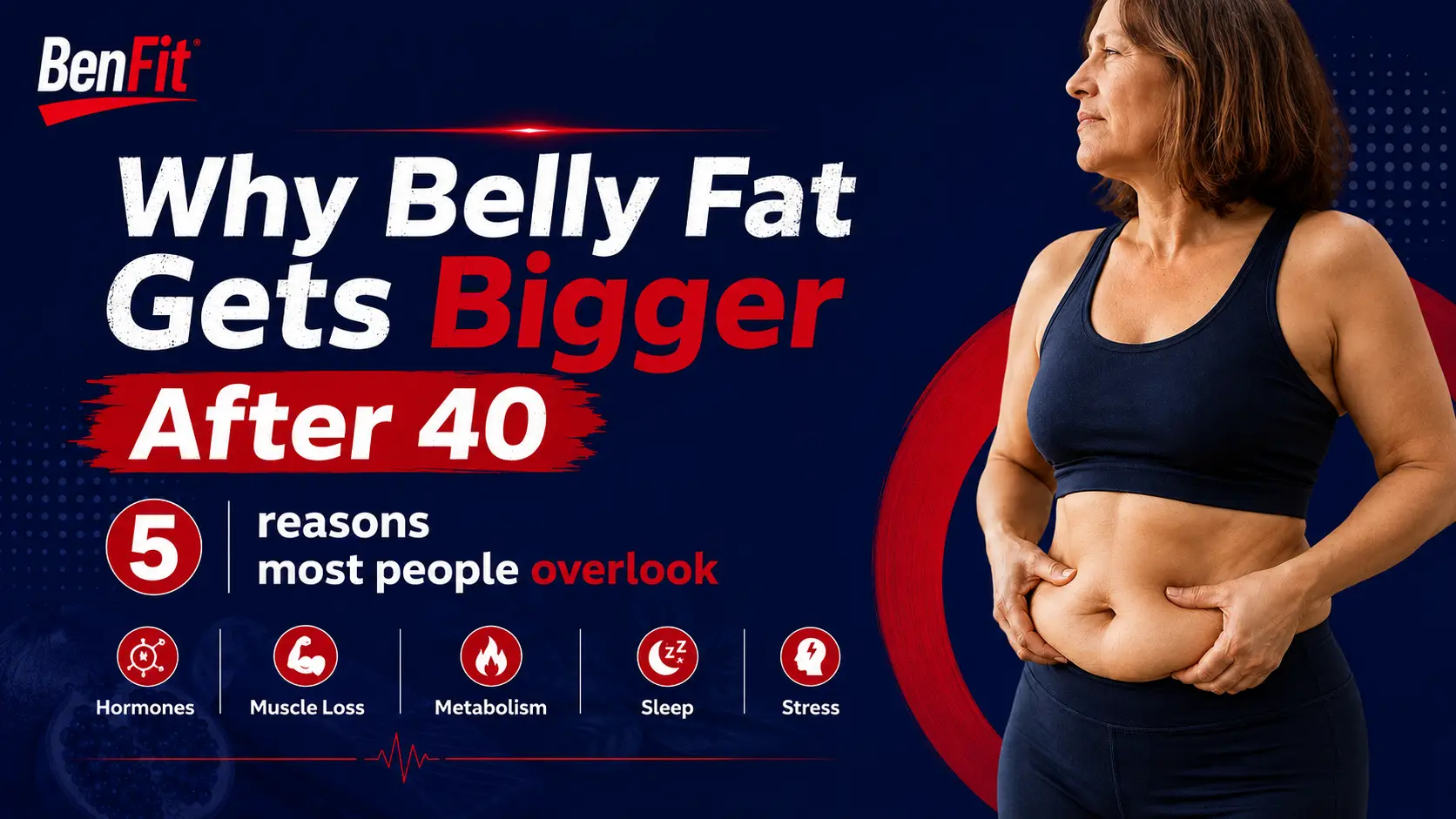
After 40, many people notice something frustrating: their weight may not change much, their diet may look almost the same, but their belly starts getting bigger.
This is not always because they suddenly lost discipline. It is often because the body is changing.
After 40, belly fat becomes easier to store because of a combination of factors: lower muscle mass, reduced insulin sensitivity, poor sleep, chronic stress, and hormonal changes. These do not cancel the importance of calories, but they can change how hungry you feel, how well you recover, how many calories you burn, and where your body tends to store fat.
Mayo Clinic explains that as people age, muscle mass typically decreases while fat increases, and losing muscle slows the rate at which the body uses calories. That change can make weight management harder, especially if activity and nutrition do not adjust with age.
The key message is simple:
Belly fat after 40 is not just a food problem. It is a lifestyle, muscle, hormone, sleep, and metabolism problem.
The Big Mistake: Only Focusing on Diet
Diet matters. Calories matter. Food quality matters.
But after 40, focusing only on food is usually not enough.
Someone can eat “healthy” and still gain belly fat if they are losing muscle, sleeping poorly, moving less, under constant stress, or becoming more insulin resistant. NIDDK explains that insulin resistance means the body does not respond to insulin the way it should, which can lead to higher blood glucose and weight gain; risk factors include overweight, large waist size, age 35 or older, and low physical activity.
That is why the BenFit approach is not just:
Eat less.
It is:
Build muscle. Improve insulin sensitivity. Sleep better. Manage stress. Eat with structure.
1. Less Muscle Means a Slower Metabolism
One of the biggest reasons belly fat increases after 40 is muscle loss.
Muscle is metabolically active tissue. When you have more muscle, your body generally burns more energy throughout the day. When muscle decreases, your body may burn fewer calories even if your food intake stays the same.
This is why two people can eat similar calories but store fat differently. The person with more muscle usually has better body composition and a higher daily energy demand.
Mayo Clinic notes that muscle mass tends to decline with age, fat tends to increase, and losing muscle slows metabolism, making it harder to stay at a healthy weight.
What to do
Strength training becomes non-negotiable after 40.
Focus on:
- Squats
- Hinges
- Push movements
- Pull movements
- Carries
- Core training
- Progressive overload
The goal is not just to “burn calories” during exercise. The goal is to build and preserve muscle so your body becomes better at handling food, movement, and aging.
2. Insulin Resistance Can Make Belly Fat Easier to Store
Insulin is a hormone that helps move glucose from the blood into cells. When insulin sensitivity is good, your body handles carbohydrates more efficiently. When insulin resistance increases, the body has a harder time using glucose properly.
This does not mean carbohydrates are automatically bad. It means the body’s ability to manage them may become weaker when activity drops, muscle mass decreases, body fat increases, or sleep and stress are poor.
NIDDK explains that insulin resistance happens when cells in muscle, fat, and liver do not respond well to insulin. Risk factors include overweight or obesity, large waist size, age 35 or older, and physical inactivity.
What to do
The best strategy is not fear of carbs. It is better carb control.
Use this structure:
- Protein at every meal
- Vegetables at most meals
- Carbs around training or active parts of the day
- Less liquid sugar
- Fewer ultra-processed snacks
- More walking after meals
- Strength training 2–4 times per week
The goal is to make your body better at using the food you eat.
3. Poor Sleep Makes Fat Loss Harder
Bad sleep is one of the most underrated reasons belly fat increases after 40.
When sleep quality drops, hunger often rises, cravings become harder to control, recovery gets worse, and training performance declines. People also tend to move less when they are tired.
The CDC says adults need at least 7 hours of sleep per night, and good sleep supports healthy weight, stress reduction, mood, heart health, metabolism, attention, and memory.
Mayo Clinic also notes that when people do not get enough sleep, they tend to snack more, consume more calories, and become less active.
What to do
Improve sleep before you blame your diet.
Start with:
- Same bedtime and wake time most days
- No caffeine late in the day
- No heavy meals close to bedtime
- Less screen time before bed
- Dark, cool bedroom
- Morning sunlight
- Regular training, but not intense training too late at night
Better sleep makes nutrition easier because your brain stops fighting you all day.
4. Chronic Stress Pushes the Body Toward Storage
Stress is not only mental. It affects the body physically.
MedlinePlus explains that chronic stress keeps the body alert over time and may increase risk for health problems including high blood pressure, heart disease, diabetes, obesity, depression, and anxiety. It also lists trouble sleeping and weight loss or weight gain among possible signs of too much stress.
This matters because chronic stress often leads to the exact behaviors that increase belly fat:
- More cravings
- More late-night eating
- Less sleep
- Less training consistency
- More alcohol
- More emotional eating
- Lower recovery
What to do
Stress management is not optional after 40.
Use practical tools:
- 20–30 minutes walking
- 5 minutes deep breathing
- Training without overtraining
- Less late-night phone use
- More consistent meals
- Lower alcohol intake
- Better sleep schedule
- Time outdoors
The goal is not to remove stress completely. The goal is to stop living in a constant “emergency mode.”
5. Lower Estrogen Can Change Fat Distribution in Women
For women, hormonal changes around perimenopause and menopause can make belly fat more noticeable.
Mayo Clinic explains that hormonal changes during menopause can make weight gain more likely around the belly rather than the hips and thighs. However, it also emphasizes that hormones alone do not explain everything; diet, lifestyle, genetics, and aging also play major roles.
This is why women after 40 often need a different strategy than they used in their 20s or 30s.
It is not just about eating less. It is about protecting muscle, sleeping better, managing stress, and building a sustainable training routine.
What to do
The foundation should be:
- Strength training at least twice per week
- Adequate protein
- Daily walking
- Sleep consistency
- Fiber-rich meals
- Less alcohol
- Less added sugar
- More recovery
Mayo Clinic also recommends aerobic activity and strength training for preventing or managing menopausal weight gain, noting that gaining muscle helps the body burn calories better.
The Real Formula: Why Belly Fat Builds Faster After 40
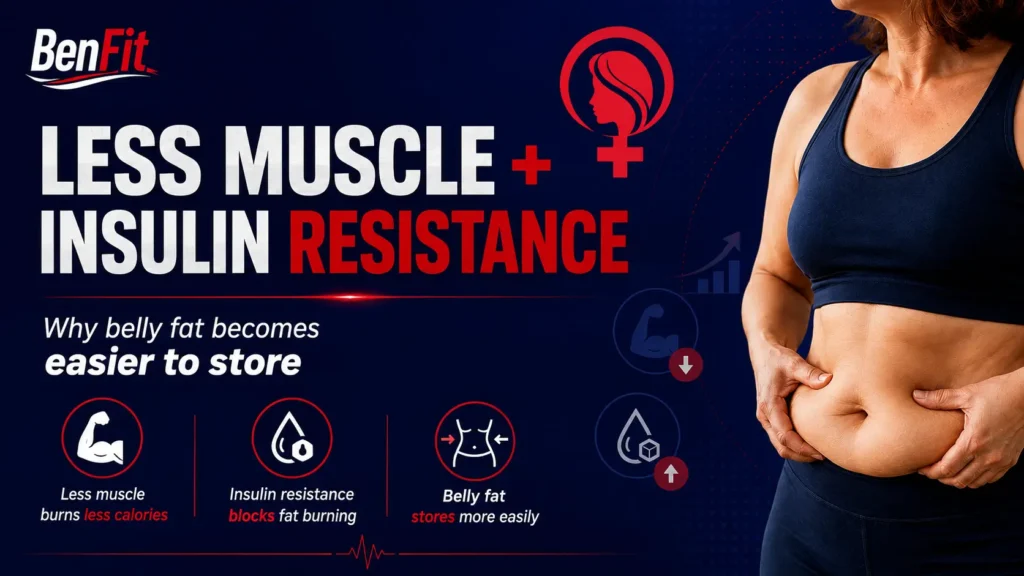
The visuals summarize the core idea well:
Less muscle + insulin resistance + poor sleep + chronic stress + hormonal changes = easier belly fat storage
That does not mean your body is broken.
It means your old routine may no longer be enough.
The same calories, same workouts, same sleep schedule, and same stress level may produce different results after 40 because your body’s recovery, muscle mass, hormones, and insulin sensitivity are not the same as before.
The BenFit Solution
1. Strength Train 2–4 Times Per Week
The CDC recommends adults do muscle-strengthening activity at least 2 days per week, in addition to weekly aerobic activity.
For belly fat after 40, strength training is not just for appearance. It supports muscle retention, metabolism, posture, insulin sensitivity, and long-term independence.
2. Get 150 Minutes of Weekly Cardio
The CDC recommends at least 150 minutes of moderate-intensity physical activity per week, such as 30 minutes a day, 5 days a week.
Good options:
- Brisk walking
- Hiking
- Cycling
- Swimming
- Incline treadmill
- Outdoor circuits
- Zone 2 cardio
3. Eat Protein at Every Meal
Protein helps preserve muscle, improves satiety, and supports recovery.
Examples:
- Eggs
- Chicken
- Turkey
- Fish
- Greek yogurt
- Cottage cheese
- Lean beef
- Tofu
- Lentils
- Protein powder when needed
4. Build Meals Around Fiber
Fiber helps meals feel bigger and more satisfying.
Use:
- Vegetables
- Berries
- Beans
- Lentils
- Oats
- Whole grains
- Chia seeds
- Apples
- Leafy greens
5. Fix Sleep Before Cutting More Calories
If sleep is poor, fat loss becomes harder.
Before you drop calories aggressively, improve sleep consistency. The CDC says quality sleep is not just about hours, but also about uninterrupted and refreshing sleep.
6. Manage Stress Like a Training Variable
Stress affects recovery, cravings, sleep, and consistency.
A simple daily stress-control routine:
- 10-minute walk after meals
- 5 minutes of breathing
- No phone 30–60 minutes before bed
- Weekly outdoor activity
- Planned recovery days
Sample Day for Reducing Belly Fat After 40
Breakfast
Eggs, spinach, Greek yogurt, and berries.
Lunch
Chicken or salmon bowl with rice, vegetables, olive oil in a measured amount, and salad.
Snack
Protein shake or Greek yogurt with a small handful of walnuts.
Dinner
Lean protein, vegetables, and a controlled carbohydrate source.
Before Bed
No heavy meal, no late caffeine, no phone scrolling, and a consistent sleep routine.
Final Takeaway
Belly fat after 40 is not random.
It is often the result of five connected changes:
- Less muscle
- More insulin resistance
- Poor sleep
- Chronic stress
- Hormonal shifts, especially lower estrogen in women
The solution is not extreme dieting.
The solution is a smarter system:
Strength training + protein + walking + sleep + stress control + consistent nutrition.
At BenFit, the goal is not just to lose weight. The goal is to rebuild the body so it burns better, moves better, sleeps better, and performs better after 40.