Healthy eating is one of the most important parts of losing weight, building energy, and improving your body composition. But there is one mistake many people make:
They assume that if a food is healthy, the amount does not matter.
That is where weight loss often gets stuck.
Foods like avocado, nuts, olive oil, peanut butter, oats, chia seeds, granola, and dried fruit can absolutely be part of a healthy diet. They contain useful nutrients, healthy fats, fiber, vitamins, minerals, and energy. The problem is not the food itself. The problem is portion size.
If you are trying to lose weight, calories still matter. A food can be nutritious and high in calories at the same time. And if you do not control the amount, even healthy foods can push you out of a calorie deficit.
The CDC explains that healthy weight loss is best supported by a lifestyle that includes good nutrition, regular physical activity, stress management, and enough sleep. It also notes that people who lose weight gradually and steadily are more likely to keep it off.
This article breaks down 10 healthy foods that are higher in calories than many people think — and how to enjoy them without slowing your progress.
The Key Point: These Foods Are Not Bad
Before we start, let’s make one thing clear:
These foods are not “unhealthy.”
The mistake is thinking that healthy means unlimited.
USDA MyPlate encourages prioritizing whole, healthy, nutritious foods, but healthy eating still needs balance, portions, and consistency.
For weight loss, your goal is not to remove every calorie-dense food. Your goal is to use them intelligently.
A simple rule:
Keep the food. Control the amount.
1. Oats
Oats are a great source of carbohydrates, fiber, and long-lasting energy. They can be an excellent breakfast option, especially when paired with protein.
But dry oats are more calorie-dense than many people realize. A large bowl of oats with milk, honey, banana, peanut butter, nuts, and dried fruit can quickly become a very high-calorie meal.
Why oats can slow weight loss
The problem usually comes from toppings:
- Peanut butter
- Honey
- Maple syrup
- Granola
- Nuts
- Dried fruit
- Full-fat milk
Oats are healthy, but the calories can climb fast when portions are not measured.
BenFit portion tip
Use a controlled serving of dry oats, then add protein to make the meal more balanced. For example:
- Oats + Greek yogurt
- Oats + protein powder
- Oats + eggs on the side
- Oats + berries instead of dried fruit
2. Chia Seeds
Chia seeds are rich in fiber and healthy fats. They can help make meals more filling, especially in yogurt, smoothies, or chia pudding.
But chia seeds are small, and that makes them easy to overuse. A few extra spoonfuls can add a lot of calories without making the meal feel much bigger.
Why chia seeds can slow weight loss
People often add chia seeds to already calorie-dense meals, such as smoothies, nut bowls, yogurt bowls, or oatmeal. The result is healthy — but sometimes too high in calories for a fat-loss goal.
BenFit portion tip
Use chia seeds as a supplement to a meal, not the base of the meal. Start with 1 tablespoon and adjust based on your calorie needs.
3. Granola
Granola looks healthy, but it is often one of the easiest foods to overeat.
Many granolas contain oats, nuts, seeds, oils, honey, dried fruit, and added sweeteners. Those ingredients can be nutritious, but together they create a calorie-dense food.
Why granola can slow weight loss
A small bowl of granola can contain much more energy than expected. The serving size on the label is often smaller than what people actually pour.
BenFit portion tip
Use granola as a topping, not as the main cereal.
Better structure:
- Greek yogurt
- Berries
- Small measured amount of granola
This keeps the crunch and flavor but makes the meal more weight-loss friendly.
4. Dried Fruit
Dried fruit is not automatically bad. It can contain fiber, minerals, and natural sugars.
But dried fruit is much more concentrated than fresh fruit because most of the water has been removed. That means it is easier to eat a lot of calories quickly.
Why dried fruit can slow weight loss
A handful of dried fruit may represent several pieces of fresh fruit. It is also less filling than the same amount of whole fruit because it has less water volume.
BenFit portion tip
If your goal is fat loss, choose fresh fruit more often.
Better options:
- Apple
- Berries
- Orange
- Kiwi
- Watermelon
- Grapes in a measured portion
Use dried fruit occasionally, and measure it instead of eating from the bag.
5. Peanut Butter
Peanut butter is one of the most common “healthy but high-calorie” foods.
It provides fat, some protein, and minerals, but it is very calorie-dense. The serving size is usually much smaller than what people naturally spread on bread, fruit, or oatmeal.
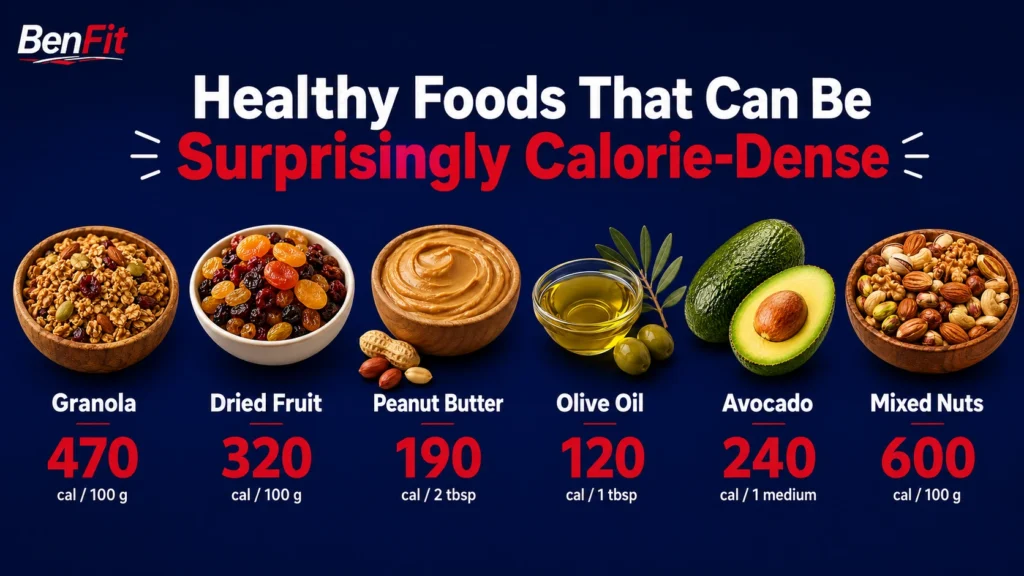
USDA data cited in nutrition references lists smooth peanut butter at about 597 calories per 100 grams, which shows how energy-dense it is.
Why peanut butter can slow weight loss
A “spoonful” can easily become two, three, or four tablespoons. That can add hundreds of calories without feeling like a full meal.
BenFit portion tip
Use a real measuring spoon for 1–2 weeks until you understand what one serving looks like.
Better uses:
- Add a small amount to oats
- Pair it with apple slices
- Use powdered peanut butter for lower-calorie flavor
- Avoid eating directly from the jar
6. Olive Oil
Olive oil is a healthy fat and can be part of a balanced diet. But it is still pure fat, and fat is calorie-dense.
One tablespoon of olive oil contains about 119 calories, according to USDA-based nutrient data.
Why olive oil can slow weight loss
Many people do not count cooking oil. They pour it into pans, salads, rice, vegetables, or sauces and forget it exists.
But oil calories count.
A salad can go from low-calorie to high-calorie if you add too much dressing or olive oil.
BenFit portion tip
Do not remove olive oil completely. Just measure it.
Use:
- 1 teaspoon for cooking
- 1 tablespoon for salad dressing
- Spray oil when needed
- Lemon, vinegar, herbs, and spices for extra flavor
7. Avocado
Avocado is nutritious, rich in healthy fats, and very satisfying. It is one of the best examples of a healthy food that still needs portion control.
The issue is not avocado itself. The issue is adding avocado on top of already high-calorie meals without adjusting anything else.
Why avocado can slow weight loss
Avocado is often added to:
- Toast
- Eggs
- Bowls
- Salads
- Wraps
- Smoothies
- Mexican dishes
These meals can be healthy, but calories can rise quickly.
BenFit portion tip
Use avocado intentionally.
For fat loss, try:
- ¼ to ½ avocado per meal
- Pair with lean protein
- Avoid combining avocado with large amounts of oil, cheese, nuts, and sauces in the same meal
8. Nuts
Nuts are healthy, satisfying, and full of beneficial fats. They can support a balanced diet when eaten in the right amount.
But they are very easy to overeat.
A small handful can be fine. Eating from a large bag can turn into hundreds of calories quickly.
Why nuts can slow weight loss
Nuts are dense, crunchy, and easy to snack on without tracking. They also do not take up much volume in the stomach compared with vegetables, fruits, or lean protein.
Nutrition references using USDA data show that many nuts and seeds are calorie-dense, with some half-cup portions reaching several hundred calories.
BenFit portion tip
Pre-portion nuts instead of eating from the bag.
Better approach:
- Use a small handful
- Add nuts to salad, not as unlimited snacks
- Choose single-serving packs
- Pair with fruit for more volume
9. Smoothie Bowls
Smoothie bowls can look very healthy, but they are often calorie bombs.
They may include:
- Banana
- Nut butter
- Granola
- Honey
- Dates
- Coconut flakes
- Protein powder
- Full-fat yogurt
- Nuts and seeds
Individually, these ingredients can be healthy. Together, they can become more like dessert than a fat-loss meal.
Why smoothie bowls can slow weight loss
Liquid or blended meals are often less satisfying than whole foods. You may consume a lot of calories quickly and still feel hungry later.
BenFit portion tip
Build a smoothie bowl like this:
- Protein base
- One fruit serving
- Ice or water for volume
- Small measured topping
- No added honey unless it fits your plan
10. “Healthy” Snacks and Fitness Foods
Protein bars, energy balls, keto snacks, gluten-free cookies, vegan desserts, and organic snacks often carry a “health halo.”
People assume they are better for weight loss because the package looks healthy.
But many of these foods are still high in calories, fats, and sweeteners.
Why healthy snacks can slow weight loss
Marketing can make foods feel lighter than they are. A snack can be organic, vegan, gluten-free, or high-protein and still be high-calorie.
BenFit portion tip
Always check:
- Calories per serving
- Serving size
- Protein
- Fiber
- Added sugars
- Total fat
- How many servings are in the package
Healthy branding does not replace portion control.
How to Eat High-Calorie Healthy Foods and Still Lose Weight
You do not need to eliminate these foods. You just need a system.
1. Measure for 1–2 Weeks
You do not have to weigh food forever. But measuring calorie-dense foods for a short period teaches you what portions actually look like.
Start with:
- Olive oil
- Peanut butter
- Nuts
- Granola
- Dried fruit
- Chia seeds
The CDC recommends tracking nutrition, physical activity, sleep, and stress when working toward a healthier weight because tracking helps identify where changes are needed.
2. Prioritize Protein First
Protein makes meals more satisfying and supports muscle retention during weight loss.
Before adding fats or toppings, ask:
Where is my protein?
Good options include:
- Eggs
- Chicken
- Fish
- Greek yogurt
- Lean meat
- Cottage cheese
- Tofu
- Beans
- Lentils
3. Add Volume With Vegetables and Fruit
If your meals are small but calorie-dense, you may still feel hungry.
Add volume with:
- Leafy greens
- Cucumber
- Tomatoes
- Broccoli
- Zucchini
- Mushrooms
- Berries
- Apples
- Citrus fruit
This helps you eat more food volume without adding too many calories.
4. Do Not Combine Too Many High-Calorie Extras
One high-calorie healthy food in a meal can be fine.
But combining several can create a problem.
For example:
Oats + peanut butter + banana + nuts + chia seeds + honey + full-fat milk = very high-calorie meal.
Better:
Oats + Greek yogurt + berries + small chia seed portion.
5. Read Labels
Serving sizes matter. Many people eat two or three servings without realizing it.
Check the label before you assume a snack is weight-loss friendly.
Sample Fat-Loss Swaps
| Instead of | Try |
|---|---|
| Big bowl of granola | Greek yogurt + berries + small granola topping |
| Large handfuls of nuts | One measured handful + fruit |
| Heavy olive oil dressing | Measured olive oil + lemon + vinegar |
| Dried fruit snack bag | Fresh fruit |
| Peanut butter from the jar | 1 measured tablespoon |
| Smoothie bowl with many toppings | Protein smoothie with one topping |
| “Healthy” snack bars daily | Whole-food snack with protein and fiber |
Final Thoughts
Healthy foods can still be high in calories.
That does not make them bad. It means they need awareness.
If you are not losing weight even though you are eating healthy, the answer may not be cutting out all your favorite foods. The answer may be learning how much your body actually needs.
At BenFit, the goal is not restriction. The goal is control, education, and sustainable results.
Do not eliminate blindly. Measure intelligently. Eat with awareness. Build a body that feels strong, lean, and energized.