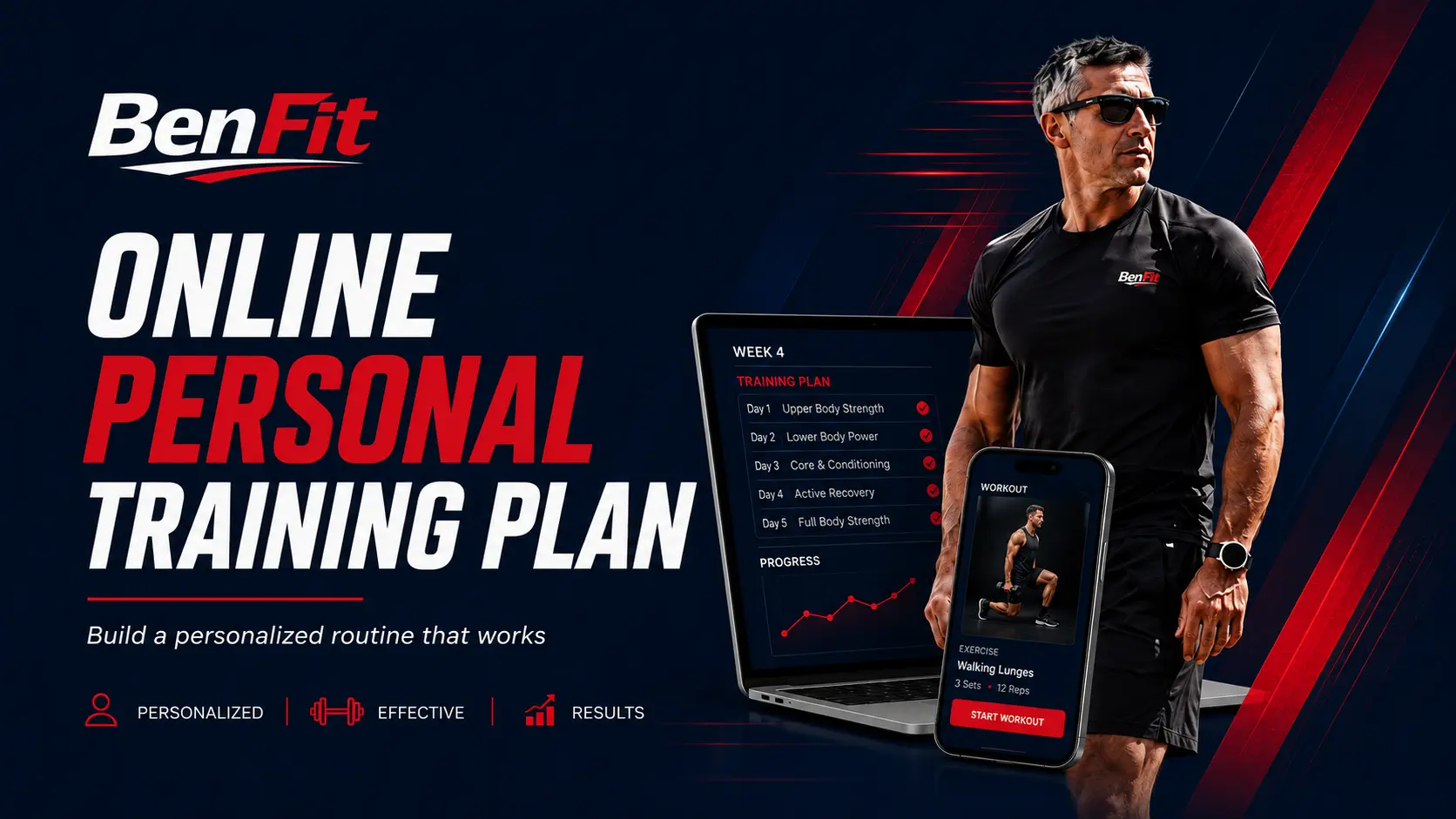
An online personal training plan should be more than a PDF workout list. The best plan connects your goal, training history, movement quality, schedule, recovery, and nutrition habits into one repeatable system. That is exactly where BenFit Pro is positioned: practical coaching for adults who want strength, better movement, fat loss, and consistency without guessing what to do every week.
For many people, online coaching is not a cheaper version of personal training. It is a smarter structure: you train where you are, follow a clear plan, send progress updates, and adjust the program based on what your body is actually doing. That matters in 2026 because fitness is moving toward personalization, tracking, and behavior-based coaching rather than random workouts.
What makes an online personal training plan effective?
A strong online plan starts with an assessment. Before choosing exercises, the coach should understand your goal, available equipment, injury history, current strength level, weekly schedule, sleep quality, and confidence with key movements. Without this step, even a beautiful workout routine can be the wrong routine.
At BenFit Pro, the goal is not to make training complicated. The goal is to make it specific. A beginner who trains at home three days per week needs a different plan than an Orange County professional who lifts in a gym, travels often, and wants to reduce belly fat while preserving muscle.
The 5-part BenFit structure for online coaching
1. Goal clarity
Your plan should define one main outcome first: strength, fat loss, mobility, body transformation, or performance. Secondary goals are added only after the main priority is clear. This keeps the program focused and prevents the common mistake of chasing too many goals at once.
2. Progressive training blocks
Random workouts create random results. A real program uses progression: more control, better range of motion, more reps, more load, better tempo, or improved conditioning over time. Progress does not always mean heavier weights every session; it means measurable improvement.
3. Corrective exercise when needed
If your squat, hinge, push, pull, or core control has limitations, the plan should include corrective work. This can include mobility drills, activation exercises, balance work, and technique coaching. Corrective exercise is especially important for adults who sit for long hours or return to training after pain or inconsistency.
4. Nutrition and recovery alignment
Training creates the signal. Nutrition and recovery help your body respond. A personalized plan should include basic targets for protein, meal timing, hydration, sleep, and recovery. For weight loss, it should also help you manage calorie intake without building an extreme diet.
5. Accountability and adjustments
The value of online coaching is the feedback loop. Your coach reviews what happened, identifies the bottleneck, and adjusts the next step. This is where online coaching beats generic apps: you are not only tracking data; you are getting decisions made from that data.
Online training vs. random workout apps
Workout apps can be useful, but they often lack context. A program may look good on screen while being too advanced, too repetitive, or not aligned with your recovery. Recent digital weight management research shows that digital programs often include self-monitoring, goal-setting, and behavior-change tools, but many still lack adaptive personalization and meaningful social support. This is exactly why a human coach-led online plan can be stronger than a template.
Who is this best for?
- Busy adults who want structure without driving to a gym every day.
- People starting again after years of inconsistent training.
- Clients who want weight loss while protecting muscle.
- Adults over 40 who need strength, mobility, and recovery planned together.
- Orange County clients who want hybrid coaching: online structure plus occasional 1:1 sessions.
Internal linking plan for this article
This article should link to the future BenFit Pro pages for 1:1 personal training in Orange County, corrective exercise coaching, nutrition coaching, and body transformation coaching.
Frequently Asked Questions
Is online personal training worth it?
Yes, if the plan is personalized, progressive, and supported by feedback. It works best when the coach adjusts training based on your schedule, recovery, equipment, and progress.
How often should I train with an online personal training plan?
Most adults do well with 3 to 5 structured sessions per week, depending on their goal, training age, and recovery. Beginners can start with 2 to 3 sessions and build gradually.
Can online personal training help with weight loss?
Yes. Weight loss usually requires a combination of strength training, nutrition habits, recovery, and consistency. Online coaching can organize those pieces into one system.
Do I need gym equipment?
Not always. A strong beginner plan can start with bodyweight, resistance bands, dumbbells, or a small home setup. Equipment helps, but consistency and progression matter more.
Ready to train smarter?
BenFit Pro helps adults build strength, improve movement quality, and stay consistent through online coaching and 1:1 personal training in Orange County, California.
Scientific and professional sources used
- CDC: Adult physical activity guidelines
- ODPHP: Physical Activity Guidelines for Americans
- 2026 review: Digital weight management interventions
- 2025 paper: AI-driven smart sportswear for exercise monitoring
Disclaimer: This article is educational and is not medical advice. If you have pain, a medical condition, or a recent injury, speak with a qualified health professional before starting a new program.