
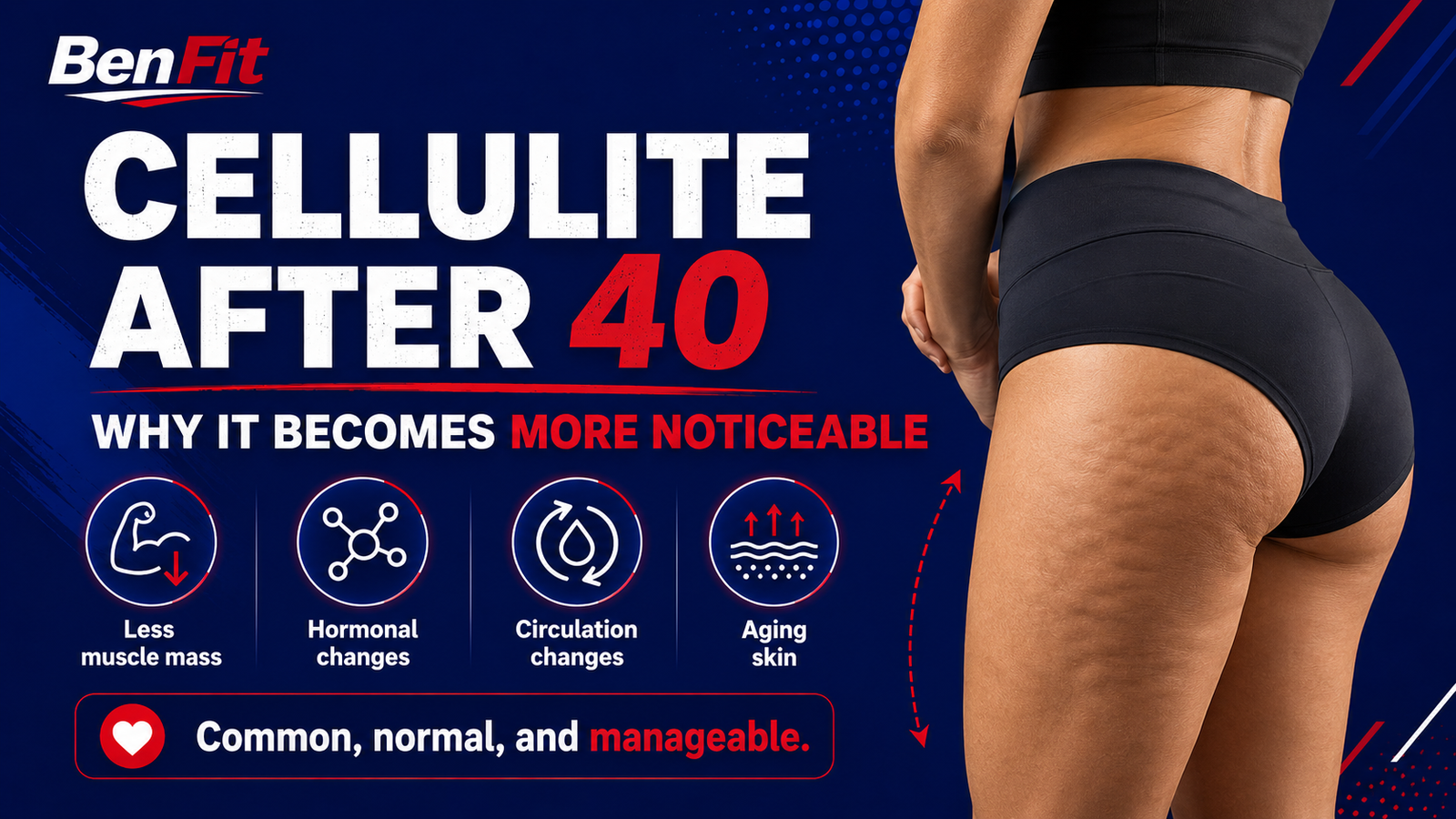
Quick answer: cellulite is not a sign that your body is “bad,” lazy, or unhealthy. It is a common skin-texture pattern created by fat cells, connective tissue, skin thickness, genetics, circulation, hormones, and age-related changes in muscle tone. The goal is not to “erase” a normal body feature. The smart goal is to improve strength, body composition, circulation, hydration, and confidence.
What cellulite actually is
Cellulite is the dimpled or uneven texture that often appears on the thighs, hips, glutes, and sometimes the lower abdomen. It happens when fat beneath the skin pushes against connective-tissue bands. Because women’s connective tissue and fat storage patterns differ from men’s, cellulite is especially common in women, including women who are lean, athletic, and consistent with training.
This is the first important mindset shift: cellulite is not the same thing as obesity. A person can have visible cellulite and still be fit. A person can lose weight and still have cellulite. And a person can improve the appearance of cellulite without chasing extreme dieting.
Why cellulite becomes more noticeable after 40
After 40, several body-composition changes can make skin texture look more visible. Muscle mass naturally becomes harder to maintain without strength training. Skin may lose some firmness. Daily movement may decrease. Stress and poor sleep can also affect appetite, recovery, and water retention. None of this means you are “broken.” It means the strategy needs to become more intelligent.
| Factor | What it can change | BenFit coaching focus |
|---|---|---|
| Lower muscle tone | Skin and tissue may look less firm | Progressive strength training |
| Inconsistent protein | Harder muscle repair and satiety | Protein at each meal |
| Poor sleep | Higher cravings and weaker recovery | Sleep routine and recovery planning |
| Low daily steps | Less circulation and lower calorie output | Daily walking targets |
| Crash dieting | Muscle loss and softer appearance | Moderate calorie deficit, not starvation |
The biggest mistake: treating cellulite like a fat-loss emergency
Many people respond to cellulite by cutting food aggressively, doing only cardio, and buying creams that promise fast results. That usually backfires. When calories drop too low and protein is low, the body can lose muscle. Less muscle can make the area look softer even if the scale drops. A stronger approach is to build the tissue underneath the skin while slowly improving body composition.
What actually helps improve the look of cellulite
1. Strength train the lower body
Glute bridges, hip thrusts, squats, split squats, step-ups, Romanian deadlifts, and lunges help build the glutes, hamstrings, and quads. More muscle does not make the legs bulky for most people. It usually makes the shape firmer and more athletic.
2. Eat enough protein
Protein supports muscle repair, helps fullness, and makes a fat-loss phase easier to control. For most healthy adults who train, a protein target spread across meals works better than trying to “save” protein for dinner.
3. Manage calories without panic
If fat loss is the goal, the calorie deficit should be moderate. You should still have energy to train, sleep, walk, and function. Cellulite-focused fat loss is not about punishing your body; it is about improving the environment your body lives in.
4. Improve circulation and movement
Walking, lower-body training, mobility work, and consistent hydration may help the legs feel better and look less puffy. You do not need a complicated detox. You need repeatable habits.
| Goal | Minimum effective habit | Upgrade |
|---|---|---|
| Firm legs and glutes | 2 lower-body strength sessions per week | 3 sessions with progressive overload |
| Less puffiness | 7,000 daily steps | 8,000–10,000 steps plus mobility |
| Better body composition | Protein at breakfast and dinner | Protein at every meal |
| Better recovery | Consistent bedtime | 7–9 hours when possible |
A simple 4-week cellulite-support plan
- Train legs twice weekly: include a squat pattern, hinge pattern, single-leg move, and glute-focused move.
- Walk daily: start with your current average and add 1,000 steps.
- Protein first: build every meal around a protein source before adding carbs and fats.
- Hydrate: drink enough water so thirst is not confused with hunger.
- Track strength, not just weight: if your lifts improve, your tissue is adapting.
When to get extra help
If cellulite is affecting your confidence, start with training, nutrition, and recovery. If you are considering medical or cosmetic treatments, speak with a qualified dermatologist. Creams and procedures vary widely, and expectations should be realistic.
BenFit takeaway
Cellulite is common. It is not a character flaw and it is not proof that your workouts are failing. After 40, the best strategy is strength training, enough protein, smart calories, quality sleep, and consistency. That is how you build a body that looks stronger, moves better, and feels more confident.
For coaching support, visit BenFit online training or 1:1 personal training in Orange County. For practical video breakdowns, you can also follow BenFit Training: https://www.youtube.com/@BenfitTraining
Scientific sources and editorial notes
- American Academy of Dermatology: cellulite treatment overview and realistic expectations.
- MedlinePlus: cellulite, subcutaneous fat, and connective tissue basics.
- NIDDK: insulin resistance, gas, bloating, diet changes, and healthy lifestyle guidance.
- U.S. Physical Activity Guidelines: adult aerobic and muscle-strengthening recommendations.
- International Society of Sports Nutrition: protein and exercise position stand.
Medical note: This article is educational and does not replace medical care. If symptoms are severe, sudden, painful, or linked with bleeding, unexplained weight loss, chest pain, fainting, or persistent digestive changes, speak with a qualified health professional.