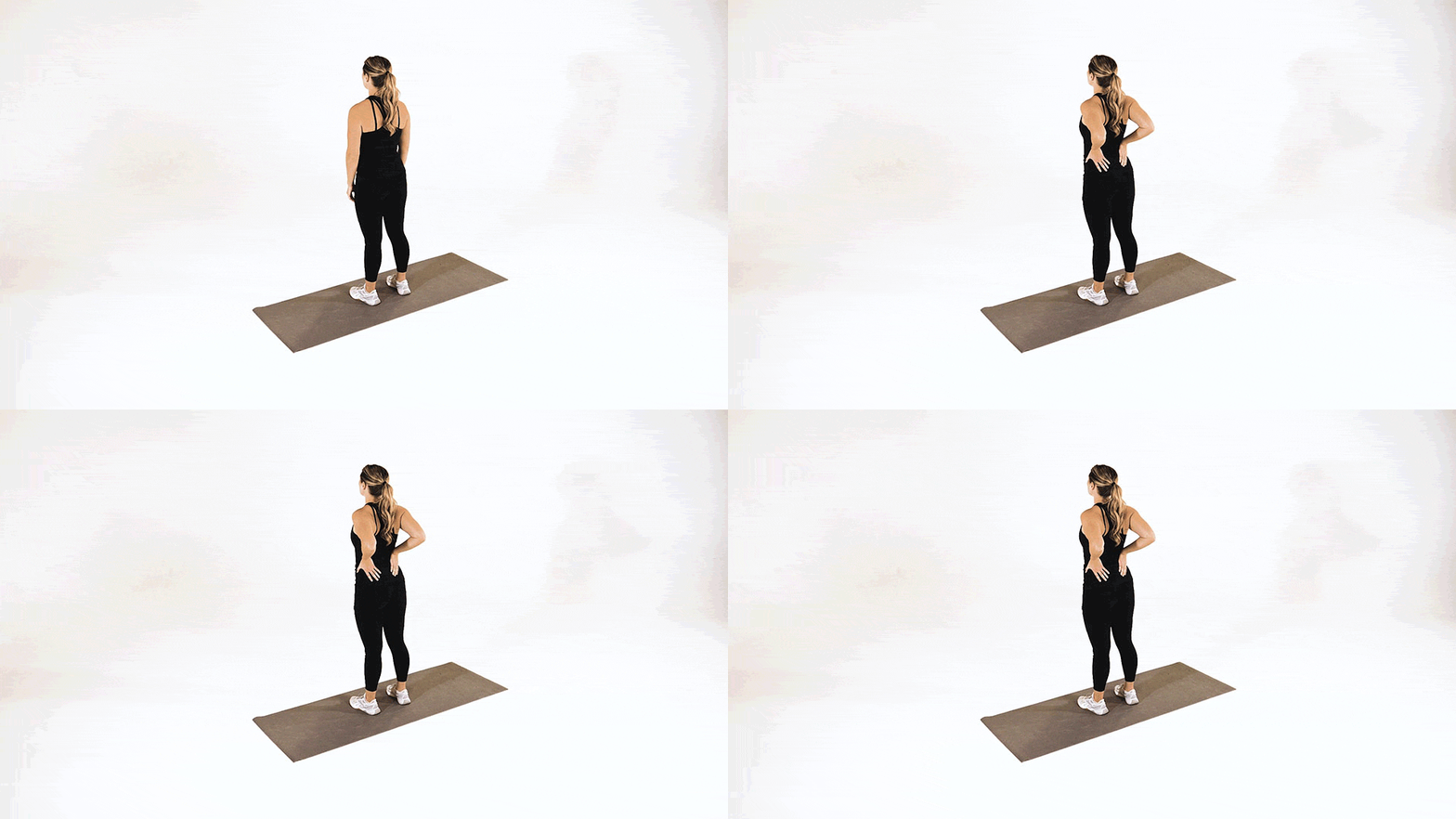
The Standing Pelvic Tilt exercise is a simple and effective movement for strengthening and improving the posture of the back and pelvis. This exercise is particularly beneficial for individuals experiencing back and pelvic issues due to prolonged sitting or improper physical activities. The Standing Pelvic Tilt can help reduce back pain and improve body balance and stability. This exercise is performed while standing and can easily be done at home or at work. By strengthening the core muscles and improving flexibility in the lower back and pelvic area, this movement can help prevent back-related injuries and enhance quality of life.
Target Muscles in Standing Pelvic Tilt
The Standing Pelvic Tilt exercise primarily focuses on the core muscles, especially the abdominals and the erector spinae muscles. By strengthening these muscles, this exercise helps improve back posture and reduce pain. Abdominal muscles play a crucial role in controlling pelvic movement and maintaining correct body posture throughout the exercise. In addition to the abdominal and back muscles, the pelvic and gluteal muscles are also indirectly engaged during this movement. Strengthening and stretching these muscles can help increase stability and balance in the lower back and pelvic region, preventing muscular injury issues.
Secondary Muscles Involved in Standing Pelvic Tilt
During the Standing Pelvic Tilt, secondary muscles such as the obliques are also indirectly involved. These muscles play an important role in maintaining body balance and stability throughout the exercise. Strengthening these muscles can help improve flexibility and reduce tension in the lower back and abdominal area. In addition to the obliques, the deep abdominal muscles and the muscles surrounding the lower back may also be activated due to the need to maintain proper posture during the exercise. These muscles help ensure the movement is performed correctly and prevent potential injuries.
How to Perform the Standing Pelvic Tilt
1. Stand with your feet slightly wider than shoulder-width apart and place your hands on your hips. This is the starting position for the exercise. 2. Gently tilt your pelvis forward, reducing the arch in your lower back, causing your abdomen to protrude slightly. Hold this position for a few seconds, then slowly return to the starting position. 3. Now, tilt your pelvis backward, increasing the arch in your lower back, causing your abdomen to draw inward. Hold this position for a few seconds as well, then return to the starting position. 4. Repeat this movement for 1 to 2 minutes, performing each tilt slowly and deliberately to avoid overstretching and injury.
Equipment Required
No special equipment is needed to perform the Standing Pelvic Tilt exercise. You only need a flat, stable surface to stand on. You can use a soft mat or an exercise mat for added comfort, but it is not essential. If you seek more stability, you can use a wall or a chair for support. However, in most cases, this exercise can be easily performed without any special equipment.
Yes, this exercise is suitable for most people and can help improve back and pelvic posture. However, if you have serious back problems or specific injuries, consulting a doctor is recommended.
You can perform this exercise 2 to 3 times a day. Regular practice can help reduce tension and improve back posture. Avoid overdoing the exercise to prevent potential injuries.
Warming up before stretching and strengthening exercises can help prevent muscle injuries. Performing light warm-up movements, such as walking or gentle stretches, can prepare your muscles for the workout.
To prevent potential injuries, ensure you perform the movement slowly and with control. Also, avoid excessive strain on your lower back and abdomen, and refrain from performing the movement in incorrect positions.
Yes, this exercise can help improve back posture and reduce tension and pain in the lower back area. However, if you have serious back problems or severe pain, consulting a doctor is recommended.
How to perform
-
Step 1
: Stand straight with your feet shoulder-width apart. Then, gently bend your knees.
-
Step 2
: Slowly move your pelvis backward, drawing your navel towards your spine until you feel a stretch in your lower back.
-
Step 3
: Continue this movement for your desired number of repetitions.