The Cable Reverse Crunch is an effective exercise for strengthening the abdominal muscles, performed using a cable machine. This movement is specifically designed to target the lower abdominal muscles. In this exercise, the legs are brought up towards the abdomen, and the resistance from the cable increases the intensity of the workout. This exercise not only helps strengthen the abs but also improves balance and muscular endurance.
This exercise is one of the best options for individuals looking for varied ways to strengthen their abdominal muscles. Adding resistance with the help of a cable makes this movement more challenging than regular crunches and aids in improving abdominal muscle strength.
Target Muscle in Cable Reverse Crunch
The primary target muscle in the Cable Reverse Crunch is the Rectus Abdominis. This muscle is responsible for flexing the spine and bringing the legs towards the chest. In this movement, the lower portion of the abdominal muscles is more engaged, strengthening this part of the body.
The main focus of this exercise is on the lower abs, but the entire Rectus Abdominis is active throughout the movement. This exercise can help strengthen and better shape this muscle, as well as improve overall performance in athletic activities.
Secondary Muscles Involved in Cable Reverse Crunch
In addition to the Rectus Abdominis, other muscles are involved secondarily in this movement. One of these is the Hip Flexors, which play a crucial role in bringing the legs upwards. The Erector Spinae (lower back muscles) are also indirectly engaged to support body balance and prevent excessive lumbar flexion.
Furthermore, the obliques (side abdominal muscles) also play a role in stabilizing the movement, although they are less engaged compared to the primary abdominal muscle. These muscles help stabilize the body during the exercise and prevent excessive side bending.
How to Perform the Cable Reverse Crunch
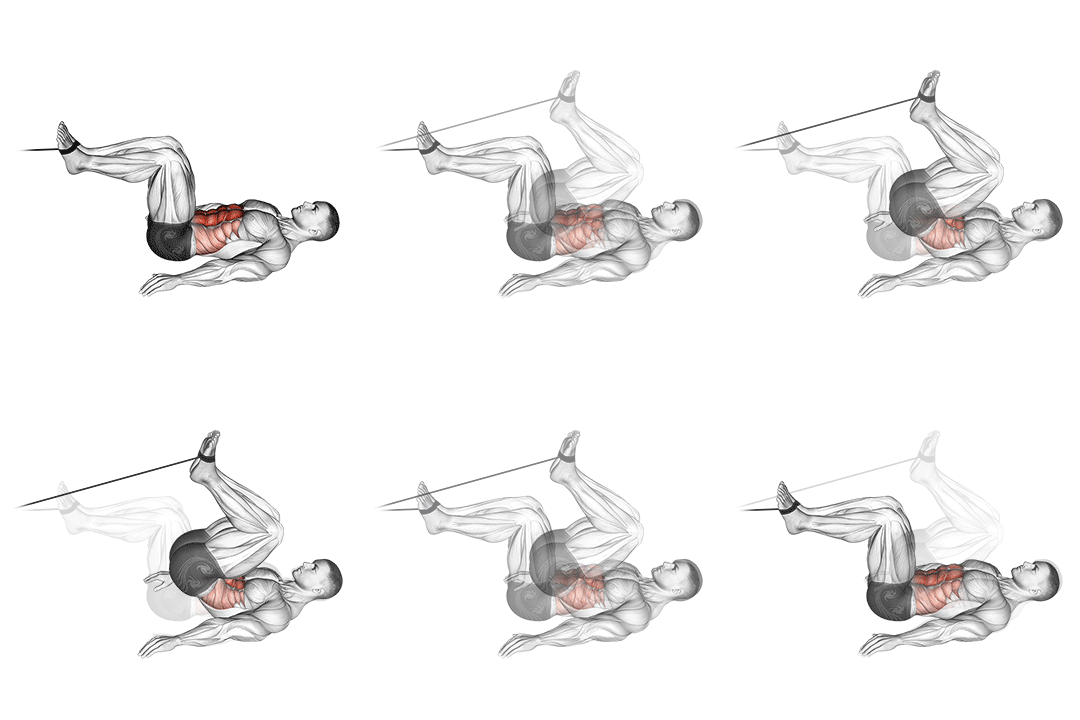
To perform the Cable Reverse Crunch, first lie down on a mat or specialized bench and use the cable machine with an appropriate ankle strap. The cable should be attached to your ankle and positioned at a suitable height. In this position, bring your legs up towards your abdomen while simultaneously pulling the cable downwards.
Pause when your legs are close to your chest, then slowly return to the starting position. Throughout the movement, keep your abdominal muscles contracted and avoid excessive arching of your lower back. You can perform this exercise for a set number of repetitions and gradually increase the resistance.
Equipment Needed
To perform the Cable Reverse Crunch, you need a cable machine and an ankle strap. The cable machine allows you to adjust the desired resistance and perform the exercise with varying intensities. You can also use an exercise mat for added comfort during the movement.
The cable machine is available in most gyms, and this exercise can be easily performed with its various settings. Using the correct equipment helps you perform the exercise with precision and efficiency, preventing potential injuries.
Yes, this exercise can be suitable for various fitness levels by adjusting the resistance.
If you have access to a cable machine, this exercise can be done at home. However, due to the need for specific equipment, it is mostly performed in a gym.
If performed correctly with proper form, the risk of lower back injury is reduced. It is important to avoid excessive arching of the lower back during this exercise.
To start, 3 sets of 10 to 15 repetitions are recommended. Over time, you can increase the number of sets and repetitions.
How to perform
-
Step 1
First, take an ankle strap and attach it to the cable machine.
-
Step 2
Sit in front of the machine, attach the cable to your ankles, then lie down and lift your legs, bending your knees at a 90-degree angle.
-
Step 3
Place your hands behind your head and bring your knees towards the center of your body until you feel a stretch in your abdominal muscles.
-
Step 4
Hold this position for a few moments, then slowly return your hips and legs to the starting position and perform the exercise for your desired number of repetitions and sets.