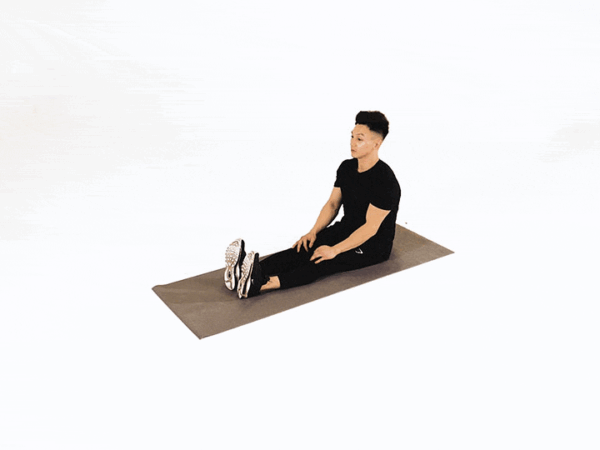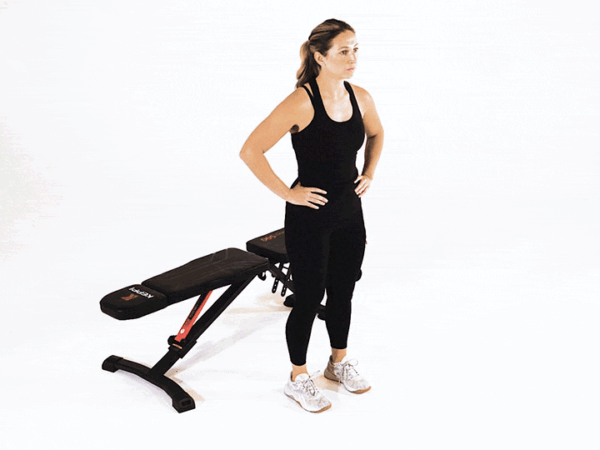
The “90 Hamstring Stretch” is a stretching exercise performed to increase the flexibility and stretch of the muscles at the back of the thigh (hamstrings). Due to its simplicity and effectiveness in deeply stretching the hamstring muscles, this movement is one of the most commonly used stretching exercises in sports and rehabilitation programs. Regular performance of this exercise can help reduce the risk of hamstring-related injuries and improve joint range of motion.
This movement is particularly beneficial for individuals involved in activities such as running, cycling, or sports that require high flexibility in the hamstring muscles. The “90 Hamstring Stretch” not only helps stretch the hamstrings but can also be effective in improving overall posture and preventing back and knee problems.
Target Muscle in Hamstring Stretch (Back of Thigh)

The primary target muscle in the “90 Hamstring Stretch” is the hamstrings, located at the back of the thigh. The hamstrings consist of three main muscles: Biceps Femoris, Semitendinosus, and Semimembranosus. These muscles originate from the pelvis and attach to the bones of the lower leg.
The hamstrings play a vital role in various leg movements, including knee flexion and hip extension. Therefore, the flexibility and strength of these muscles are crucial for proper leg function. Regular stretching of these muscles helps reduce tension and prevent cramps and related injuries.
Secondary Muscles Involved in Hamstring Stretch (Back of Thigh)
In addition to the hamstrings, other muscles are also affected during this stretching exercise. The gluteal muscles, which include the large muscles of the buttocks, play a supportive role. These muscles help stabilize the pelvis and assist in the correct movement of the legs during the stretch.
Furthermore, the lower back muscles, such as the Erector Spinae, are indirectly involved. Stretching the hamstrings simultaneously reduces tension in these muscles and can help improve overall body posture and prevent back pain.
How to Perform the Hamstring Stretch (Back of Thigh)
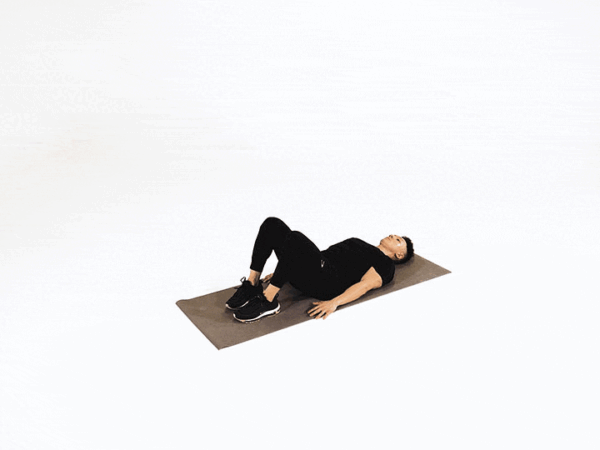
To perform the “90 Hamstring Stretch,” first lie on your back and bring one leg straight up towards the ceiling. The other leg should be bent with the foot flat on the floor. Using your hands or a strap, hold the raised leg and gently pull it towards your body until you feel a stretch in the back of your thigh. Hold this position for 20 to 30 seconds.
To increase the stretch, you can gently pull the raised leg further towards your body or change the angle between your leg and torso. After holding the stretch for the specified time, slowly lower your leg and repeat the movement for the other leg. This exercise can be performed as part of a daily stretching routine or before and after workouts.
Equipment Needed
Typically, no special equipment is required to perform the “90 Hamstring Stretch.” However, to enhance and deepen the stretch, you can use a strap, towel, or belt. These aids help you hold your leg comfortably and perform the stretch in a controlled manner without excessive strain.
Using these aids is particularly recommended for individuals with less flexibility. Additionally, a mat can be used for added comfort while lying down. This exercise can be done anywhere and anytime, as the necessary equipment is simple and readily available.
Yes, this exercise is suitable for most people, but individuals with specific lower back or thigh issues should consult a doctor before performing it.
The optimal hold time for the stretch is between 20 to 30 seconds. This can be repeated several times a day for best results.
Yes, regular stretching of the hamstrings can help reduce tension in the lower back muscles and prevent pain caused by the stiffness of these muscles.
Yes, regularly performing the “90 Hamstring Stretch” helps improve hamstring flexibility and increase joint range of motion.
You can use a strap, towel, or belt to perform this exercise. A mat is also recommended for added comfort while lying down.
How to perform
-
Step 1
To begin this exercise, lie on your back, keep one leg straight, and bend the other leg, holding your knee with your hands.
-
Step 2
Straighten the bent leg upwards and hold for 15 seconds, then switch legs.
-
Step 3
Repeat this exercise for the required number of repetitions.