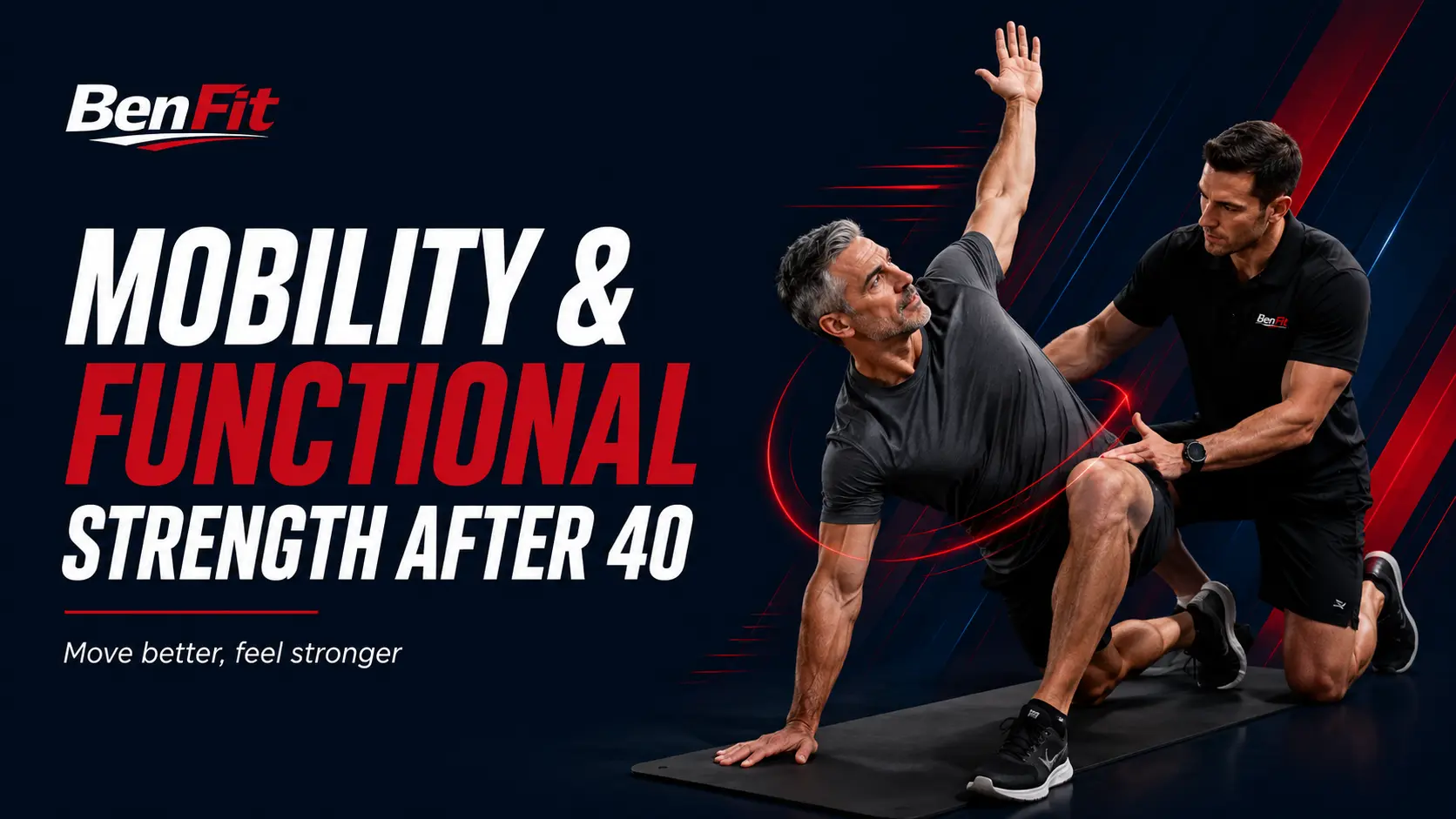
A mobility workout should help you move better, not just stretch more. After 40, many adults feel tighter in the hips, shoulders, ankles, and back. But the solution is not always more flexibility. Often, the body needs mobility, stability, strength, and better daily movement patterns.
BenFit Pro uses mobility as part of a complete system: move better, get stronger, recover smarter, and keep training long-term.
What is mobility?
Mobility is the ability to move through a useful range of motion with control. Flexibility is passive range. Mobility is active ownership. For example, touching your toes is flexibility; hinging with control while keeping your spine organized is mobility.
Why mobility matters after 40
With age, desk work, stress, injury history, and reduced activity can all affect movement quality. Poor mobility can change how you squat, hinge, lunge, press, and rotate. Over time, this can limit strength progress and make workouts feel uncomfortable.
The BenFit weekly mobility and strength structure
Day 1: Lower body mobility + strength
Focus on ankles, hips, glutes, hamstrings, and core control. Use exercises like supported squats, hip airplanes, split squats, glute bridges, and controlled deadlift patterns.
Day 2: Upper body mobility + posture
Focus on thoracic rotation, shoulder stability, scapular control, rows, carries, and breathing mechanics. This is especially useful for desk workers and clients with neck or shoulder tension.
Day 3: Full-body functional strength
Combine movement patterns: squat, hinge, push, pull, carry, rotate, and brace. Functional strength is not a trend; it means your training improves how you move in real life.
Daily 8-minute mobility reset
- 90/90 hip switches
- Cat-cow to thoracic rotation
- Half-kneeling hip flexor stretch with glute squeeze
- Ankle rocks
- Deep squat breathing or supported squat hold
Mobility mistakes to avoid
- Stretching aggressively before heavy lifting.
- Ignoring strength in the new range of motion.
- Doing random drills without knowing the limitation.
- Expecting one mobility session to fix years of movement habits.
- Skipping breathing and core control.
How mobility supports weight loss and body transformation
Mobility does not burn massive calories by itself. Its value is that it helps you train consistently. Better movement can make strength training safer, more comfortable, and more effective. That consistency supports fat loss, muscle maintenance, and long-term health.
When to use a coach
If you are unsure why a movement feels restricted, a coach can help identify the pattern. Online coaching can work well when paired with video review, but 1:1 sessions are useful for hands-on feedback and cueing.
Internal linking plan for this article
Link this article to corrective exercise specialist, strength training for weight loss, online personal training, and personal trainer Orange County CA.
Frequently Asked Questions
How often should I do mobility workouts?
Most people benefit from short daily mobility resets plus 2 to 3 structured mobility sessions per week.
Is mobility training the same as stretching?
No. Stretching focuses on range of motion. Mobility adds control, strength, breathing, and usable movement.
Can mobility reduce pain?
It may improve movement comfort, but pain should be assessed by a qualified healthcare professional.
What is functional strength?
Functional strength means building strength that transfers to real-life movement patterns such as lifting, carrying, climbing, reaching, and balancing.
Ready to train smarter?
BenFit Pro helps adults build strength, improve movement quality, and stay consistent through online coaching and 1:1 personal training in Orange County, California.
Scientific and professional sources used
- CDC: Adult physical activity guidelines
- ODPHP: Physical Activity Guidelines for Americans
- 2025 paper: AI-driven smart sportswear for exercise monitoring
Disclaimer: Mobility work should be pain-free and adapted to your body. Stop if symptoms increase and speak with a qualified professional.