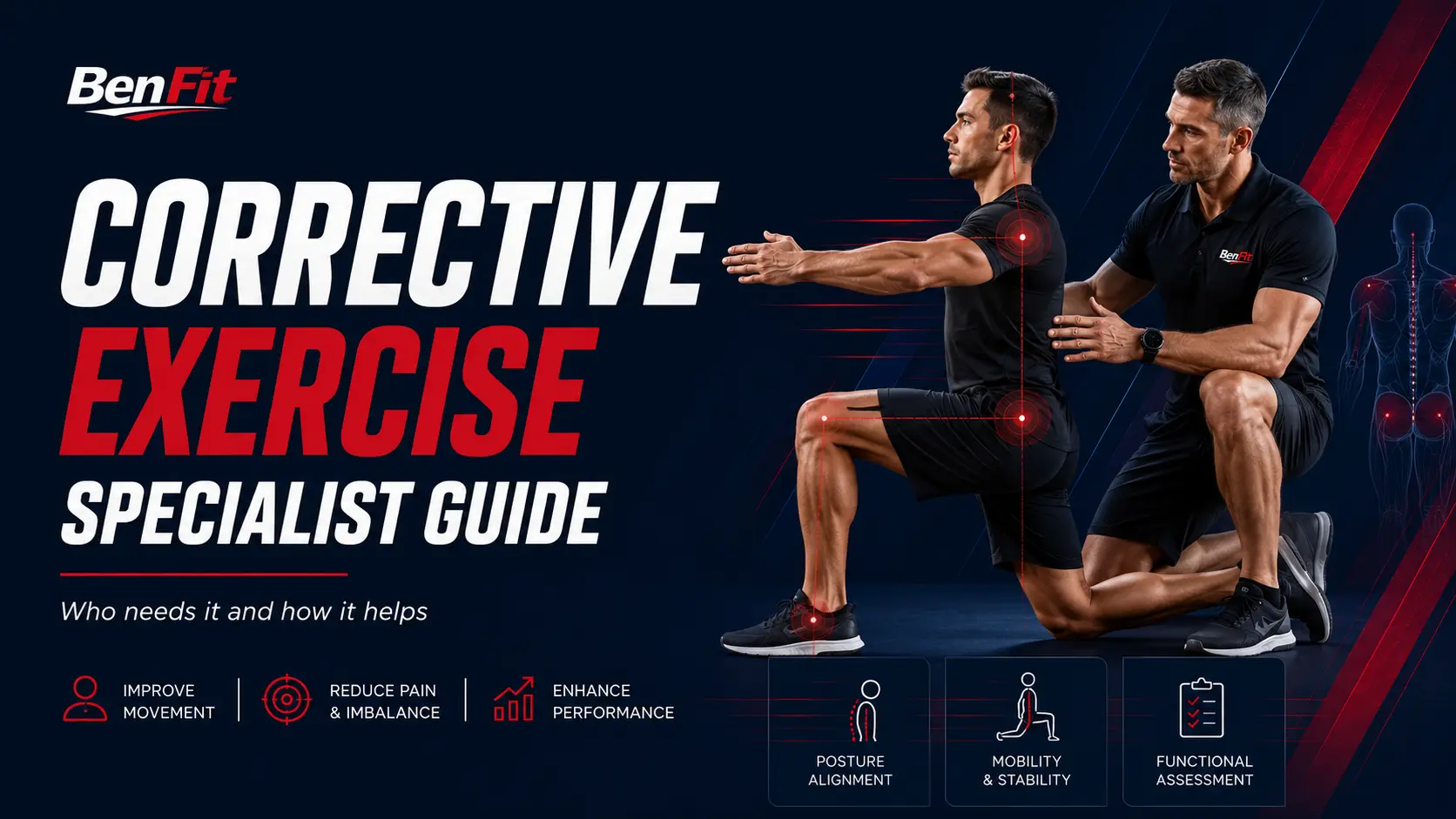
A corrective exercise specialist helps identify movement limitations, muscle imbalances, posture patterns, and control issues that can affect how you train. Corrective exercise is not a replacement for medical care or physical therapy, but it can be a powerful bridge between “I want to work out” and “my body is ready to train well.”
For BenFit Pro, corrective exercise is a key part of coaching because many adults do not need harder workouts first. They need better movement, better control, and a smarter progression.
What is corrective exercise?
Corrective exercise is an assessment-based approach to improving movement quality. It usually includes mobility drills, soft tissue strategies, activation exercises, stability work, balance training, and controlled strength movements. The purpose is to help the body move with better alignment and efficiency before the program becomes more intense.
In personal training, corrective exercise is especially useful for people who sit for long hours, have poor posture, feel tight in the hips or shoulders, struggle with squat or hinge patterns, or feel pain during basic gym movements.
What does a corrective exercise specialist look for?
Movement compensations
A compensation is when the body finds a workaround. For example, knees collapsing inward during a squat, the lower back arching during overhead movements, or shoulders rising during pulling exercises. These patterns can limit progress and may increase stress on joints over time.
Mobility restrictions
Mobility is your ability to move through a useful range of motion with control. Tight ankles, hips, thoracic spine, or shoulders can change how the whole body moves. A corrective plan identifies which limitations matter most for your goals.
Stability and control
Sometimes the issue is not flexibility. It is control. The body may have enough range, but not enough strength or coordination to own that range. Corrective exercise often combines mobility with stability so the new movement becomes usable.
Who needs corrective exercise?
- Beginners who want to learn safe movement patterns.
- Adults over 40 returning to training after inconsistency.
- Clients with recurring tightness or discomfort during workouts.
- People who want strength training but struggle with form.
- Desk workers with hip, back, neck, or shoulder stiffness.
Corrective exercise inside a BenFit Pro program
A good corrective strategy is not endless stretching. It should connect to your main goal. If you want weight loss, corrective work helps you train harder with better mechanics. If you want muscle, it improves your ability to load the right muscles. If you want longevity, it helps maintain movement quality and independence.
Online corrective exercise: can it work?
Online coaching can support corrective exercise when video review, clear cues, and progressive programming are used. Current research in exercise monitoring and virtual coaching shows growing interest in using sensors, AI, and video feedback to evaluate exercise form. That does not replace a qualified coach, but it supports the direction of the fitness industry: more feedback, more personalization, and better movement data.
Internal linking plan for this article
This is a high-value cluster post. Link it to online personal training, Orange County personal training, mobility workout plans, and strength training for weight loss.
Frequently Asked Questions
Is corrective exercise the same as physical therapy?
No. Physical therapy treats medical injuries and diagnoses. Corrective exercise in personal training focuses on movement quality, exercise technique, and training readiness. If pain or injury is present, a medical professional should be involved.
Can corrective exercise help posture?
It may help by improving mobility, strength, breathing control, and awareness. Posture is usually influenced by habits, strength, mobility, and daily movement patterns.
How long does corrective exercise take to work?
Many people feel better quickly, but lasting change usually requires consistent practice over several weeks. The goal is to integrate corrective work into real strength training, not keep it separate forever.
Do advanced lifters need corrective exercise?
Yes, sometimes. Advanced clients often need it to clean up movement patterns, manage recovery, and continue progressing safely.
Ready to train smarter?
BenFit Pro helps adults build strength, improve movement quality, and stay consistent through online coaching and 1:1 personal training in Orange County, California.
Scientific and professional sources used
- NASM: Certified Personal Trainer program and OPT model
- 2025 paper: AI-driven smart sportswear for exercise monitoring
- CDC: Adult physical activity guidelines
Disclaimer: Corrective exercise is educational fitness coaching, not diagnosis or treatment. If you have pain, injury, or neurological symptoms, consult a licensed healthcare provider.