The “Alternating Floor Leg Raise” is a simple and effective exercise for strengthening the abdominal muscles and lower body. This movement focuses on the core muscles and helps improve balance and body stability. In this exercise, the legs are raised alternately from the floor, which increases tension and contraction in the abdominal and leg muscles. This exercise can be easily performed at home or in the gym and does not require any special equipment. The “Alternating Floor Leg Raise” exercise is very effective for strengthening the abdominal muscles, especially the lower abs. This movement is also used to improve the flexibility and endurance of the core muscles and can be used as part of strength and fitness programs.
Target Muscle in Alternating Leg Raise
The primary target muscle in the “Alternating Floor Leg Raise” is the abdominal muscles, especially the lower part of the rectus abdominis (Lower Rectus Abdominis). By lifting the legs off the ground, these muscles are intensely engaged, strengthening and improving the body’s core control. The main focus of this movement is on the abdominal muscles, and over time, it helps to increase the strength of this area. Strengthening the abdominal muscles can help improve posture, reduce the risk of injury, and enhance performance in other athletic activities.
Secondary Muscles Involved in Alternating Leg Raise
In addition to the abdominal muscles, other muscles are also involved in the “Alternating Floor Leg Raise” exercise. These include the hip flexors, which are engaged when lifting the legs off the ground. These muscles help maintain balance and control the leg movements. Also, the lower back muscles and obliques are indirectly involved in this exercise. These muscles help keep the body stable throughout the movement and prevent unwanted rotation or bending.
How to Perform Alternating Leg Raise
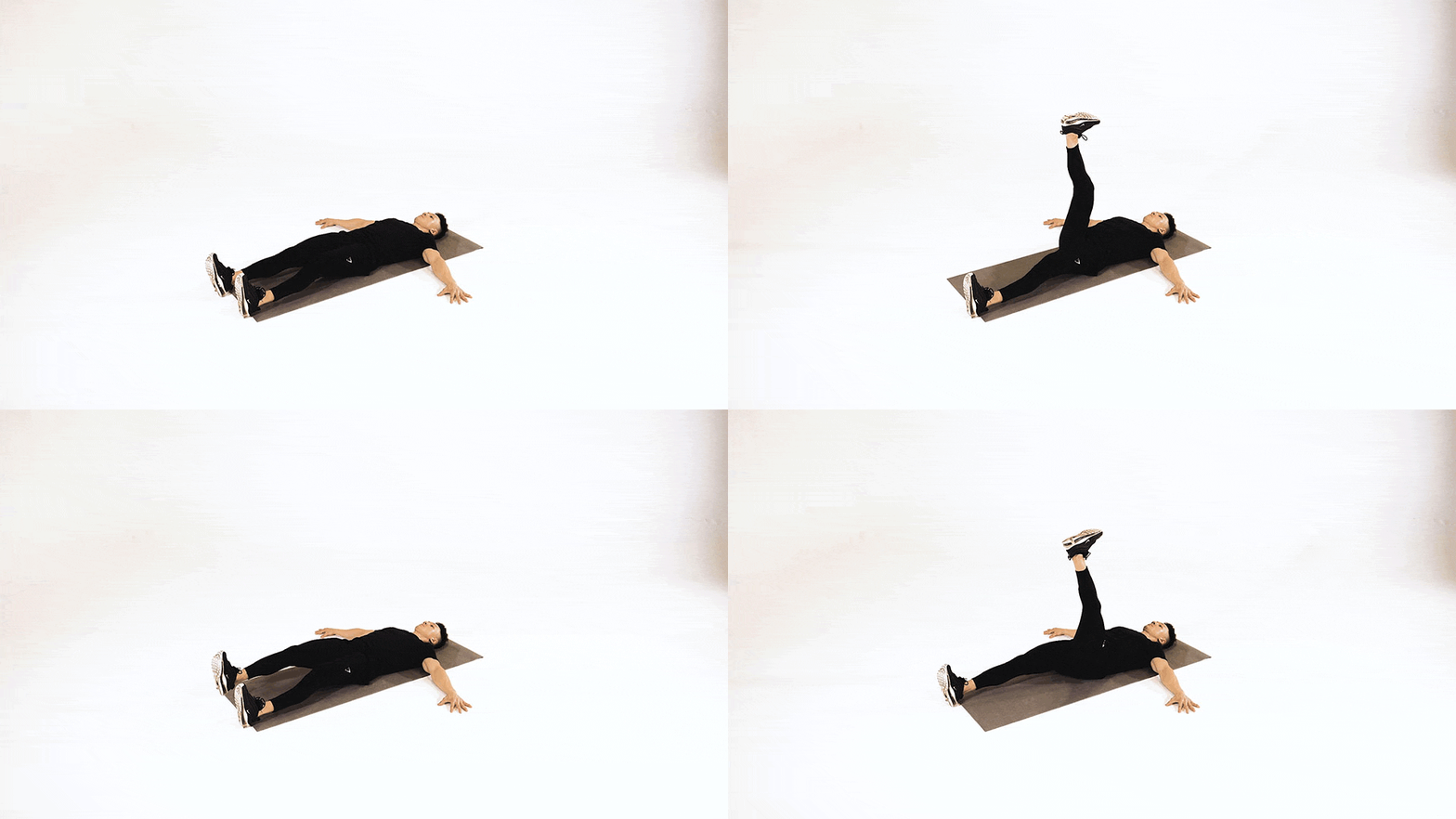
To perform the “Alternating Floor Leg Raise,” first lie on your back on the floor with your hands by your sides. Keep your legs straight and slowly lift one leg off the ground until it forms an angle of about 45 degrees with the floor. Then, slowly lower that leg and lift the other. Perform this movement alternately with each leg. It is important to keep your abdominal muscles contracted throughout the movement and your lower back pressed firmly to the floor. This helps prevent excessive strain on your back and avoids injury. The number of repetitions varies depending on your fitness level, but performing 10 to 15 repetitions for each leg is generally recommended.
Equipment Needed
The “Alternating Floor Leg Raise” exercise does not require any special equipment and can be performed on any flat surface, such as a yoga mat. Using a yoga mat helps you achieve greater comfort and prevents direct pressure on the spine. If you wish to increase the intensity of the exercise, you can use ankle weights. These weights help you apply more pressure to your abdominal and leg muscles, leading to faster improvement in muscle strengthening.
Yes, this exercise is suitable for beginners, but it should be performed with care and focus on correct body form to prevent injury.
Performing this exercise 2 to 3 times a week as part of an abdominal strengthening program is recommended.
This exercise helps strengthen the abdominal muscles, but for belly fat reduction, it should be combined with aerobic exercises and a proper diet.
People with back problems should perform this exercise with caution and consult a doctor or fitness trainer if necessary.
Yes, you can increase the intensity of the exercise by using ankle weights, which will engage the muscles more.
How to perform
-
Step 1
First, lie on your back on the floor, place your hands beside your body, and extend your legs straight out in front of you.
-
Step 2
Slowly lift one of your legs off the ground while keeping the other leg stationary on the floor, until your lifted leg reaches a 90-degree angle with the floor.
-
Step 3
Feel the stretch in your abdominal muscles, then return the leg to the starting position and repeat with the other leg.
-
Step 4
Perform this movement for the desired number of repetitions and sets.