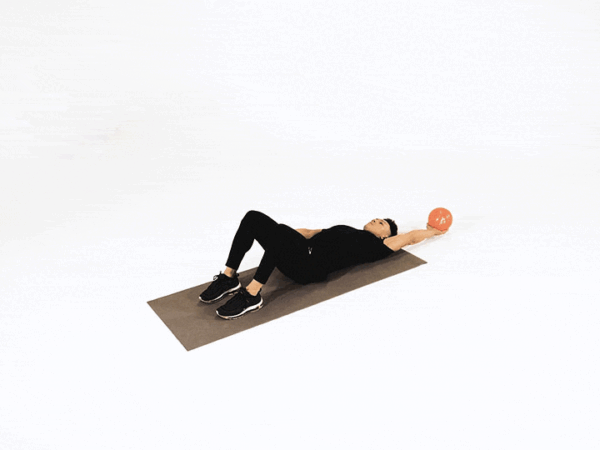
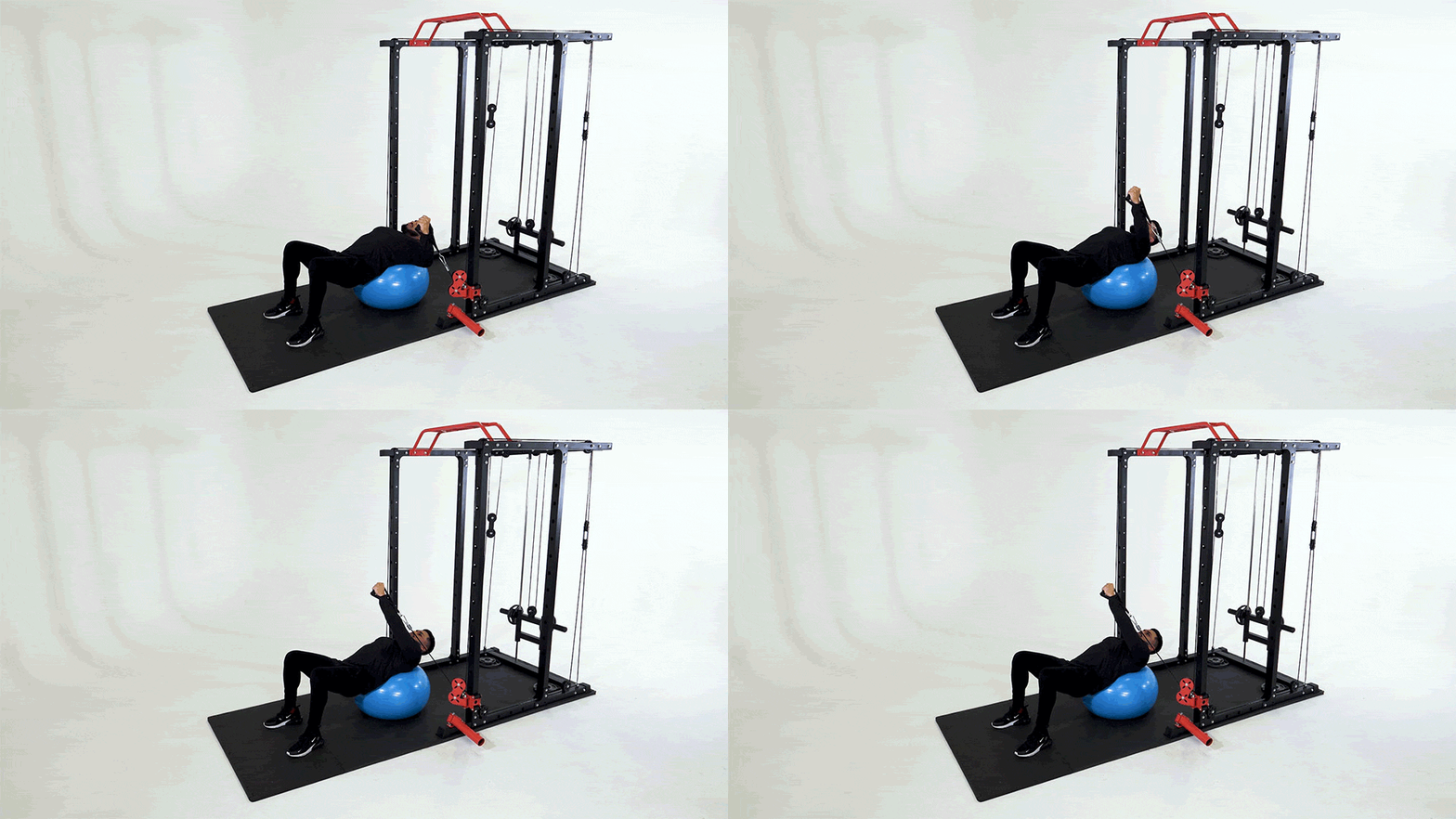
The single-arm stability ball chest fly is an excellent exercise for strengthening the chest and shoulder muscles, specifically targeting the upper chest. This movement is similar to the regular dumbbell fly, with the difference being that only one arm is used, and the individual must focus more on maintaining balance. Using balance as an additional factor makes this exercise more challenging, engaging more muscles as a result.
This exercise is not only suitable for strengthening the chest muscles but is also effective in strengthening the shoulder muscles, core muscles, and even the arm muscles. Performing this movement with balance on one arm allows your body to gain more strength and endurance. This exercise is particularly recommended for individuals who want to challenge their training level and achieve better results.
Target Muscle
The primary target of the single-arm stability ball chest fly is to strengthen the chest muscles, especially the upper chest. This exercise specifically puts pressure on the upper part of the chest (pectorals) and helps in the growth and shaping of this area. Performing the movement with one arm requires more focus and control, leading to greater pressure on the chest muscles.
In addition to the chest muscles, the shoulder muscles are also activated in this exercise. The deltoid muscles, particularly the lateral and anterior parts, are directly stressed. Furthermore, the back muscles and core muscles are also engaged in this exercise to maintain balance and body control.
Secondary Muscles Engaged
In addition to the primary target muscles, which are the chest and shoulder muscles, other muscles are also intensely engaged in the single-arm stability ball chest fly. The core muscles, including the abdominal and back muscles, continuously work to maintain balance and body stability. These muscles help keep the body in the correct position throughout the movement and prevent any deviations.
Also, the arm muscles, especially the biceps and triceps, are involved in guiding the weight and keeping it in the proper position during this exercise. These muscles assist in performing the movement correctly, maintaining balance, and preventing potential injuries.
How to Perform the Exercise
To perform the single-arm stability ball chest fly, first lie directly on an incline bench with a suitable dumbbell in your hand. Then, bring one arm up with complete control, and simultaneously position the other hand appropriately to maintain balance. While keeping your body stable, slowly lower your arm towards your chest level and then bring it back up completely.
In this exercise, be careful to keep your body in a stable position and avoid any unnecessary movement. The movement should be performed with focus and control to achieve the best results. Since only one arm is used, you must maintain your balance with your core muscles throughout the movement.
Equipment Needed
To perform the single-arm stability ball chest fly, you will need an incline bench (to position the body at the correct angle) and suitable dumbbells. The dumbbells should be light or heavy enough for you to perform the movement with complete control, but heavier weights should be used with caution to avoid injury to the shoulders and chest. Additionally, wearing appropriate athletic shoes is recommended to aid with balance and stability.
Although this exercise is typically performed manually, if you are a beginner, you might want to use a spotter to assist you when starting. This exercise is particularly effective for individuals looking to increase chest strength and endurance.
This exercise may be challenging for beginners as it requires a high level of control and balance. It’s best to strengthen your strength and control in other chest exercises before starting this one.
No, in addition to the chest muscles, the shoulder, arm, and core muscles are also activated in this exercise.
For beginners, it’s best to use light dumbbells and gradually increase the weight with consistent practice.
Yes, proper breathing is very important in this exercise. You should inhale while lowering the dumbbells and exhale while lifting them.
How to perform
-
Step 1
First, attach a handle to the cable machine and connect it to the lower pulley, and place a stability ball in front of the machine.
-
Step 2
Grip the handle with a hammer grip and sit on the stability ball.
-
Step 3
Slowly move your legs forward until your legs are extended, knees are bent, and your lower back is flat on the middle of the ball.
-
Step 4
Lift the handle above your chest; this will be your starting position.
-
Step 5
Slowly lower the handle to the sides, similar to a fly movement, until you feel a stretch in your chest muscles, and pause for a moment.
-
Step 6
Return the handle to the starting position, squeezing your chest muscles.
-
Step 7
Continue the exercise for the desired number of repetitions and sets.